



Qatar halts LNG supply after Iran strike
Mar 25, 2026, 10:09 am


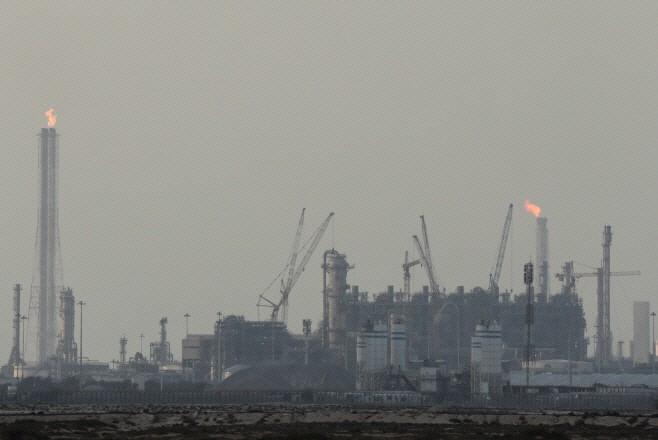 |
| Liquefied natural gas (LNG) production facilities operated by QatarEnergy are seen in Ras Laffan Industrial City. The site was hit by an Iranian missile strike, disrupting output. / Reuters-Yonhap |
QatarEnergy has declared force majeure on its long-term liquefied natural gas (LNG) supply contracts with South Korea and three other countries following damage to key production facilities caused by an Iranian missile strike.
According to international media reports on March 24, QatarEnergy announced the temporary suspension of LNG supply contracts with South Korea, Italy, Belgium, and China.
The move underscores how escalating conflict in the Middle East is now directly impacting global energy infrastructure, disrupting gas supply chains across both Europe and Asia.
The disruption stems from missile strikes carried out by Iran on March 18 and 19, which severely damaged production facilities in Ras Laffan Industrial City—Qatar’s main LNG hub. The attack hit LNG production lines and gas-to-liquids (GTL) facilities, leading to a loss of about 12.8 million tons of annual output, equivalent to roughly 17% of Qatar’s export capacity.
As a result, QatarEnergy is expected to suffer annual revenue losses of around $20 billion.
Saad al-Kaabi, CEO of QatarEnergy, said in an interview that 17% of the country’s LNG export capacity has been affected and that it could take between three and five years to fully restore operations.
Reports indicate that two of Qatar’s 14 LNG production lines and one of its two gas liquefaction facilities were damaged in the attack.
The suspension of LNG supplies highlights the growing risk that geopolitical tensions in the Middle East could trigger a broader global energy crisis, with significant implications for major importing countries such as South Korea.
#QatarEnergy #LNG supply #force majeure #Iran missile attack
Copyright by Asiatoday
Most Read
-
1
Celltrion’s Omlyclo gains ground in major European..

-
2
Trump demands rates fall below 1% as Fed hikes for..

-
3
Trump makes $1 trillion bet ahead of midterm elect..

-
4
Iran resumes ballistic missile production, assembl..

-
5
Samsung Electronics, Mistral AI to jointly develop..

-
6
Trump warns countries not helping U.S. must pay re..

-
7
Apple launches first foldable, 1 million won prici..

PEOPLE





HEADLINE NEWS
- Trump to roll out ‘unprecedented welcome’ for Xi with B-2 bombers, F-22 fighters
- S. Korea, U.S., and Japan form united front on Taiwan and economic coercion..
- Trump administration moves to impose sweeping sanctions on International Cr..
- Xi to make state visit to U.S. Sept. 23-25, dispelling rumors over his heal..

-
Address : In-Young Bldg., 34, Uisadang-daero 1-gil, Yeongdeungpo-gu, Seoul
Copyright by ASIATODAY CO., LTD. All rights resereved