



Shin nomination raises rate hike expectations
Mar 24, 2026, 08:33 am


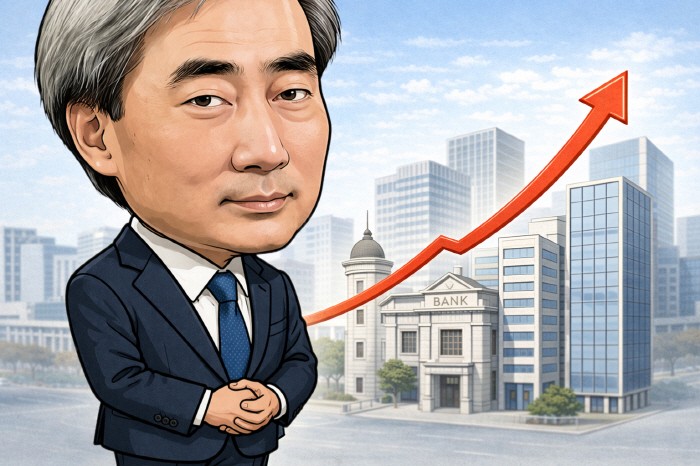 |
| An AI-generated image illustrating monetary policy outlook amid the nomination of Hyun Song Shin as Bank of Korea governor candidate. |
The nomination of Hyun Song Shin, economic adviser at the Bank for International Settlements (BIS), as the next governor of the Bank of Korea (BOK) has raised expectations of a potential shift in monetary policy, including the possibility of an interest rate hike.
Amid prolonged instability in the Middle East pushing up oil prices and inflation concerns, Shin—often described as a “pragmatic hawk”—is seen as more inclined to tighten policy compared to the current rate-freeze stance.
However, concerns over economic slowdown remain, leading many analysts to believe that any rate hike would be implemented cautiously.
According to financial sources on March 23, President Lee Jae-myung nominated Shin the previous day as the next BOK governor. Given his focus on inflation control, markets are increasingly speculating about a potential rate hike amid rising external uncertainties.
Shin has consistently emphasized the importance of addressing inflation while maintaining financial stability. He has argued that inflationary pressures could spread beyond specific sectors and has warned that prolonged low interest rates may heighten risks within the financial system. His approach also includes adjusting policy intensity depending on economic conditions while supplying liquidity when necessary.
These views are expected to remain relevant as concerns grow over renewed inflation and financial instability. Rising global oil prices driven by geopolitical tensions are seen as a key factor that could push up import and consumer prices, potentially prompting a policy shift from the BOK’s current stance of holding rates steady.
Still, many analysts believe a near-term rate hike is unlikely. Higher interest rates could dampen consumption and investment, adding pressure to an already slowing economy. A premature shift toward tighter policy could also weigh on overall economic conditions.
As a result, markets expect the central bank to carefully calibrate the pace and strength of policy adjustments, balancing inflation, growth, and financial stability.
Following his nomination, Shin said he would pursue a “balanced monetary policy” that takes into account inflation, economic growth, and financial stability, pledging to work with the Monetary Policy Board to navigate the challenges facing the Korean economy. The presidential office also described him as a suitable candidate capable of achieving both price stability and growth.
In the securities industry, the prevailing view is that while the possibility of a rate hike remains open, the timing is more likely to be in the second half of the year.
Choi Ji-wook, a researcher at Korea Investment & Securities, said, “If elevated commodity prices continue to push up core inflation and inflation expectations, the Bank of Korea is expected to respond with a rate hike,” adding that “given relatively weak demand-side pressures such as wage growth, the actual increase may be limited to around one hike in the latter half of the year.”
#Hyun Song Shin #Bank of Korea #interest rates #inflation #monetary policy
Copyright by Asiatoday
Most Read
-
1
Celltrion’s Omlyclo gains ground in major European..

-
2
Trump demands rates fall below 1% as Fed hikes for..

-
3
Trump makes $1 trillion bet ahead of midterm elect..

-
4
Iran resumes ballistic missile production, assembl..

-
5
Trump warns countries not helping U.S. must pay re..

-
6
Apple launches first foldable, 1 million won prici..

-
7
Turkish Airlines named main club partner of Liverp..

PEOPLE







-
Address : In-Young Bldg., 34, Uisadang-daero 1-gil, Yeongdeungpo-gu, Seoul
Copyright by ASIATODAY CO., LTD. All rights resereved