



BTS comeback draws massive crowd in Seoul
Mar 21, 2026, 08:47 pm


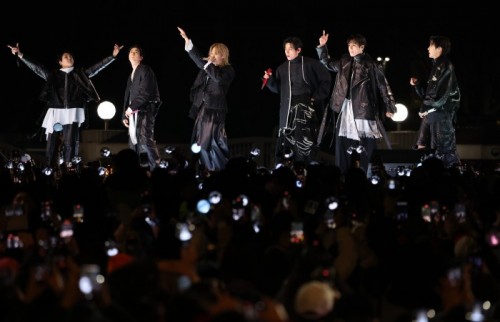 |
| BTS held a free comeback concert, “BTS THE COMEBACK LIVE | ARIRANG,” at Gwanghwamun Square in Seoul on March 21, drawing tens of thousands of fans. / Yonhap News |
BTS kicked off their full-group comeback concert at 8 p.m. on March 21 at Gwanghwamun Square, drawing tens of thousands of fans to the heart of the capital.
Fans from across generations and countries, including the global fandom ARMY, filled the square to celebrate the group’s return. Even before the performance began, the area was awash in purple light from official light sticks, creating a festival-like atmosphere.
According to unofficial estimates by the Seoul city government and police, about 40,000 to 42,000 people had gathered around Gwanghwamun and nearby Deoksugung as of 8 p.m., with crowd density reaching “fully packed” levels.
The venue effectively transformed into a massive outdoor concert hall. While 22,000 seats across designated zones were prepared, many fans without tickets secured spots along sidewalks and in front of large outdoor screens. The crowd included foreign tourists in traditional hanbok and emotional fans wiping away tears, highlighting the intense atmosphere.
Authorities deployed approximately 15,000 personnel, including police and firefighters, maintaining the highest level of security readiness amid heightened global tensions. Entry to the square was restricted to 31 designated gates, where all attendees passed through metal detectors. Items such as scissors and lighters were strictly prohibited.
Some minor disputes occurred during inspections, including cases involving kitchen knives carried by chefs or small blades found in bags. One citizen protested, saying, “Isn’t this excessive inspection?” but police maintained strict controls for safety reasons.
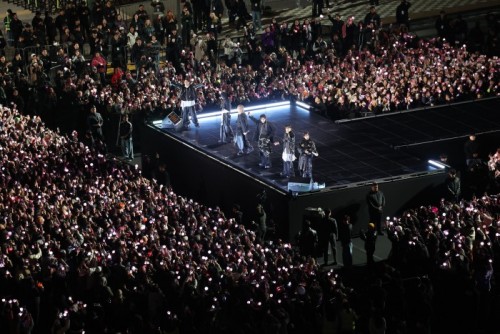 |
| Crowds filled Gwanghwamun Square and surrounding areas as BTS held their comeback concert celebrating the release of their album “ARIRANG.” / Yonhap News |
In some areas, even newspapers branded as “BTS special editions” were banned due to fire concerns, prompting complaints from fans.
To manage the crowd, authorities divided the area into four zones — core, hot, warm, and cold — with plans to restrict access immediately if more than 100,000 people gathered in high-density “hot zones.”
Traffic disruptions were also significant. Major roads such as Sejong-daero, Sajik-ro, and Yulgok-ro were closed, leading to unusual scenes including police buses transporting wedding guests. Access to rooftops and buildings in 31 nearby structures was completely restricted to prevent accidents, while nearby cultural venues suspended operations or canceled events.
Police also installed triple-layer barricades on major roads to prevent potential vehicle attacks. Several roads, including Sejong-daero and the Gwanghwamun underpass, were closed until 11 p.m.
Subway stations such as Gwanghwamun Station (Line 5), City Hall Station (Lines 1 and 2), and Gyeongbokgung Station (Line 3) temporarily skipped stops for safety, with normal operations scheduled to resume from 10 p.m.
#BTS #Gwanghwamun #ARIRANG #comeback concert #K-pop
Copyright by Asiatoday
Most Read
-
1
Kia Sportage outperforms Mazda CX-5 in German auto..

-
2
Houthis launch successive attacks on Saudi airport..

-
3
Saudi Arabia, Iran hold first diplomatic talks to..

-
4
U.S. deploys carrier, 10,000 more troops to Middle..

-
5
Saudi airport in Riyadh struck again, leaving at l..

-
6
Japan tracks Ukraine fiber-optic drones, bolsters..

-
7
Putin's ally visits China on the 8th ahead of APEC..

PEOPLE





HEADLINE NEWS
- Trump slams Nobel Peace Prize snub, claiming he is 'preventing war' between the two Koreas
- China makes tactical retreat following fierce pushback from EU
- Japan openly opposes U.S. sanctions on ICC, fueling tensions with Washingto..
- Military service exemptions for artists and athletes under scrutiny at parl..

-
Address : In-Young Bldg., 34, Uisadang-daero 1-gil, Yeongdeungpo-gu, Seoul
Copyright by ASIATODAY CO., LTD. All rights resereved