



PPP reform pledge fades as incumbents dominate
Mar 20, 2026, 09:18 am


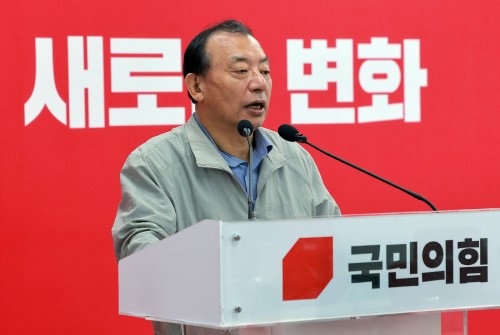 |
| People Power Party nomination committee chief Lee Jung-hyun speaks during a briefing at party headquarters in Seoul on March 19. / Yonhap News |
The People Power Party (PPP) is facing criticism that its pledge for “innovative nominations” ahead of the June 3 local elections has fallen short, as incumbent candidates continue to dominate the selection process.
Despite calls for generational change and the introduction of new political faces, most incumbent metropolitan mayors and governors have secured nominations or advanced to primaries, raising concerns that the party’s reform momentum has weakened.
According to political sources on March 19, only one of the PPP’s 16 incumbent metropolitan leaders—North Chungcheong Governor Kim Young-hwan—was excluded from nomination. His case is linked to legal risks, including an arrest warrant request over alleged bribery, making his candidacy unlikely.
In most regions, including Incheon, Gangwon, South Chungcheong, Daejeon, Sejong, South Gyeongsang and Ulsan, incumbents received single nominations. In North Gyeongsang, a primary is underway, while in Seoul, Mayor Oh Se-hoon—seeking a historic fifth term—will face an upcoming candidate interview. Busan is expected to see a competitive primary between Mayor Park Heong-joon and Rep. Joo Jin-woo.
Even where primaries are held, incumbents are widely seen as having a strong advantage due to higher name recognition and political weight. In Seoul, challengers are considered less competitive compared to Oh, while in North Gyeongsang, Governor Lee Cheol-woo is viewed as maintaining an edge despite health concerns.
This incumbent-centered trend is also evident in key municipal races in the Seoul metropolitan area, where sitting mayors in cities such as Yongin, Seongnam, Namyangju and Gimpo have secured nominations.
Lee Jung-hyun, head of the PPP’s nomination committee, had initially urged incumbents to step aside to allow space for younger candidates and experts, promoting “generational, era, and political change.” However, the plan has not materialized as expected.
Lee attributed the outcome to a lack of challengers, saying, “Incumbent metropolitan leaders are strong, and there were not enough challengers, making this outcome inevitable. If there had been more challengers, we would have supported them.”
Criticism has also emerged over limited participation by youth and women. Although the party recruited 19 young and female talents, many have not been placed in competitive races. Lee acknowledged the difficulty, noting that “it is hard for recruited talents to enter regions where the party has a high chance of winning,” adding that they are more likely to be nominated in less competitive districts.
#People Power Party #local elections #nominations #incumbents #generational change
Copyright by Asiatoday
Most Read
-
1
Trump demands rates fall below 1% as Fed hikes for..

-
2
Celltrion seeks rheumatoid arthritis indication ex..

-
3
Chinese e-commerce giants AliExpress, Temu and She..

-
4
Trump warns countries not helping U.S. must pay re..

-
5
Turkish Airlines named main club partner of Liverp..

-
6
China expels No. 2 military official Zhang Youxia..

-
7
Houthi rebels release video claiming downing of Sa..

PEOPLE






-
Address : In-Young Bldg., 34, Uisadang-daero 1-gil, Yeongdeungpo-gu, Seoul
Copyright by ASIATODAY CO., LTD. All rights resereved