



Trump rejects NATO, Asia support over Hormuz
Mar 19, 2026, 08:48 am


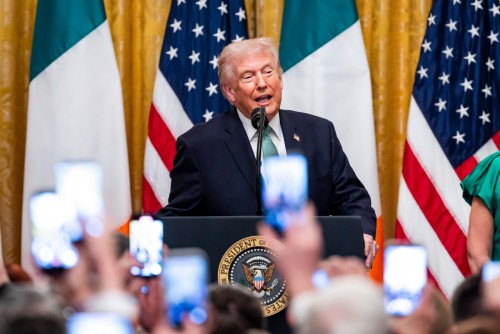 |
| U.S. President Donald Trump speaks as he signals a shift in stance on military cooperation with allies over the Strait of Hormuz. |
Donald Trump signaled a sharp shift in U.S. foreign policy, declaring that Washington no longer needs support from its allies regarding military operations in the Strait of Hormuz.
In a post on Truth Social, Trump said most North Atlantic Treaty Organization (NATO) members had expressed reluctance to participate in operations against Iran in the Middle East.
“I am not surprised by their behavior,” Trump wrote, criticizing NATO as “a one-way street” where the United States spends hundreds of billions of dollars annually to protect allies. “We protect them, but they do nothing for us when needed,” he added.
He went further, stating, “We no longer need or want NATO’s help. We never needed it in the first place.”
Trump also extended his criticism to Asian allies, mentioning South Korea, Japan and Australia. “The same goes for Japan, Australia, and South Korea,” he said, adding that “the United States does not need help from anyone.”
The remarks mark a departure from his previous stance of pressuring allies to share more responsibility. Analysts say the shift could be aimed at justifying potential unilateral U.S. action rather than multilateral cooperation.
The comments also cast uncertainty over Washington’s push for a multinational coalition to secure the Strait of Hormuz, a key global oil route. With allied participation lagging, the U.S. may pivot toward alternative forms of cooperation or independent operations.
Trump has repeatedly urged countries including South Korea, Japan, the United Kingdom, France and China to join efforts to protect oil tankers in the region, often citing their energy dependence and the presence of U.S. forces abroad.
Meanwhile, the United Arab Emirates signaled openness to joining U.S.-led efforts to secure the waterway. The UAE has reportedly faced 1,936 missile and drone attacks from Iran during the conflict, a factor seen as influencing its supportive stance.
#Donald Trump #NATO #Strait of Hormuz #US foreign policy #military alliance
Copyright by Asiatoday
Most Read
-
1
Celltrion’s Omlyclo gains ground in major European..

-
2
Trump demands rates fall below 1% as Fed hikes for..

-
3
Trump makes $1 trillion bet ahead of midterm elect..

-
4
Iran resumes ballistic missile production, assembl..

-
5
Samsung Electronics, Mistral AI to jointly develop..

-
6
Trump warns countries not helping U.S. must pay re..

-
7
Apple launches first foldable, 1 million won prici..

PEOPLE






HEADLINE NEWS
- Trump to roll out ‘unprecedented welcome’ for Xi with B-2 bombers, F-22 fighters
- S. Korea, U.S., and Japan form united front on Taiwan and economic coercion..
- Trump administration moves to impose sweeping sanctions on International Cr..
- Xi to make state visit to U.S. Sept. 23-25, dispelling rumors over his heal..

-
Address : In-Young Bldg., 34, Uisadang-daero 1-gil, Yeongdeungpo-gu, Seoul
Copyright by ASIATODAY CO., LTD. All rights resereved