



US stresses flexibility amid THAAD concerns
Mar 18, 2026, 08:21 am


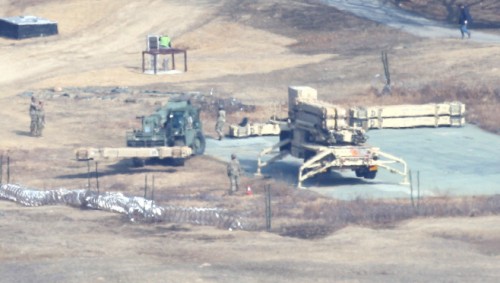 |
| A THAAD missile launcher is seen being dismantled at a U.S. base in Seongju, South Korea, amid reports of a possible redeployment to the Middle East. / Yonhap News |
A senior U.S. defense official emphasized the military’s ability to flexibly redeploy assets worldwide, amid growing speculation that elements of the THAAD system in South Korea could be moved to the Middle East.
Michael Duffey, U.S. undersecretary of defense for acquisition and sustainment, declined to confirm any specific redeployment but underscored that such flexibility is a key strength of the American military.
“Our flexibility and ability to move assets to meet the most urgent needs around the world is a tremendous strength of our system,” Duffey said during a House Foreign Affairs Committee hearing in Washington.
His remarks come as tensions escalate in the Middle East, fueling speculation that air defense assets stationed in South Korea could be reassigned to address rising regional threats.
During the hearing, Ami Bera highlighted South Korea’s past experience with economic retaliation from China following the deployment of THAAD, warning of renewed security and diplomatic risks.
“I supported THAAD deployment during the Trump administration in response to North Korea, but South Korea paid a real price through economic coercion by China,” Bera said.
He added that while the need to protect assets in the Middle East is understandable, any prolonged redeployment could raise serious concerns about a potential security gap on the Korean Peninsula.
Duffey reiterated that he could not provide details on the timing or scope of any potential redeployment but again stressed the importance of maintaining operational flexibility.
His comments are widely interpreted as leaving open the possibility of repositioning key defense assets such as THAAD, depending on global security demands.
Despite the uncertainty, Duffey reaffirmed Washington’s commitment to its alliance with South Korea.
“We remain fully committed to our alliance with South Korea and to providing all the capabilities we can,” he said.
He also pointed to expanding the U.S. defense industrial base as a long-term solution, ensuring that military assets can be rapidly produced and deployed wherever needed.
Speculation about a possible redeployment intensified after reports that THAAD launchers in Seongju were being moved to Osan Air Base, along with increased U.S. military transport activity.
However, South Korea’s Defense Minister Ahn Gyu-back dismissed concerns, stating that while minor adjustments may occur, there have been no significant changes to core military assets.
“There is no need for public concern,” he said.
Analysts note that the situation reflects Washington’s broader strategy of “strategic flexibility,” balancing global military demands while maintaining commitments to allies in key regions such as the Korean Peninsula.
#THAAD #US military #missile defense #Korea US alliance #Middle East
Copyright by Asiatoday
Most Read
-
1
Celltrion’s Omlyclo gains ground in major European..

-
2
Trump demands rates fall below 1% as Fed hikes for..

-
3
Trump makes $1 trillion bet ahead of midterm elect..

-
4
Iran resumes ballistic missile production, assembl..

-
5
Samsung Electronics, Mistral AI to jointly develop..

-
6
Trump warns countries not helping U.S. must pay re..

-
7
Apple launches first foldable, 1 million won prici..

PEOPLE






HEADLINE NEWS
- Trump to roll out ‘unprecedented welcome’ for Xi with B-2 bombers, F-22 fighters
- S. Korea, U.S., and Japan form united front on Taiwan and economic coercion..
- Trump administration moves to impose sweeping sanctions on International Cr..
- Xi to make state visit to U.S. Sept. 23-25, dispelling rumors over his heal..

-
Address : In-Young Bldg., 34, Uisadang-daero 1-gil, Yeongdeungpo-gu, Seoul
Copyright by ASIATODAY CO., LTD. All rights resereved