



Telecom firms prepare networks for BTS Gwanghwamun concert
Mar 16, 2026, 10:02 am


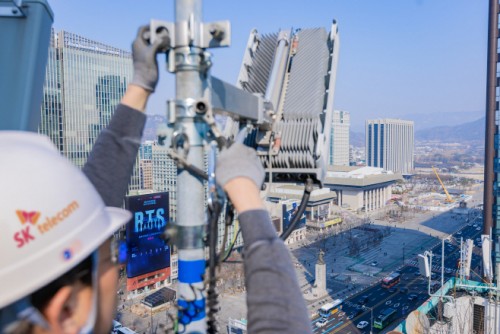 |
| An SK Telecom employee inspects telecommunications equipment near Gwanghwamun in Seoul ahead of the BTS concert. /SK Telecom |
South Korea’s three major telecom operators are implementing special network measures ahead of BTS’s comeback concert at Gwanghwamun Square on March 21, expecting a surge in mobile traffic from large crowds and global live streaming.
SK Telecom, KT and LG Uplus announced plans to expand telecommunications infrastructure and strengthen monitoring systems to ensure stable network services during the event.
The concert is expected to draw large numbers of visitors from around the world, many of whom will upload photos and videos or watch the performance via live broadcasts. With the event being streamed globally, telecom companies say ensuring network stability has become a top priority.
SK Telecom said it will deploy its AI-based network operation system A-One for the first time to manage traffic during the concert.
Using A-One, the company can analyze coverage, recommend optimal locations for new equipment, predict network traffic based on past event data and monitor network quality through AI-powered agents. The system will also track traffic conditions in real time during the event and respond immediately to any sudden changes in user access or equipment performance.
SK Telecom has divided the Gwanghwamun and Seoul City Hall areas into three zones based on crowd density and usage patterns, allowing it to operate customized network management strategies. Areas near the stage are expected to see heavy data uploads, while outer zones may experience increased streaming traffic.
The company will also deploy additional mobile base stations and temporary communication facilities along the route from Gwanghwamun to Seoul City Hall to increase network capacity. Equipment will be prioritized around the stage, ticket booths and merchandise areas where crowds are expected to gather.
Special measures have also been prepared for international visitors using roaming services. SK Telecom will install temporary facilities in areas with high roaming demand and optimize existing base stations to maintain stable connectivity.
KT said it has installed six mobile base stations around Gwanghwamun Square and Seoul City Hall, along with 79 additional wireless base stations and 14 Wi-Fi units to significantly expand network capacity.
On the day of the concert, KT will operate an emergency monitoring system centered at its Gwacheon Network Control Center. Engineers will monitor both upload and download traffic in real time and respond immediately to unexpected changes. About 80 network specialists, including 40 engineers, will be deployed on site.
The company will also operate an AI-based traffic control solution called W-SDN, which automatically detects signs of network overload and adjusts traffic within one minute.
KT has also expanded its backbone network capacity to handle high-definition global streaming traffic expected during the event.
LG Uplus said it will operate a proactive response system based on autonomous network technology while deploying additional mobile base stations and temporary repeaters.
Ahead of the event, the company installed temporary communication facilities at more than 10 locations around Gwanghwamun Square and nearby areas, while optimizing existing LTE and 5G networks to prevent traffic congestion in specific zones.
LG Uplus will also station on-site personnel to monitor equipment conditions and network quality during the concert. At the same time, its integrated network control center in Magok will operate an emergency response system to monitor traffic and implement immediate optimization measures if necessary.
“Large-scale gatherings can cause sudden spikes in traffic during specific time periods,” said Kwak Jun-young, head of Seoul metropolitan infrastructure at LG Uplus. “Through proactive preparations and real-time monitoring, we aim to provide stable communication services for all users during the event.”
#BTS concert #Gwanghwamun Square #SK Telecom #KT #LG Uplus
Copyright by Asiatoday
Most Read
-
1
Kia Sportage outperforms Mazda CX-5 in German auto..

-
2
Houthis launch successive attacks on Saudi airport..

-
3
Saudi Arabia, Iran hold first diplomatic talks to..

-
4
U.S. deploys carrier, 10,000 more troops to Middle..

-
5
Saudi airport in Riyadh struck again, leaving at l..

-
6
Japan tracks Ukraine fiber-optic drones, bolsters..

-
7
Putin's ally visits China on the 8th ahead of APEC..

PEOPLE





HEADLINE NEWS
- Trump slams Nobel Peace Prize snub, claiming he is 'preventing war' between the two Koreas
- China makes tactical retreat following fierce pushback from EU
- Japan openly opposes U.S. sanctions on ICC, fueling tensions with Washingto..
- Military service exemptions for artists and athletes under scrutiny at parl..

-
Address : In-Young Bldg., 34, Uisadang-daero 1-gil, Yeongdeungpo-gu, Seoul
Copyright by ASIATODAY CO., LTD. All rights resereved