



Seoul Central prosecutors face growing manpower shortage
Mar 12, 2026, 08:57 am


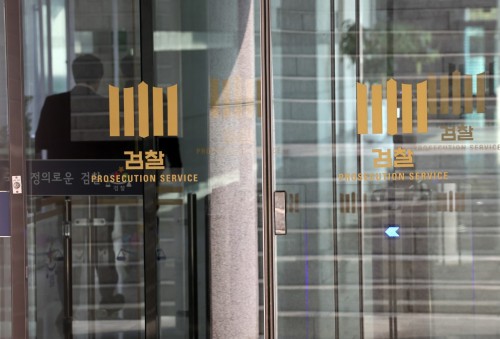 |
| The Seoul Central District Prosecutors’ Office building in Seoul. /Yonhap News |
The Seoul Central District Prosecutors’ Office, the largest prosecution office in South Korea, is struggling with a growing manpower shortage as prosecutors are increasingly dispatched to special investigations and joint task forces.
Despite internal organizational restructuring to redistribute personnel, staffing gaps in investigative departments have persisted due to ongoing dispatches to special counsel teams and a joint investigation unit probing alleged collusion between politicians and business figures.
According to officials on March 11, the office recently adjusted workloads within its trial division by reducing the number of prosecutors from 37 to 35 while expanding the Public Investigation Division 2 from two prosecutors to four. The move is intended to prepare for investigations related to the upcoming June local elections.
To improve efficiency, the Criminal Trial Division 5 — which handles the prosecution of major cases under the supervision of the fourth deputy chief prosecutor — will also take on general criminal cases handled by courts dealing with major trials. Meanwhile, the number of prosecutors in Criminal Trial Divisions 1 and 4 has been reduced after their court workload eased.
The office has also reassigned one anti-corruption prosecutor to the Human Rights Protection Division to cope with a surge in warrant requests as police conduct more direct investigations. The number of prosecutors in that division has increased from five to six.
Half of them are senior prosecutors with extensive experience across multiple fields, a move intended to support police investigations more quickly while strengthening judicial oversight.
Through broader internal adjustments, the office also restored the number of anti-corruption prosecutors to 10, the level seen in December last year.
Nevertheless, staffing shortages remain severe.
Of the office’s authorized quota of 267 prosecutors, only 243 are currently working. In addition, 14 prosecutors are currently seconded to outside investigations, including eight assigned to special counsel probes — three related to alleged insurrection, three to an investigation involving Kim Keon Hee, and two to the so-called “government funds envelope” case — as well as six prosecutors assigned to the joint investigation headquarters examining suspected political-business collusion.
Including regular personnel transfers and resignations, the actual staffing gap is estimated at 24 prosecutors — roughly equivalent to the full staffing level of the Pyeongtaek branch of the Suwon District Prosecutors’ Office.
At the same time, the number of cases handled by the office continues to rise. The total number of cases received — including those transferred by police and those not forwarded for prosecution — increased from about 115,000 in 2023 to about 129,000 in 2024 and about 131,000 in 2025.
The situation is also adding pressure on the leadership of the office.
“Typically, when a new chief prosecutor takes office, they try to launch new policies or initiatives,” an anonymous prosecutor said. “But right now the backlog of criminal cases is so severe that it’s difficult to pursue such efforts. There’s also a reluctance to assign additional work to prosecutors while case processing is already delayed.”
To address the shortage, the Seoul Central prosecutors’ office is implementing measures aimed at improving efficiency. These include refraining from initiating non-essential direct investigations and reducing routine reporting practices that had previously been handled as formalities.
Meanwhile, Seoul Central District Prosecutors’ Office chief Park Cheol-woo is also placing emphasis on changes in organizational culture.
According to an official at the office, prosecutors are making efforts to actively establish innocence in cases such as retrials involving past injustices when serious procedural flaws exist or when the factual basis of a previous conviction is clearly lacking.
“We are moving away from the past practice of filing appeals mechanically,” the official said. “Instead, we are shifting toward objectively assessing whether an appeal is warranted based on legal reasoning and evidence.”
#Seoul Central District Prosecutors’ Office #prosecution manpower shortage #special counsel investigation
Copyright by Asiatoday
Most Read
-
1
Celltrion’s Omlyclo gains ground in major European..

-
2
Trump demands rates fall below 1% as Fed hikes for..

-
3
Hyundai Motor Group breaks ground on integrated st..

-
4
U.S. strikes 3 Iranian oil tankers, Iran vows reta..

-
5
Trump makes $1 trillion bet ahead of midterm elect..

-
6
Iran resumes ballistic missile production, assembl..

-
7
Samsung Electronics, Mistral AI to jointly develop..

PEOPLE







-
Address : In-Young Bldg., 34, Uisadang-daero 1-gil, Yeongdeungpo-gu, Seoul
Copyright by ASIATODAY CO., LTD. All rights resereved