



Construction sector welcomes pro-nuclear shift
Jan 28, 2026, 10:09 am


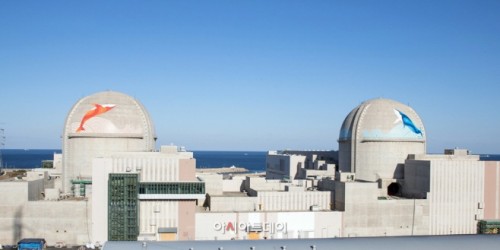 |
| Units 1 and 2 of the Shin Hanul Nuclear Power Plant in Uljin, North Gyeongsang Province. / Korea Hydro & Nuclear Power |
South Korea’s construction industry is reacting positively to the government’s decision to scrap its nuclear phase-out policy and expand infrastructure investment, seeing the shift as a supportive—if cautiously monitored—signal for securing new projects this year.
According to industry sources on Monday, the government has decided to move forward with the 11th Basic Plan for Long-Term Electricity Supply and Demand, originally drawn up under the previous administration, reversing its earlier reluctance toward new nuclear power plant construction.
The plan calls for the completion of two large-scale nuclear reactors by 2038, as well as small modular reactors by 2035. Industry estimates put the cost of building new nuclear plants at more than 10 trillion won, making them mega-scale projects with significant implications for construction firms.
Infrastructure expansion initiatives are adding to optimism. Gyeonggi Province and Korea Electric Power Corporation recently agreed to share plans for provincial road construction and power grid development, actively pursuing joint design of road and transmission networks.
The collaboration aims to establish cooperative frameworks during the construction phase to improve budget efficiency, and industry watchers expect similar models to emerge. By focusing on reducing wasteful spending, such projects could enable more efficient delivery of large-scale infrastructure works.
Gyeonggi Province expects that integrating road and power grid projects will help boost local acceptance and prevent delays. Officials also estimate potential savings of 15 billion to 20 billion won per kilometer if transmission tunnels are replaced with excavated lines installed alongside road construction.
Despite the upbeat outlook, industry officials remain cautious. “It is clearly a positive signal, but we need to watch how things unfold in the early stages,” one construction industry source said. “Nuclear projects are still vulnerable to political variables until sites are finalized, and large-scale infrastructure coordination is being attempted for the first time.”
#nuclear power #construction industry #power supply plan #new nuclear reactors #infrastructure expansion
Copyright by Asiatoday
Most Read
-
1
Kia Sportage outperforms Mazda CX-5 in German auto..

-
2
Houthis launch successive attacks on Saudi airport..

-
3
Saudi Arabia, Iran hold first diplomatic talks to..

-
4
U.S. deploys carrier, 10,000 more troops to Middle..

-
5
Saudi airport in Riyadh struck again, leaving at l..

-
6
Putin's ally visits China on the 8th ahead of APEC..

-
7
Chinese military support and training center opens..

PEOPLE





HEADLINE NEWS

-
Address : In-Young Bldg., 34, Uisadang-daero 1-gil, Yeongdeungpo-gu, Seoul
Copyright by ASIATODAY CO., LTD. All rights resereved