



Trump floats 25% tariff, signals talks with Korea
Jan 28, 2026, 09:51 am


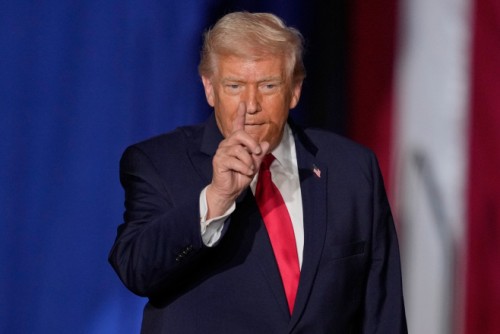 |
| U.S. President Donald Trump speaks about the American economy at a rally in Clive, Iowa, on Jan. 27. / AP·Yonhap |
U.S. President Donald Trump said he would “work out a solution with South Korea” regarding a proposed tariff hike on Korean goods, signaling a possible shift toward negotiations just a day after threatening to restore tariffs to 25 percent.
Speaking to reporters at the White House on Tuesday before departing for Iowa, Trump responded to a question on whether he would raise tariffs on South Korean products by saying, “We will work out a solution,” repeating that “we will work out a solution with South Korea.”
The remarks marked a softer tone compared with his statement the previous day on his social media platform Truth Social, where he warned that tariffs on automobiles, lumber and pharmaceuticals from South Korea could be raised from 15 percent back to 25 percent, citing delays by the Korean legislature in implementing a trade-related agreement.
Trump did not specify an effective date for the tariff increase, nor did his administration issue an executive order or follow-up measures, fueling speculation that the message was intended more as negotiating pressure than an imminent action.
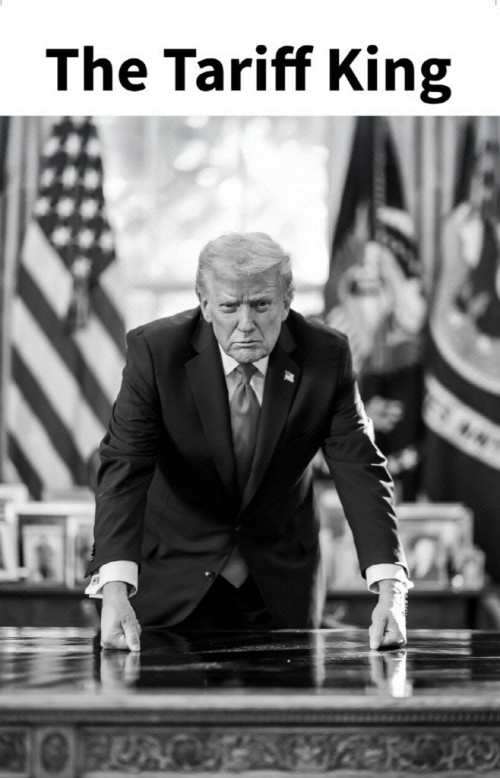 |
| A photo posted by U.S. President Donald Trump on Truth Social on Jan. 16 shows him in the Oval Office with the words “Tariff King” written on it. / Trump Truth Social |
At the heart of the dispute is a bill pending in South Korea’s National Assembly known as the Special Act on Strategic Investment Management for the United States. Under a memorandum of understanding signed in November last year, South Korean companies pledged about $350 billion in investment in the United States, while Washington agreed to reduce tariffs retroactively once implementing legislation was submitted in Seoul.
After the bill was introduced in early December, the Trump administration followed through by retroactively cutting tariffs on South Korean automobiles from 25 percent to 15 percent, effective Nov. 1. However, with the bill still stalled in the National Assembly, Trump has complained that “only the United States is honoring the deal.”
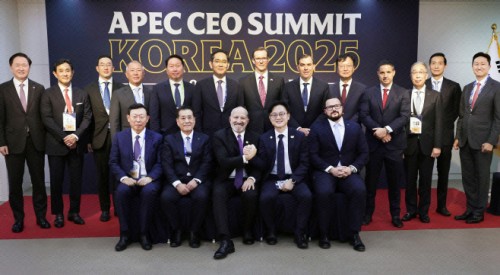 |
| South Korean Minister of Trade, Industry and Energy Kim Jung-kwan (front row, second from right) poses for a commemorative photo at a summit business roundtable held at the Gyeongju Arts Center in North Gyeongsang Province on Oct. 29, 2025, together with U.S. Commerce Secretary Howard Lutnick (center), Samsung Electronics Chairman Lee Jae-yong (back row, sixth from left), Hyundai Motor Group Chairman Chung Eui-sun (fourth), SK Group Chairman Chey Tae-won (fifth), and LG Group Chairman Koo Kwang-mo (third). / Courtesy of the Ministry of Trade, Industry and Energy |
South Korea’s government moved quickly to respond, dispatching senior trade officials to Washington. Trade Minister Kim Jung-kwan, currently in Canada, is expected to head to Washington to meet U.S. Commerce Secretary Howard Lutnick. Trade Minister Yeo Han-koo is also set to hold talks with U.S. Trade Representative Jamieson Greer.
South Korean officials and ruling party members are considering accelerating legislative procedures, aiming to pass the bill as early as late February or early March. With Trump publicly stating his willingness to seek a solution, analysts say talks are likely to focus on Seoul committing to a legislative timeline in exchange for a delay or withdrawal of the tariff hike.
Still, concerns remain that if the bill faces further delays, Trump could revive the tariff threat at any time, given his unpredictable negotiating style.
#Trump #tariffs #South Korea #25 percent tariff #U.S.–Korea trade
Copyright by Asiatoday
Most Read
-
1
Trump shares map on social media labeling Strait o..

-
2
Kia Sportage outperforms Mazda CX-5 in German auto..

-
3
Houthis launch successive attacks on Saudi airport..

-
4
U.S. deploys carrier, 10,000 more troops to Middle..

-
5
Trump rejects Iran's offer to open Strait of Hormu..

-
6
N. Korea conducts first swarm attack drill with dr..

-
7
U.S.-China summit falls short on substance as Trum..

PEOPLE



HEADLINE NEWS
- Seoul dismisses Ukraine's claim of 'S. Korean support for Russia' as "inaccurate and inappropriate"
- S. Korea, Japan race to develop nuclear-powered submarines
- Henri Kagan, Kenso Soai win Nobel Prize in Chemistry for uncovering how mol..
- Vance says Alaska LNG cooperation will move forward with Seoul's current or..

-
Address : In-Young Bldg., 34, Uisadang-daero 1-gil, Yeongdeungpo-gu, Seoul
Copyright by ASIATODAY CO., LTD. All rights resereved