



Ahn Sung-ki, beloved ‘national actor,’ passes away
Jan 06, 2026, 08:38 am


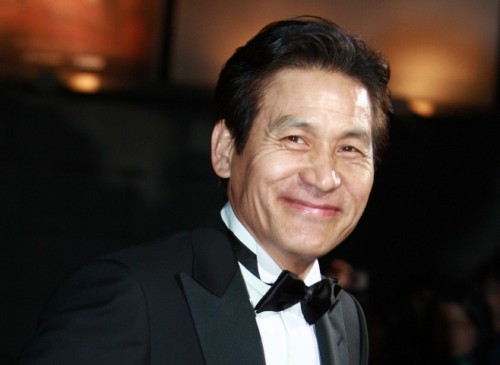 |
| Ahn Sung-ki, widely regarded as South Korea’s “national actor,” attends the red carpet at the 7th Korea Film Awards at Sejong Center for the Performing Arts in Seoul in 2008. The veteran actor died on Jan. 5 at the age of 74. / Yonhap |
Ahn Sung-ki, the towering figure whose life itself mirrored the history of South Korean cinema, died Monday at the age of 74, marking the end of an era for the nation’s film industry.
According to the funeral committee, Ahn passed away around 9 a.m. at Soonchunhyang University Hospital in Seoul, six days after being admitted to intensive care in an unconscious state following a choking incident at his home. He was surrounded by his wife, Oh So-young, and their two sons.
Ahn had battled blood cancer since 2019. Although he was declared cancer-free the following year, the disease later returned. He publicly disclosed his illness in a 2022 interview and reaffirmed his desire to return to acting by appearing at the opening ceremony of the Bucheon International Fantastic Film Festival in 2023 alongside fellow actors Park Joong-hoon and Choi Min-sik.
Born in 1950 but officially registered as a 1952 birth due to post-war circumstances, Ahn made his screen debut in 1959 as a child actor in Hwanghon Train, directed by the late Kim Ki-young. He went on to appear in more than 70 films during his youth before stepping away from acting to focus on his studies. During his high school years, he shared a classroom with future pop legend Cho Yong-pil, a friendship that later became widely known.
After graduating from Hankuk University of Foreign Studies and completing his mandatory military service through the ROTC program, Ahn initially aspired to a career outside the film industry. However, geopolitical changes redirected his path back to acting. Following an uncertain return in the late 1970s, his career was reignited with director Lee Jang-ho’s 1980 film A Good Windy Day, in which his portrayal of a Chinese restaurant deliveryman won critical acclaim.
From there, Ahn rose to prominence through a string of landmark films including Mandala, People in the Slum, Children of Darkness and Mist Village. In the mid-to-late 1980s, he became the defining leading man of Korean cinema, starring in box-office hits such as Whale Hunting, Deep Blue Night and That Winter Was Warm, often serving as director Bae Chang-ho’s on-screen muse.
In the 1990s, Ahn collaborated with leading figures of the Korean New Wave, including Park Kwang-su, Jang Sun-woo and Chung Ji-young, before successfully bridging generations in commercially successful films such as Two Cops, No Mercy and Silmido. Even after transitioning into supporting roles in later years, he continued to command the screen, notably in Unbowed (2012).
Over a career spanning nearly seven decades, Ahn appeared in more than 170 films. His final screen appearance was a special role as Eo Yeong-dam in Noryang: Deadly Sea (2023).
Beyond acting, Ahn was revered for his integrity and dedication to the film community. He played a leading role in the screen quota movement, served as head of the Korean Actors Association and held various positions supporting cultural and humanitarian causes, including as a goodwill ambassador for UNICEF Korea.
In recognition of his contributions, Ahn received the Silver Crown Order of Cultural Merit in 2013 and was elected a member of the National Academy of Arts in 2024.
A funeral service will be held at Seoul St. Mary’s Hospital, with the ceremony conducted as a filmmakers’ funeral. The cortege will be led by fellow actors Lee Byung-hun, Lee Jung-jae and Jung Woo-sung. Ahn will be laid to rest in Yangpyeong.
#Ahn Sung-ki #South Korean cinema #national acto
Copyright by Asiatoday
Most Read
-
1
Kia Sportage outperforms Mazda CX-5 in German auto..

-
2
Houthis launch successive attacks on Saudi airport..

-
3
Saudi Arabia, Iran hold first diplomatic talks to..

-
4
U.S. deploys carrier, 10,000 more troops to Middle..

-
5
Saudi airport in Riyadh struck again, leaving at l..

-
6
Japan tracks Ukraine fiber-optic drones, bolsters..

-
7
Putin's ally visits China on the 8th ahead of APEC..

PEOPLE





HEADLINE NEWS
- Trump slams Nobel Peace Prize snub, claiming he is 'preventing war' between the two Koreas
- China makes tactical retreat following fierce pushback from EU
- Japan openly opposes U.S. sanctions on ICC, fueling tensions with Washingto..
- Military service exemptions for artists and athletes under scrutiny at parl..

-
Address : In-Young Bldg., 34, Uisadang-daero 1-gil, Yeongdeungpo-gu, Seoul
Copyright by ASIATODAY CO., LTD. All rights resereved