



KOSPI posts world’s best annual return
Dec 31, 2025, 08:16 am


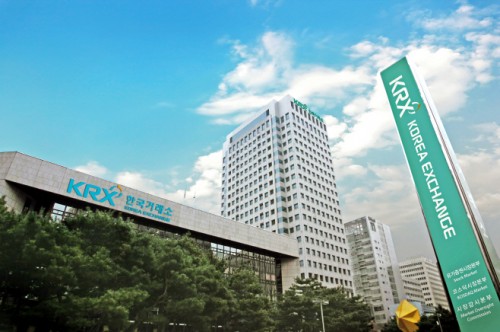 |
| / Korea Exchange |
South Korea’s stock market posted a strong rebound this year, recording the highest annual gain among major economies. The benchmark KOSPI closed the year at 4,214 points, up more than 75 percent from a year earlier, while the tech-heavy KOSDAQ also surged over 36 percent, reflecting broad-based strength.
According to the Korea Exchange on Monday, the KOSPI index ended 2025 at 4,214.17 points, marking a 75.6 percent increase from the end of last year. This was the strongest performance among G20 and OECD member countries.
Chile followed with a 57 percent rise, while Colombia gained 53 percent and Israel 51 percent. By contrast, major advanced markets posted more modest gains, including the United States at 17 percent, Germany at 22 percent and Japan at 27 percent.
The KOSPI had fallen to a yearly low of 2,293 points in early April amid political uncertainty at home and concerns over potential U.S. reciprocal tariffs. Investor sentiment, however, improved rapidly after the launch of a new government and the rollout of policies aimed at boosting shareholder value and curbing unfair trading practices. Expectations of a recovery in the semiconductor industry further fueled the rally.
By sector, machinery and equipment surged 133.7 percent, followed by electrical and electronics at 127.9 percent, electricity and gas at 103.5 percent, and securities firms at 99.9 percent. Analysts attributed the gains to expectations of earnings improvements in shipbuilding, defense, nuclear power and semiconductor industries amid a global trend toward interest rate cuts.
The rally lifted the total market capitalization of the main bourse to 3,478 trillion won, up 1,515 trillion won, or 77.1 percent, from a year earlier. It marked the first time the figure surpassed 3,000 trillion won, led by strong growth in the electronics and machinery sectors.
Trading activity also increased. Average daily trading volume rose 6.4 percent year on year to 518 million shares, while average daily trading value jumped 57.1 percent to 16.9 trillion won. The sharp rise in trading value reflected higher stock prices and increased turnover in large-cap, high-priced shares.
By investor type, institutions and other corporate investors posted net buying for the year, while foreign and retail investors were net sellers overall. Foreign investors, however, played a key role in the market’s upward momentum, posting sizable net purchases from May through October, excluding August.
The KOSDAQ market also showed a clear recovery. The index closed the year at 925 points, up 36.5 percent from the end of last year, buoyed by expectations for policies to revitalize the secondary market and strong demand for artificial intelligence-related semiconductors.
Semiconductor, robotics and biotech stocks led the gains, with machinery and equipment rising 76.6 percent, general services 68.8 percent, transport equipment and parts 53.3 percent, and pharmaceuticals 40.1 percent. As a result, KOSDAQ market capitalization climbed to 506 trillion won, up 48.7 percent year on year, surpassing 500 trillion won for the first time.
Average daily trading value on the KOSDAQ increased 10.7 percent to 9.3 trillion won, with liquidity improving notably in the fourth quarter as daily turnover reached 12.7 trillion won. Retail investors were net buyers of 9.1 trillion won worth of shares, while foreign and institutional investors recorded net sales of 3.1 trillion won and 700 billion won, respectively.
#KOSPI #KOSDAQ #Korea Exchange #stock market rally
Copyright by Asiatoday
Most Read
-
1
Celltrion’s Omlyclo gains ground in major European..

-
2
Trump demands rates fall below 1% as Fed hikes for..

-
3
Trump makes $1 trillion bet ahead of midterm elect..

-
4
Iran resumes ballistic missile production, assembl..

-
5
Trump warns countries not helping U.S. must pay re..

-
6
Apple launches first foldable, 1 million won prici..

-
7
Turkish Airlines named main club partner of Liverp..

PEOPLE






-
Address : In-Young Bldg., 34, Uisadang-daero 1-gil, Yeongdeungpo-gu, Seoul
Copyright by ASIATODAY CO., LTD. All rights resereved