



China slams planned U.S. tariffs, calls overcapacity claims a false premise
Nov 26, 2026, 01:06 pm


China has strongly condemned U.S. plans to announce new tariff rates on the grounds of overcapacity, calling the issue of overcapacity a “false premise."
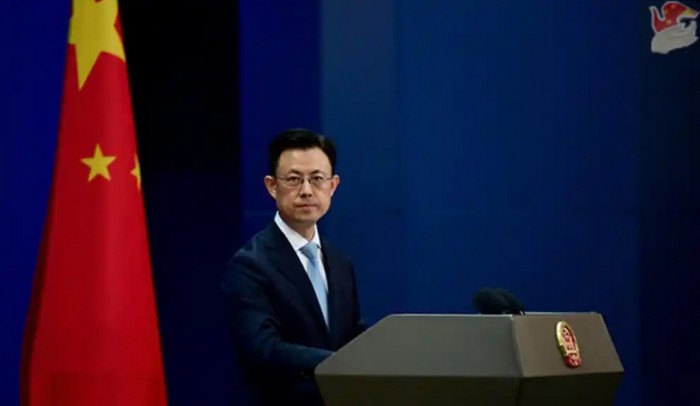 |
| Chinese Foreign Ministry spokesperson Guo Jiakun strongly objects to prospective U.S. tariffs over overcapacity at a regular press briefing on November 24. / Chinese Foreign Ministry website |
According to Beijing sources familiar with U.S.-China relations on November 26, Guo made the remarks at a regular press briefing the previous day in response to reports that the U.S. planned to impose additional tariffs on China and other economies, saying that China's position on handling economic and trade issues with the U.S. was consistent and clear.
Guo said neither side stood to benefit from tariff or trade wars and urged the two sides to resolve relevant issues through negotiations based on equality, respect and mutual benefit. He also dismissed the so-called issue of overcapacity as a false premise and expressed China's opposition to using it as a pretext for political manipulation. He further stressed that China and the U.S. should jointly implement the important understandings reached by their leaders and maintain the momentum of stable development in bilateral economic and trade relations.
According to the sources, the Office of the U.S. Trade Representative (USTR) is expected to soon announce the results of its Section 301 investigations into overcapacity involving 16 trading partners, including South Korea, China, Japan and the European Union (EU), along with new tariff rates. The announcement follows the USTR's launch of investigations in March under Section 301 of the Trade Act into forced labor and overcapacity in various economies, seeking to impose replacement tariffs after the reciprocal tariffs announced worldwide by the Donald Trump administration in April last year were invalidated by a U.S. Supreme Court ruling that found them unlawful.
At the previous day's briefing, Guo also pushed back against the guilty verdicts handed down in the U.S. against Chinese telecommunications equipment maker Huawei on multiple criminal charges, including fraud, money laundering and conspiracy to steal trade secrets. He said the Chinese government firmly opposed U.S. efforts to suppress and contain Chinese companies, adding that China firmly supported its companies in safeguarding their legitimate and lawful rights and interests.
According to the sources, a jury in the U.S. District Court for the Eastern District of New York had earlier found Huawei and several of its subsidiaries guilty on 10 of the 12 counts brought against them on November 24 (local time). The guilty verdicts covered charges including bank fraud, wire fraud, conspiracy to commit money laundering, conspiracy to steal trade secrets and conspiracy to violate U.S. sanctions. However, the defendants were acquitted on two counts: racketeering conspiracy and conspiracy to obstruct justice.
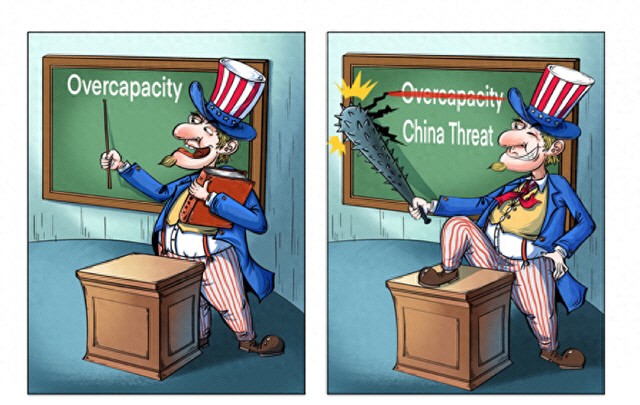 |
| An editorial cartoon depicting U.S. pressure on China over the issue of overcapacity. / China Daily |
During the two-month trial, U.S. prosecutors argued that Huawei had stolen technology from American companies and abused the U.S. financial system. They also alleged that Huawei had helped the Iranian government monitor its own citizens. Given the circumstances, these allegations can hardly be dismissed as entirely unfounded or outlandish. However, considering the argument that these allegations were deliberately made to intensify the pressure needed for the U.S. to prevail in its tariff and trade war against China over the past decade or so, there is arguably some room for understanding China's strong backlash.
Hong Soon-do
Most Read
-
1
China President Xi's Keynote Speech at the APEC C..

-
2
Alice Huang, affair partner of Jensen Huang, repor..

-
3
Iran resumes attacks after two months, targeting U..

-
4
Russian warship sinks in suspected drone attack at..

-
5
Inside Kylin Villa, the symbol of China's reform h..

-
6
Trump, Xi, Putin call for security cooperation at..

-
7
Trump, Putin, Zelenskyy may hold peace talks at G2..

PEOPLE






-
Address : In-Young Bldg., 34, Uisadang-daero 1-gil, Yeongdeungpo-gu, Seoul
Copyright by ASIATODAY CO., LTD. All rights resereved