



U.S. prepares new round of tariffs, citing overcapacity and subsidies
Nov 26, 2026, 09:05 am


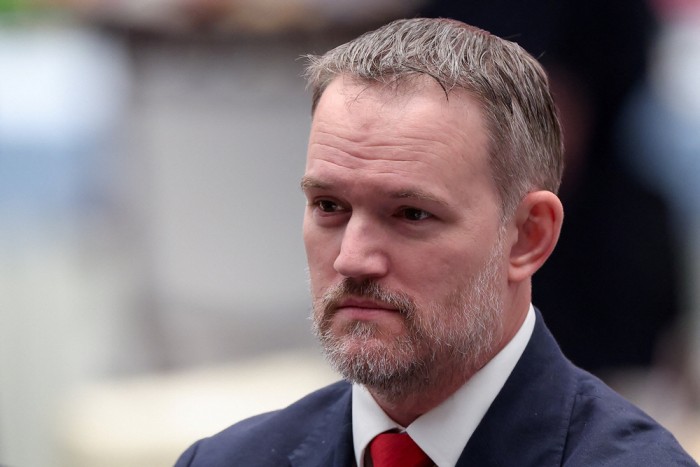 |
| U.S. Trade Representative Jamieson Greer. / Reuters-Yonhap |
The U.S. administration is preparing to raise tariffs on dozens of countries, including South Korea, citing the need to protect domestic manufacturing and strengthen industrial competitiveness, officials said on November 24 (local time).
The move is seen as an attempt by the administration of U.S. President Donald Trump to use industrial subsidies and overcapacity as grounds for exerting additional pressure beyond existing reciprocal tariffs.
Under the existing tariff agreement between South Korea and the U.S., the prevailing view is that South Korea's overall tariff rate will not exceed 15 percent even if additional tariffs are imposed. However, a separate investigation targeting the country's digital regulations remains a factor of uncertainty.
The Wall Street Journal (WSJ) reported that day that U.S. Trade Representative Jamieson Greer could announce as early as this week the findings of a months-long tariff investigation into overcapacity and industrial subsidies in China, the European Union (EU) and 14 other countries. The timing of the announcement could change.
Greer has argued that government support in the targeted economies has led to industrial overcapacity, allowing their companies to supply large quantities of inexpensive goods to global markets and undermining the competitiveness of U.S. manufacturers.
Once the findings are announced, the U.S. is expected to finalize the tariffs after gathering feedback from the targeted economies and taking other steps. China, in particular, is likely to face higher tariffs than other countries, given its extensive industrial subsidy policies.
However, certain industrial goods, such as steel, aluminum and automobiles, are expected to be excluded because they are subject to tariffs under separate national security provisions.
Although the final tariff rates remain uncertain, U.S. administration officials have repeatedly said they intend to impose tariffs at levels similar to those set in 2025, before the U.S. Supreme Court struck down Trump's tariff measures in February this year.
Officials familiar with the plan expect tariffs of 15 percent or less to apply to South Korea, Japan, the EU and others that reached trade agreements with the Trump administration before the Supreme Court ruling, while countries that did not, such as India and Vietnam, are likely to face higher tariffs.
Last year, South Korea agreed with the U.S. to lower its tariff rate to 15 percent in exchange for commitments including $350 billion in investment in the U.S.
Accordingly, the combined rate of the 12.5 percent forced labor-related tariff finalized in July and the latest tariffs is expected not to exceed 15 percent.
However, another factor of uncertainty is that the Office of the U.S. Trade Representative (USTR) is considering a separate investigation under Section 301 of the Trade Act over South Korea's digital regulations.
Concerns have been raised that if this investigation leads to additional tariffs, it could create greater uncertainty over the existing agreement capping tariffs at 15 percent.
In March, the USTR launched investigations under Section 301 of the Trade Act, alleging that overcapacity in 16 economies had created unfavorable conditions for U.S. companies.
Around the same time, it also investigated 60 economies over imports of goods produced with forced labor and inadequate regulations governing such imports. In July, it finalized a tariff rate of 12.5 percent for South Korea.
Kim Hyun-min
Most Read
-
1
China President Xi's Keynote Speech at the APEC C..

-
2
Alice Huang, affair partner of Jensen Huang, repor..

-
3
Iran resumes attacks after two months, targeting U..

-
4
Russian warship sinks in suspected drone attack at..

-
5
Inside Kylin Villa, the symbol of China's reform h..

-
6
Trump, Xi, Putin call for security cooperation at..

-
7
Trump, Putin, Zelenskyy may hold peace talks at G2..

PEOPLE





-
Address : In-Young Bldg., 34, Uisadang-daero 1-gil, Yeongdeungpo-gu, Seoul
Copyright by ASIATODAY CO., LTD. All rights resereved