



Education authorities prepare for nationwide school support staff strike
Nov 26, 2026, 10:38 am


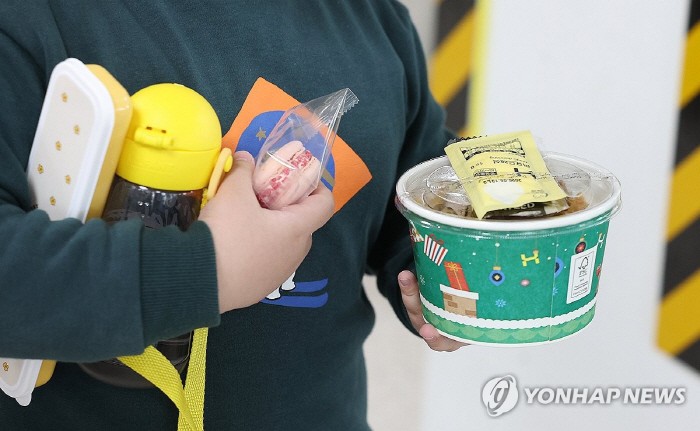 |
| Education authorities are activating an emergency response system to minimize disruptions to school meal services, childcare and other educational activities after the National Solidarity Council of School Non-Regular Workers announced plans to launch a general strike on November 27. The photo shows alternative meals being provided at some schools in Daegu during a strike by the council in December last year. / Yonhap News Agency |
Education authorities are activating an emergency response system to minimize disruptions to school meal services, childcare and other educational activities after the National Solidarity Council of School Non-Regular Workers announced plans to launch a general strike on November 27. Schools facing difficulties providing regular meals will offer alternative meals or ask students to bring packed lunches, while childcare services will continue as usual through alternative programs and other measures.
According to the Ministry of Education on November 26, the ministry and 16 metropolitan and provincial offices of education nationwide have been engaged in collective wage negotiations with the council since September but have failed to narrow differences between labor and management.
The council is demanding adequate education funding, budget allocations to increase school cafeteria staffing following revisions to the School Meals Act, an end to discrimination against non-regular workers, and improved working conditions. The council comprises three unions — the National School Non-Regular Workers' Union, the National Education Support Staff Division and the Korean Women's Trade Union — and had approximately 94,000 school support staff members as of April this year.
The Ministry of Education and metropolitan and provincial offices of education will establish strike response centers and develop response systems for individual areas, including school meal services, childcare, special education and early childhood education.
Schools unable to provide regular meals will offer alternative meals depending on their circumstances, while childcare services will continue as usual through alternative programs and other measures. For special education, individual schools will develop their own measures to support flexible educational activities, including shortened classes.
The Seoul Metropolitan Office of Education also announced that day that it had distributed a strike response manual to schools at all levels, outlining response measures by job category and guidelines for preventing unfair labor practices. It has established response centers at its headquarters and district offices of education, along with a reporting system to quickly monitor strike participation and any unusual developments at individual schools.
In particular, schools will simplify meal menus, provide alternative meals or ask students to bring packed lunches, depending on their circumstances. For elementary school childcare, kindergarten after-school programs and special education, the education office plans to minimize disruptions to educational activities by taking into account existing personnel and operating conditions. Schools have also been instructed to notify parents in advance through school newsletters and other means if changes to educational activities are anticipated.
The council plans to hold a rally in front of the National Assembly building in Yeouido, Yeongdeungpo-gu, Seoul, on the day of the strike.
“While we respect labor unions' right to collective action, we will work to swiftly reach a reasonable agreement through labor-management consultations to protect students' educational activities and health and ensure that parents do not experience inconvenience,” Acting Minister of Education Choi Eun-ok said.
Park Ji-sook
Most Read
-
1
China President Xi's Keynote Speech at the APEC C..

-
2
Alice Huang, affair partner of Jensen Huang, repor..

-
3
Iran resumes attacks after two months, targeting U..

-
4
Russian warship sinks in suspected drone attack at..

-
5
Inside Kylin Villa, the symbol of China's reform h..

-
6
Trump, Xi, Putin call for security cooperation at..

-
7
Trump, Putin, Zelenskyy may hold peace talks at G2..

PEOPLE






-
Address : In-Young Bldg., 34, Uisadang-daero 1-gil, Yeongdeungpo-gu, Seoul
Copyright by ASIATODAY CO., LTD. All rights resereved