



Altman backs Jensen Huang, warns of AI chip demand illusion
Nov 17, 2026, 09:20 am


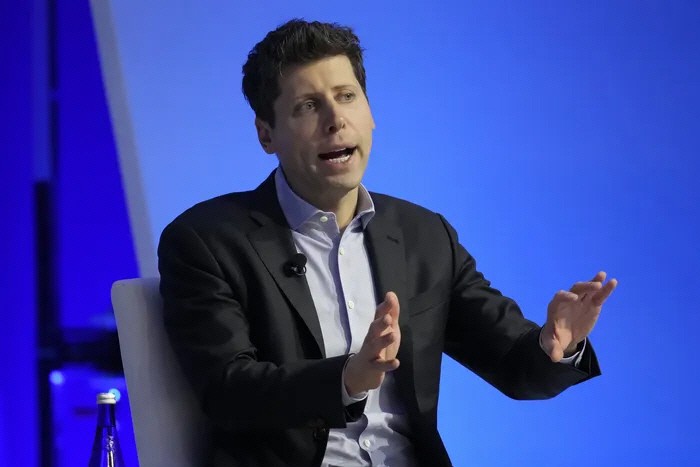 |
| OpenAI CEO Sam Altman. /AP-Yonhap News Agency |
OpenAI CEO Sam Altman has publicly expressed support for Jensen Huang, the former Nvidia CEO who recently resigned. While taking a cautious stance on Huang's personal controversy and the possibility of his return to the company, Altman said the role Huang has played in the artificial intelligence (AI) industry would be difficult to replace.
Speaking at a discussion during the "Silicon Valley & The World" event hosted by U.S. online news outlet Semafor on Nov. 16 (local time), Altman said of the former Nvidia CEO, "Jensen has long been a hero of mine. Heroes have flaws."
He stressed that it was difficult to imagine the AI revolution without Huang and the company he had built, Nvidia. Altman also noted that Nvidia had invested in and collaborated with OpenAI from an early stage, highlighting the close relationship the two companies have maintained throughout the growth of the AI industry.
However, when asked whether it would be appropriate for Huang to return to Nvidia, Altman declined to take a position, saying, "I don't think I know enough to answer that question."
He added that he felt deep personal empathy for Huang's situation, recalling his own experience of being ousted as OpenAI CEO by the company's board in 2023 before being reinstated.
Potential double-counting of AI chip demand raises concerns over market overheating
While expressing optimism about the AI industry's growth prospects, Altman also pointed to the possibility that demand for AI chips may have been overstated.
He explained that as more companies enter the AI chip manufacturing market, different suppliers may be counting the same customers' purchasing plans in their demand forecasts.
Altman said the situation had changed from the days when Nvidia was effectively the only major supplier of AI chips. Today, companies including AMD, Google and Cerebras compete with Nvidia.
He elaborated that multiple chipmakers may each be expecting companies such as OpenAI and Anthropic to purchase a substantial share of their output, creating the possibility of counting the same demand more than once.
In other words, forecasts of AI chip demand may present a misleading picture.
Nevertheless, Altman maintained that underlying demand for AI infrastructure, including data center construction, remains robust. He also reiterated his belief that AI will continue to serve as a driving force behind human progress.
Altman further argued that humans must remain in control of advances in AI technology, amid growing concerns about recursive self-improvement (RSI), in which AI systems improve their own capabilities without human oversight.
He explained that this is different from using AI to accelerate the development of new models.
Cheon Hyun-bin
Most Read
-
1
AMD's Lisa Su floated as potential Nvidia successo..

-
2
Iran resumes attacks after two months, targeting U..

-
3
Alice Huang, affair partner of Jensen Huang, repor..

-
4
U.S. links Myanmar peace efforts to rare earth acc..

-
5
Hegseth rejects calls for impeachment over Iran wa..

-
6
Xi secures fourth term as China reshuffles next-ge..

-
7
Democrats flip U.S. Congress in historic midterm s..

PEOPLE







-
Address : In-Young Bldg., 34, Uisadang-daero 1-gil, Yeongdeungpo-gu, Seoul
Copyright by ASIATODAY CO., LTD. All rights resereved