



S. Korea, France widen nuclear cooperation to SMRs
Nov 13, 2026, 04:13 pm


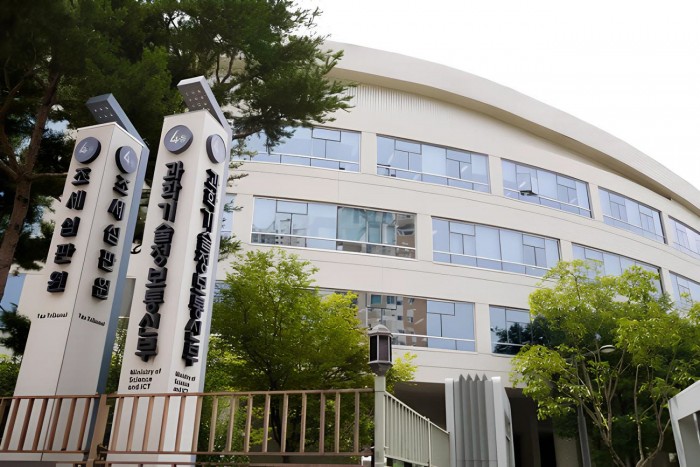 |
| The Ministry of Science and ICT building. /Yonhap News Agency |
The South Korean government is expanding its nuclear cooperation with France to include next-generation technologies such as small modular reactors (SMRs).
The Ministry of Science and ICT (MSIT) and the Ministry of Climate, Energy and Environment (MCEE) announced on Nov. 13 that they jointly held the 27th Korea-France Joint Coordinating Committee on Nuclear Energy with the French Alternative Energies and Atomic Energy Commission (CEA) in Saclay, France, over two days from Nov. 12 to 13.
Established in 1982 following the signing of a nuclear cooperation agreement between South Korea and France in 1981, the committee has served as an intergovernmental channel for discussing cooperation across the nuclear energy sector.
Starting with the 27th meeting, the Director General for Research and Development Policy at South Korea's MSIT and the head of France's CEA have served as chief delegates for their respective countries.
The change follows discussions on strengthening nuclear cooperation during bilateral summits held in April and September.
At the meeting, the two countries discussed ways to cooperate on 21 technical agenda items across three areas: nuclear research and development, nuclear safety and the nuclear industry.
In nuclear research and development, the two sides agreed to expand cooperation on a wide range of issues, including advanced nuclear technologies such as sodium-cooled fast reactors (SFRs) and molten salt reactors (MSRs), decontamination and decommissioning, radioactive waste management, nuclear fuel and radiation technologies.
In particular, the committee discussed new areas of cooperation, including the use of joint research facilities for developing materials for molten salt reactors and exchanges of research personnel. Both countries also agreed to further promote related research cooperation.
In the industrial sector, the two sides discussed ways to ensure a stable supply of nuclear power plant fuel, building on memorandums of understanding (MOUs) on nuclear fuel supply chain cooperation signed around the bilateral summits in April and September.
Specifically, they plan to expand technical cooperation across the entire nuclear industry life cycle, from securing fuel supplies to radioactive waste disposal and nuclear power plant decommissioning.
The two countries also agreed to revise the "Arrangement on the Establishment and Operation of the Korea-France Joint Coordinating Committee on Nuclear Energy," signed in 1982.
The revision will update relevant provisions, including the names of institutions in the existing arrangement, and expand the scope of bilateral cooperation to include next-generation reactors such as SMRs, as well as the front and back ends of the nuclear fuel cycle.
Kim Sung-soo, Director General for Research and Development Policy at MSIT and South Korea's chief delegate to the meeting, said, "This year marks the 140th anniversary of diplomatic relations between South Korea and France, a meaningful milestone. Building on our longstanding friendly and cooperative relationship, the two countries have also maintained close cooperation in the nuclear energy sector."
"We will further strengthen our bilateral cooperation framework by incorporating new areas of cooperation, including the front and back ends of the nuclear fuel cycle, and expand joint research and personnel exchanges across various fields, including next-generation nuclear technologies such as SMRs, to usher in a new phase of nuclear cooperation between our two countries," he added.
Seo Byeong-ju
Most Read
-
1
AMD's Lisa Su floated as potential Nvidia successo..

-
2
Southeast Asian auto parts makers hit hard by Chin..

-
3
U.S. links Myanmar peace efforts to rare earth acc..

-
4
Hegseth rejects calls for impeachment over Iran wa..

-
5
Democrats flip U.S. Congress in historic midterm s..

-
6
Xi secures fourth term as China reshuffles next-ge..

-
7
Nvidia executive Kimberly Powell at center of Jens..

PEOPLE





HEADLINE NEWS

-
Address : In-Young Bldg., 34, Uisadang-daero 1-gil, Yeongdeungpo-gu, Seoul
Copyright by ASIATODAY CO., LTD. All rights resereved