



Free-roaming livestock poses road hazards in rural Kazakhstan
Nov 02, 2026, 01:19 pm


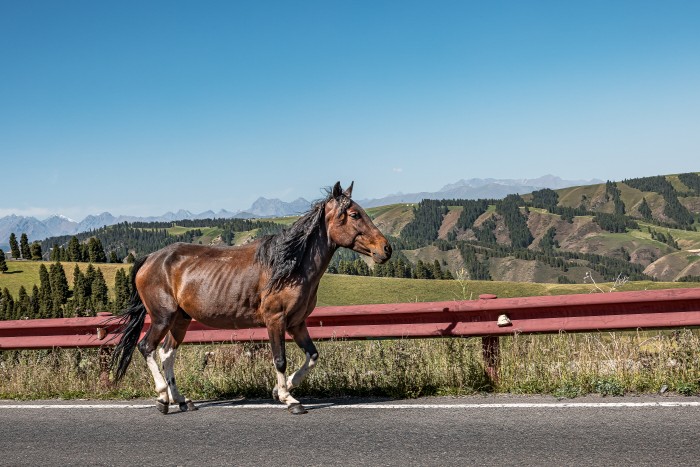 |
| This image is for illustrative purposes only and is unrelated to the article. / Getty Images Bank |
Traditional free-range livestock farming has become a growing concern for rural communities in Kazakhstan. The practice of allowing horses, sheep and other livestock to roam freely across vast grasslands is creating traffic safety problems in the region.
On Oct. 30, Kazakhstan's state news agency Kazinform reported on conflicts between free-ranging livestock and nearby residents in rural areas, highlighting problems with livestock management. On the night of Oct. 10, an 18-year-old man named Almaz died at the scene after his motorcycle collided with a horse on a road near Olginka village in Pavlodar Region.
Police are investigating the exact circumstances of the accident, but it is believed that Almaz was unable to avoid a horse that suddenly appeared while he was riding along a quiet road. Police imposed an administrative penalty on the horse's owner for violating livestock grazing regulations.
Residents claimed that horses had been appearing on roads for years. They said they had repeatedly filed complaints with village and regional akims, or local administrative heads, but little action had been taken.
Resident Kristina Baranova said horses were seen wandering near the road even the day after the accident. Residents are calling for roadside fences, patrol personnel and a dedicated police officer for the village.
Kazakhstan is a country where nomadic traditions remain, and free-range livestock farming using vast grasslands and pastures has become a major method of raising animals in rural areas. Raising horses, sheep and cattle on extensive pastures has the advantage of reducing livestock farming costs, including the construction of barns and the purchase of feed.
However, as road networks expand and rural areas develop, increasing vehicle traffic has led to cases in which free-ranging livestock enter roads, causing traffic accidents or disrupting residents' lives.
According to police in Pavlodar Region, 17 livestock-related traffic accidents occurred in the first nine months of this year, affecting 80 people. Approximately 27,000 animals were placed in the region's 128 temporary livestock holding facilities this year, including around 13,000 horses. More than 2,000 administrative penalties were imposed for violations of grazing regulations.
Current law prohibits grazing without supervision by an owner or caretaker and grazing near land designated for motor vehicle roads. However, the fine for violating grazing regulations is only 12,975 tenge (approximately 38,200 won) as of 2026. Although accidents resulting in injury or property damage can lead to separate legal liability and compensation claims, fines for routine management violations remain low.
Economic factors are also cited as a reason why free-range grazing practices persist. Grazing livestock on extensive pastures reduces the costs of purchasing feed, building and maintaining barns, and hiring workers for livestock management.
By contrast, raising livestock in barns requires additional spending on facilities and personnel. Because the cost savings from free-range grazing are substantial while the burden associated with inadequate supervision is relatively small, farm owners have little incentive to change their existing livestock farming practices.
Kim Min-gyu
Most Read
-
1
Putin proposes trilateral U.S.-China-Russia summit..

-
2
U.S., Israel plan to resume strikes on Iran after..

-
3
Ukraine halts strikes on Russian oil refineries un..

-
4
China's fifth plenum to conclude amid expectations..

-
5
ASEAN to discuss Myanmar's return next month

-
6
AI-discovered PHP flaw triggers global cybersecuri..

-
7
UK court orders worldwide asset freeze on Vietnam'..

PEOPLE







-
Address : In-Young Bldg., 34, Uisadang-daero 1-gil, Yeongdeungpo-gu, Seoul
Copyright by ASIATODAY CO., LTD. All rights resereved