



Protests spread across Germany, France and Portugal
Nov 02, 2026, 10:37 am


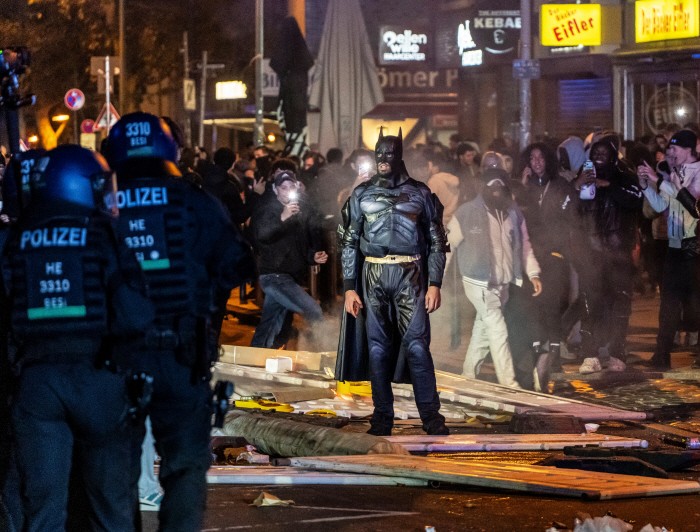 |
| A man dressed as Batman stands in front of police during riots in central Frankfurt, Germany, on Oct. 31 (local time). / AP-Yonhap |
Large-scale, youth-led protests demanding greater investment in education and stable consumer prices and housing costs were held in major cities across Germany, France and Portugal on Oct. 31 (local time).
According to AFP, Reuters and other news agencies, demonstrations led by the youth group Gen Z regelt ("Gen Z takes charge") took place simultaneously in 34 German cities, including Berlin, Munich and Frankfurt. Organizers highlighted the financial burden on young people caused by rising prices and demanded measures including opposition to the introduction of conscription and increased funding for education and healthcare.
Most rallies proceeded peacefully, but violence, including property damage and looting, broke out in some city centers, prompting police to respond.
In Frankfurt, some of the protests escalated into riots, with masked groups looting stores. Police warned residents on social media to avoid the city center, saying violence was continuing, including protesters throwing Molotov cocktails at emergency responders and police officers.
According to police figures, up to approximately 18,000 people participated in the protests in Frankfurt, Munich and Berlin, falling short of both the organizers' estimate of around 36,000 and the initial projection of 182,000.
German authorities said the demonstrations, which coincided with Halloween events, were generally peaceful but warned of possible involvement by extremist groups.
Germany's Interior Ministry said it was monitoring indications that far-left groups and some organizations linked to foreign extremists had attempted to mobilize their supporters.
In commercial districts, including Kurfürstendamm, a major shopping area in Berlin, businesses took precautions against possible clashes by boarding up store windows or shortening opening hours.
Protesters emphasized the financial and social pressures felt by younger generations in Germany, Europe's largest economy. However, some questioned the independence of the protest movement because of the participation of various political and civic groups.
The German Federal Student Conference (BSK) distanced itself from the rallies and announced a separate demonstration for Nov. 20.
On the same day, thousands of citizens protested in Lisbon, the Portuguese capital, against the worsening housing crisis and demanded the withdrawal of proposed amendments to rental laws. As soaring housing prices and rents increase the housing burden on young people, public opposition is growing to government plans to strengthen landlords' eviction powers and abolish rent caps on new contracts.
Protests also continued across France for a third consecutive weekend. According to government figures, approximately 320,000 people took part in demonstrations at around 150 locations nationwide to protest rising living costs and deteriorating education and public services. Protesters also clashed with police in some cities, including Paris and Lyon.
Labor unions and student groups have announced plans for another nationwide general strike on Nov. 5.
Lee Jeong-eun
Most Read
-
1
Putin proposes trilateral U.S.-China-Russia summit..

-
2
U.S., Israel plan to resume strikes on Iran after..

-
3
Ukraine halts strikes on Russian oil refineries un..

-
4
China's fifth plenum to conclude amid expectations..

-
5
ASEAN to discuss Myanmar's return next month

-
6
AI-discovered PHP flaw triggers global cybersecuri..

-
7
UK court orders worldwide asset freeze on Vietnam'..

PEOPLE







-
Address : In-Young Bldg., 34, Uisadang-daero 1-gil, Yeongdeungpo-gu, Seoul
Copyright by ASIATODAY CO., LTD. All rights resereved