



New York City pushes to phase out Central Park horse carriages
Oct 14, 2026, 01:09 pm


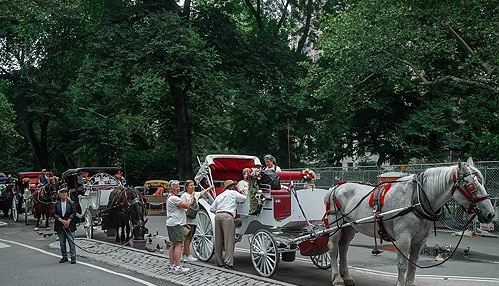 |
| Passengers board a carriage in Central Park, New York, New York, U.S., on August 20 local time. / EPA, Yonhap |
Central Park horse carriage operations, an iconic tourist attraction in New York City, are expected to be banned entirely as of June 2028.
New York City Mayor Zohran Mamdani and New York City Council Speaker Julie Menin reached a final agreement on legislation to phase out horse carriages, CNN reported on the 13th local time.
Speaker Menin plans to put the bill to a full council vote on the 22nd. Council Member Christopher Marte, the primary sponsor of the bill, stated in an interview with CNN that 29 co-sponsors have joined the legislation, anticipating that it will pass smoothly.
The legislative push was prompted by years of concerns raised by animal welfare organizations, alongside the fatal accident involving an 18-year-old tourist in Central Park this past June, which served as a direct catalyst.
At the time, Romanch Mahajan, who was visiting New York with his family, fell from the carriage and died when the horse suddenly bolted while the driver had stepped down. It was the first fatal accident to occur in the roughly 150 years since carriage operations began.
Animal welfare groups have argued that carriage horses are overworked in harsh conditions, and Mahajan's death intensified calls to halt carriage rides for the safety of tourists and the public.
Speaker Menin said, "This tragedy is a warning that carriage operations can no longer be left unaddressed," adding, "While tradition matters, safety comes first in a crowded park, and we will take decisive action by bringing 'Romanch's Law' to a vote."
In preparation for the end of carriage operations, New York City authorities decided to prepare transition measures offering job training and reemployment assistance to workers in the sector, connecting them to affiliated agencies and related industries, such as the New York City Taxi and Limousine Commission and the Metropolitan Transportation Authority.
Carriage operators are voicing fierce opposition. The Transport Workers Union (TWU) Local 100, which represents carriage drivers, countered that it has continually strengthened driver education and safety regulations while properly caring for the animals.
The union also called for the withdrawal of the bill, arguing that the support package proposed by the city amounts to little more than basic job counseling, failing to provide practical protections for livelihoods and threatening to strip numerous families of their primary source of income.
Lee Jeong-eun
Most Read
-
1
Kia Sportage outperforms Mazda CX-5 in German auto..

-
2
Houthis launch successive attacks on Saudi airport..

-
3
Saudi Arabia, Iran hold first diplomatic talks to..

-
4
Saudi airport in Riyadh struck again, leaving at l..

-
5
U.S. deploys carrier, 10,000 more troops to Middle..

-
6
Five ASEAN countries welcome Myanmar coup leader

-
7
Putin's ally visits China on the 8th ahead of APEC..

PEOPLE






HEADLINE NEWS
- New White House Press Secretary links $54 billion from Seoul to Alaska LNG in first briefing
- Industrial Bank of Korea launches local subsidiary in Vietnam
- Saudi-Houthi clashes over oil facilities escalate, hitting 24 vessels in Ho..
- Bin Salman underestimates Houthi offensive, imperiling Saudi economic refor..

-
Address : In-Young Bldg., 34, Uisadang-daero 1-gil, Yeongdeungpo-gu, Seoul
Copyright by ASIATODAY CO., LTD. All rights resereved