



Bin Salman underestimates Houthi offensive, imperiling Saudi economic reforms
Oct 14, 2026, 09:22 am


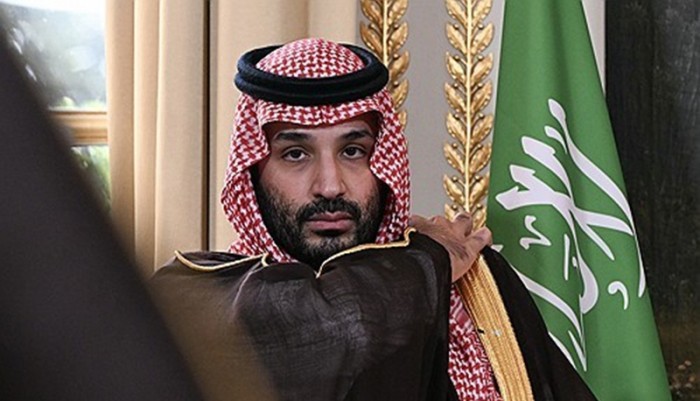 |
| Saudi Crown Prince Mohammed bin Salman attends a trade agreement signing ceremony held at the Élysée Palace in Paris, France, on August 24 (local time). / EPA, Yonhap |
As the offensive by Yemen's Houthi rebels drags on, Saudi Arabia is coming under heavy pressure across its broader economy, grappling with an economic contraction, widening fiscal deficits, and disruptions to mega development projects.
According to The Wall Street Journal on the 12th (local time), the Saudi Ministry of Finance projected that the nation's gross domestic product (GDP) will shrink by 3.6% this year. As military spending surges due to clashes with the Houthis, fiscal deficits are widening and concerns over an economic downturn are mounting.
The fallout from the war is also surfacing across the non-oil sector, an area Saudi Arabia has cultivated meticulously to reduce its reliance on crude.
According to economic research firm Capital Economics, the size of Saudi Arabia's non-oil economy contracted in the second quarter of this year compared to the previous quarter.
In the wake of recent conflicts with the Houthis, Saudi Arabia suffered setbacks to its plans to foster tourism and travel into core economic pillars, while the hosting of a major international investment conference scheduled for late this month has also been thrown into doubt.
Foreign investment in Saudi Arabia trended downward in the first half of this year, falling short of the 2030 target set by Crown Prince Mohammed bin Salman.
As defense spending and infrastructure expenses rise, concerns are also mounting that funds essential for economic diversification could be diverted elsewhere.
With data centers even becoming targets of attacks, the government's ambitions to emerge as an AI hub now face serious risk.
Saudi Arabia pours massive capital into global tech industries and artificial intelligence (AI) projects, while providing base access and airspace transit rights to the U.S. military.
Mega development projects driven by Crown Prince bin Salman are also feeling the impact. Multiple ventures, including the futuristic megacity Neom, have been halted or placed under review, and Saudi Arabia abandoned its plans in January to host the 2029 Asian Winter Games.
Securing the financial resources needed to host the 2030 Riyadh Expo and the 2034 World Cup remains an outstanding hurdle.
Plans to build the tourism and travel industry into a major economic pillar are also being derailed.
As Houthi offensives persist, uncertainty clouds whether a major international investment conference slated for late this month will proceed.
Over the past decade, Crown Prince bin Salman channeled vast sums into numerous projects requiring intricate engineering to showcase Saudi modernization and attract investment and tourism.
These include the futuristic megacity Neom, a colossal cube-shaped structure in Riyadh, and a desert ski resort.
The total cost of these ventures reaches trillions of dollars, a scale excessive for a government with an annual budget of roughly $350 billion.
Miscalculations in which Saudi Arabia underestimated the Houthis' military capabilities appear to have contributed to this worsening situation.
According to sources, Saudi intelligence grasped that Iran had pressured the Houthis to enter the conflict, but some Saudi officials assessed that the Houthis would act in their own interest rather than Iran's, given the significant military losses they had already suffered from U.S. and Israeli strikes last year.
Contrary to expectations, however, the Houthis launched an aggressive offensive in August to seize territory along the coast of the Bab el-Mandeb Strait in the Red Sea.
Fearing an escalation, Saudi Arabia refrained from providing air support while allied Yemeni government forces attempted to repel Houthi attacks on the strategic port city of Mokha, ultimately allowing Mokha and other major coastal strongholds to fall to the Houthis.
Saudi Arabia is seeking a diplomatic resolution, but circumstances appear unfavorable.
Although Crown Prince bin Salman courted ties with the U.S. by pledging to invest roughly $1 trillion in the country, the U.S. did not comply with requests for troop deployments, dispatching only military advisers.
In response, Saudi Arabia requested assistance from Pakistan, another ally, and is scouting air defense systems worldwide.
Yet stepping up military counteraction carries the risk of embroiling the kingdom even deeper into the war.
Kim Hyun-min
Most Read
-
1
Kia Sportage outperforms Mazda CX-5 in German auto..

-
2
Houthis launch successive attacks on Saudi airport..

-
3
Saudi Arabia, Iran hold first diplomatic talks to..

-
4
Saudi airport in Riyadh struck again, leaving at l..

-
5
U.S. deploys carrier, 10,000 more troops to Middle..

-
6
Five ASEAN countries welcome Myanmar coup leader

-
7
Putin's ally visits China on the 8th ahead of APEC..

PEOPLE






HEADLINE NEWS
- New White House Press Secretary links $54 billion from Seoul to Alaska LNG in first briefing
- Industrial Bank of Korea launches local subsidiary in Vietnam
- Saudi-Houthi clashes over oil facilities escalate, hitting 24 vessels in Ho..
- Bin Salman underestimates Houthi offensive, imperiling Saudi economic refor..

-
Address : In-Young Bldg., 34, Uisadang-daero 1-gil, Yeongdeungpo-gu, Seoul
Copyright by ASIATODAY CO., LTD. All rights resereved