



Hyundai Mobis bets on physical AI, but selling profitable businesses raises questions over future returns
Oct 13, 2026, 11:03 am


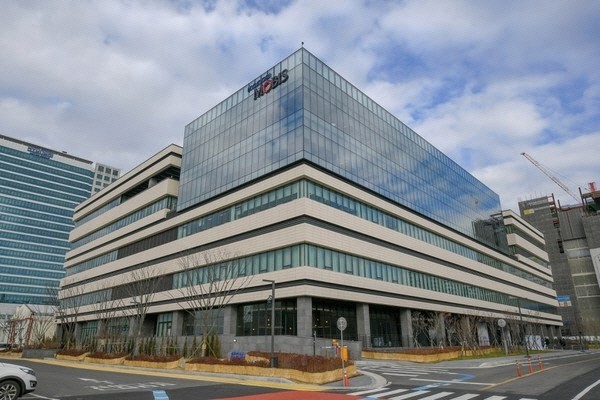 |
| View of Hyundai Mobis Uiwang Research Center. / Hyundai Mobis |
Hyundai Mobis has faced pushback from its labor union and shareholders as it accelerates a portfolio restructuring to foster future growth engines such as physical artificial intelligence (AI) and robotics. Questions are mounting over whether divesting a profitable existing business unit under the pretext of securing future growth drivers will genuinely enhance shareholder value. Because the company is shedding a stable revenue base to wager on unproven future ventures, controversy surrounding the tangible benefits of the restructuring is intensifying.
According to industry sources on the 12th, the Hyundai Mobis Office and Research Workers Branch of the Korean Metal Workers' Union (KMWU) Gyeonggi Chapter, alongside a coalition of Hyundai Mobis shareholders, are mobilizing dissenting voting rights and appraisal rights through the shareholder activism platform ACT to oppose the carve-out and divestiture of the automotive lighting business unit. The company previously executed a share purchase agreement (SPA) with French automotive supplier OPmobility on September 30 to sell the lighting unit. Industry sources value the transaction at approximately 600 billion won. The deal involves carving out the lighting business and transferring equity in the newly established entity, with the spin-off date set for April 1 next year.
The lighting business slated for sale posted roughly 2.5 trillion won in revenue last year, including overseas operations and related subsidiaries, while generating positive operating profit. Hyundai Mobis plans to shed non-core operations through the sale to concentrate capabilities on high-value future businesses, including automotive electronics and robotics. The central point of contention is how concretely the economic payoff of these future ventures has been demonstrated. The union and shareholder coalition criticized management for using distant physical AI and future projects—where near-term monetization remains uncertain—to divert attention while offloading a lucrative, profitable division at a bargain price equivalent to roughly 0.24 times its annual revenue.
Hyundai Mobis has been positioning physical AI, robotic actuator components, and next-generation mobility technologies as its core growth engines. The strategy seeks to sharpen technological competitiveness by moving away from its traditional vehicle-parts manufacturing structure. However, emerging tech ventures demand substantial upfront capital for research, development, and manufacturing capacity, whereas realizing meaningful profits often takes time. This lag makes it difficult to assume that selling off an established, profitable division automatically translates into increased corporate value simply because future sectors show high growth potential.
Another dispute centers on how much of the 600 billion won generated from the sale will actually fund future business initiatives. Carving out and transferring a division entails additional cost burdens, such as employee severance packages and compensation for supply chain partners. Considering these overheads, critics argue that the net financial benefit of the sale could prove negligible. Conversely, assessments regarding the fairness of the transaction price remain mixed. Analysts across the financial investment sector suggest 600 billion won represents a reasonable valuation given the lighting unit's margins and net asset value, indicating that evaluating the sale as a firesale solely on a price-to-sales basis is overly simplistic.
Nonetheless, calls persist for a thorough comparison between the future cash flows generated by retaining the existing business and the projected returns from reinvesting sale proceeds into new growth ventures. Hyundai Mobis maintains that the portfolio overhaul is an essential measure to navigate the evolving mobility landscape, aiming to realign the corporate structure around high-value areas to ultimately bolster enterprise and shareholder value. "The necessity of transitioning toward future mobility and the justification for divesting an individual business unit are separate issues," an industry insider observed. "The company will need to prove that reinvesting the proceeds into future technologies delivers greater value to shareholders than continuing to operate the cash-generating lighting unit."
Kim A-yoon
Most Read
-
1
Kia Sportage outperforms Mazda CX-5 in German auto..

-
2
Houthis launch successive attacks on Saudi airport..

-
3
Saudi Arabia, Iran hold first diplomatic talks to..

-
4
U.S. deploys carrier, 10,000 more troops to Middle..

-
5
Saudi airport in Riyadh struck again, leaving at l..

-
6
Putin's ally visits China on the 8th ahead of APEC..

-
7
Chinese military support and training center opens..

PEOPLE






HEADLINE NEWS

-
Address : In-Young Bldg., 34, Uisadang-daero 1-gil, Yeongdeungpo-gu, Seoul
Copyright by ASIATODAY CO., LTD. All rights resereved