



Courts lack standards to exclude AI-manipulated evidence
Sep 22, 2026, 09:26 am


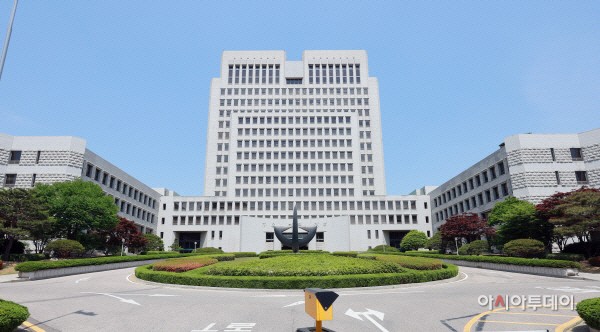 |
| The Supreme Court. / Park Sung-il |
As the possibility grows that AI-generated or manipulated materials could be submitted as evidence in court, South Korea’s judiciary still lacks specific procedures and standards for screening them out.
Critics say the judicial system is failing to keep pace with technological advances, raising the risk that manipulated evidence could be used as a key basis for court rulings.
According to AsiaToday’s reporting on Sept. 21, the Supreme Court’s National Court Administration said in a written response to a question from the newspaper that “there are no separate procedures or standards for excluding evidence that apply specifically to AI-manipulated evidence.”
The question asked whether there were concrete procedures or standards under the Criminal Procedure Act for screening AI-generated or manipulated digital evidence submitted in court.
Another concern is that the judiciary has not been discussing specific procedures or standards for detecting such evidence.
After multiple cases involving fabricated statutes and court precedents generated with AI were reported between November last year and March this year, the National Court Administration formed a task force to explore institutional improvements in response to false claims and evidence submitted using AI.
However, AsiaToday found that the task force did not examine detection technologies for identifying AI-manipulated evidence or procedures and standards based on the results of such detection.
The judiciary takes the position that AI detection results should be used only as reference material when determining whether evidence is authentic and that courts should be cautious about immediately excluding evidence solely on that basis.
Ultimately, judges must determine whether AI-manipulated evidence is admissible by considering a range of factors under existing procedural laws, including how the evidence was created and submitted and the results of expert examinations.
With no separate standards in place for AI-manipulated evidence, critics warn that individual courts could reach different conclusions about the authenticity and credibility of the same type of evidence.
Correcting a ruling could also be difficult even if manipulated evidence was used as key evidence and the judgment became final.
Courts cannot independently reassess evidence that formed the basis of a final judgment, and even if it is later discovered that AI-manipulated evidence played a decisive role, that fact alone would not automatically overturn the ruling.
Under the current Criminal Procedure Act, a retrial may be granted not simply when documents or other evidence used in the original judgment are found to have been forged or altered, but when the forgery or alteration has been established by a final judgment.
This means that even if manipulation is discovered, additional proceedings may be needed to conclusively establish it, potentially delaying relief for a considerable period.
A Supreme Court official said, “We will continue to review measures needed in judicial practice while monitoring the accumulation of relevant cases, advances in AI technology, changes in the court environment and legislative discussions.”
Son Seung-hyun
Most Read
-
1
Celltrion’s Omlyclo gains ground in major European..

-
2
Trump demands rates fall below 1% as Fed hikes for..

-
3
Trump makes $1 trillion bet ahead of midterm elect..

-
4
Iran resumes ballistic missile production, assembl..

-
5
Samsung Electronics, Mistral AI to jointly develop..

-
6
Trump warns countries not helping U.S. must pay re..

-
7
Apple launches first foldable, 1 million won prici..

PEOPLE






HEADLINE NEWS
- Trump to roll out ‘unprecedented welcome’ for Xi with B-2 bombers, F-22 fighters
- S. Korea, U.S., and Japan form united front on Taiwan and economic coercion..
- Trump administration moves to impose sweeping sanctions on International Cr..
- Xi to make state visit to U.S. Sept. 23-25, dispelling rumors over his heal..

-
Address : In-Young Bldg., 34, Uisadang-daero 1-gil, Yeongdeungpo-gu, Seoul
Copyright by ASIATODAY CO., LTD. All rights resereved