



China presses Iran at Saudi request to restrain Houthi military actions
Sep 18, 2026, 01:08 pm


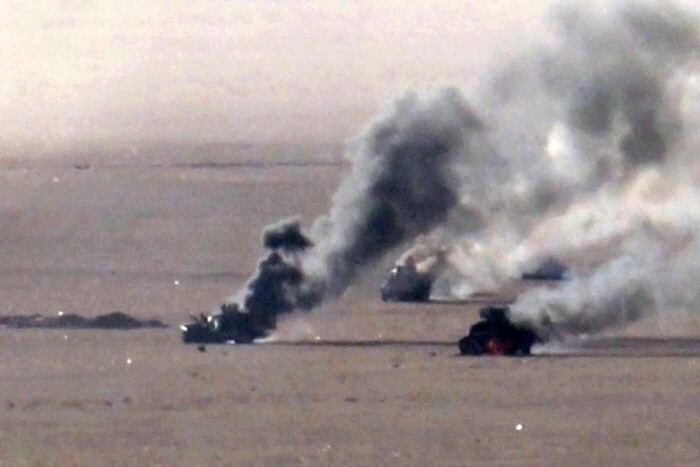 |
| A handout picture released by the Ansar Allah (Houthi rebels) Media Center on the 15th local time shows a military vehicle the Houthis claimed to have attacked in Al-Jawf. The group declared a naval blockade against Saudi Arabia, attacking Saudi vessels in the Red Sea and resuming clashes with Saudi government forces. / AFP, Yonhap |
China has asked Iran to rein in military actions by Yemen's Houthi rebels at the request of Saudi Arabia, Reuters reported on the 17th local time.
According to three Iranian sources familiar with the matter, the Saudi government reportedly asked China to mediate as concerns grew over the safety of Saudi crude export routes and maritime logistics, following recent advances by the Iran-backed Houthi rebels toward the Red Sea coast and near the Bab el-Mandeb Strait.
While China publicly urges restraint, peaceful dialogue, and the guarantee of safe navigation, it has internally conveyed that Iran should exercise its influence over the Houthis to protect key transport corridors. However, direct measures such as economic pressure were reportedly not mentioned during the communication.
The Chinese Foreign Ministry told Reuters, "China does not want regional tensions to spread to Yemen and the Red Sea," adding that "escalating instability serves the interest of no party."
The ministry went on to state that the sovereignty and security of all nations must be respected, and facilities essential to civilian livelihoods must not be targeted, adding, "China urges an end to actions that further complicate the situation, and calls for resolving the issue through dialogue and negotiation."
China is a major buyer of Iranian crude and has been Iran's largest trading partner for more than a decade.
According to commodities data analytics firm Kpler, China's Iranian crude purchases averaged about 1.4 million barrels per day in 2025, accounting for more than 80% of Iran's seaborne crude exports.
A senior Western diplomat in the region noted, "Beijing is one of the few countries that can pressure Iran to rein in the Houthis."
Alex Vatanka, director of the Iran Program at the Middle East Institute (MEI) in Washington, explained that while Beijing may oppose U.S. pressure on Iran, China's interests in the Middle East extend far beyond Iran.
More than half of China's crude oil imports come from the region, and trade volume between China and member states of the Gulf Cooperation Council (GCC) amounts to roughly $300 billion annually.
Vatanka pointed out, "Iran can disrupt Hormuz, but at some point, that leverage begins to hurt the very country (China) that Tehran is increasingly relying upon."
According to the Iranian sources, it remains unclear whether Tehran will act on Beijing's concerns. Nevertheless, amid persistent hostility with the U.S., relations with China carry substantial economic and strategic weight for Iran, Reuters reported.
Experts view whether China is genuinely willing to exercise its diplomatic and economic leverage over Iran as a key litmus test.
Lee Jeong-eun
Most Read
-
1
Celltrion’s Omlyclo gains ground in major European..

-
2
Trump demands rates fall below 1% as Fed hikes for..

-
3
Trump makes $1 trillion bet ahead of midterm elect..

-
4
Iran resumes ballistic missile production, assembl..

-
5
Samsung Electronics, Mistral AI to jointly develop..

-
6
Trump warns countries not helping U.S. must pay re..

-
7
Apple launches first foldable, 1 million won prici..

PEOPLE






HEADLINE NEWS
- Trump to roll out ‘unprecedented welcome’ for Xi with B-2 bombers, F-22 fighters
- S. Korea, U.S., and Japan form united front on Taiwan and economic coercion..
- Trump administration moves to impose sweeping sanctions on International Cr..
- Xi to make state visit to U.S. Sept. 23-25, dispelling rumors over his heal..

-
Address : In-Young Bldg., 34, Uisadang-daero 1-gil, Yeongdeungpo-gu, Seoul
Copyright by ASIATODAY CO., LTD. All rights resereved