



Young Japanese in their 20s rush to buy homes amid fears of being priced out forever
Sep 07, 2026, 01:05 pm


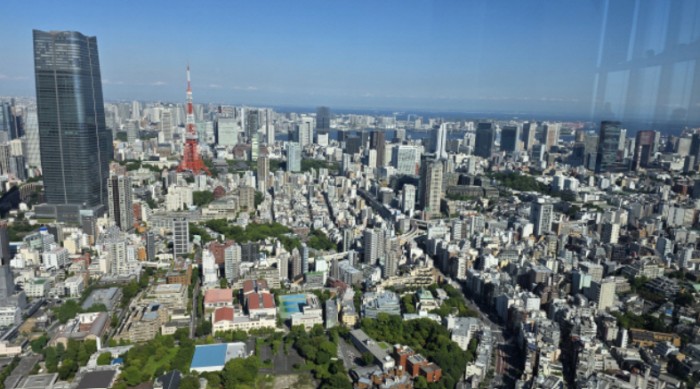 |
| Downtown Tokyo. / Tokyo Correspondent Choi Young-jae |
Young Japanese in their 20s, who had long been passive about buying homes, are aggressively entering the housing market. Analysts attribute this shift to mounting anxiety that further delays could price them out permanently amid relentless home price gains and rising interest rates.
According to an analysis by Japan's Sankei Shimbun on the 6th based on the Ministry of Internal Affairs and Communications' Family Income and Expenditure Survey, the homeownership rate among multi-person households with a householder aged 29 or younger reached 40.7% last year. This marks the highest level since records began in 2000.
Homeownership among young households hovered in the low 20% range through the early to mid-2000s. After fluctuating over the years, the figure stayed in the low 30% range from 2015 through roughly 2023, before climbing sharply starting in 2024 to breach the 40% mark for the first time last year.
Condominium prices across Japan have indeed surged significantly. According to the Real Estate Economic Institute, the average price of a newly built condominium in the greater Tokyo metropolitan area surpassed 100 million yen (roughly 860 million won) for the first time in the first half of this year. In the Kinki region, including Osaka, prices reached 54.53 million yen, marking the second-highest level on record following the first half of last year and exceeding the 52.21 million yen recorded during the bubble economy in the first half of 1991.
This shift marks a departure from the purchasing behavior seen among young people following the collapse of the bubble economy in the early 1990s. When the myth of ever-rising real estate values shattered back then, younger generations strongly favored renting over buying.
Recently, however, persistent price increases coupled with an upward trajectory in interest rates have fueled concerns that delaying home purchases will only make homeownership more elusive. While young people once avoided buying due to the risk of price drops, they are now moving to secure homes before prices and mortgage rates climb even higher.
Ultra-long-term mortgage products rolled out by financial institutions are also fueling this wave of purchases. Japanese lenders have recently introduced mortgages with repayment periods extending up to 50 years, and Sankei Shimbun identified the proliferation of such financing options as a key driver accelerating home purchases among the young.
Nonetheless, because home prices are outpacing income growth, financial strain on buyers, including young adults, is mounting. While housing costs equivalent to six to seven times annual household income are typically considered reasonable, instances of buyers purchasing homes well above that threshold are steadily increasing.
Nam Mi-kyung
Most Read
-
1
Celltrion nears additional contract with major U.S..

-
2
Putin proposes trilateral U.S.-China-Russia summit..

-
3
U.S. weighs dropping MOAB, world's most powerful n..

-
4
"Aren't those foreigners on welfare?": M..

-
5
Attention centers on APEC for possible Trump-Xi-Pu..

-
6
Saudi Arabia, Iran hold first diplomatic talks to..

-
7
Saudi airport in Riyadh struck again, leaving at l..

PEOPLE







-
Address : In-Young Bldg., 34, Uisadang-daero 1-gil, Yeongdeungpo-gu, Seoul
Copyright by ASIATODAY CO., LTD. All rights resereved