



North Korea pours out backlash against UFS
Aug 14, 2026, 01:51 pm


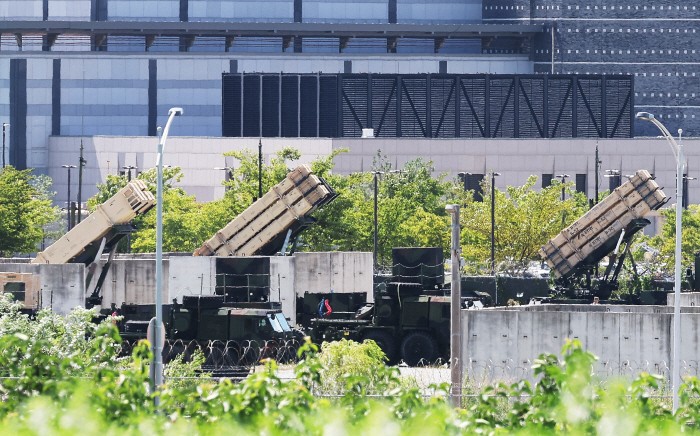 |
| Patriot missiles are stationed at Camp Humphreys in Pyeongtaek, Gyeonggi Province, on the 12th, the day North Korea launched a ballistic missile toward the East Sea ahead of the Korea-U.S. joint exercise "Ulchi Freedom Shield" (UFS). / Yonhap |
North Korea voiced strong objections on the 14th to the ongoing Korea-U.S. joint exercise "Ulchi Freedom Shield" (UFS), saying its position of "absolutely refusing to tolerate any enemy threat or challenge will be expressed more clearly."
North Korea issued a statement from a Foreign Ministry spokesperson through its state news agency KCNA that day. The ministry said the U.S. and South Korea had officially announced UFS would begin on the 17th, and that the U.S. did not hide that the exercise's purpose is to complete preparations for actual military confrontation with North Korea, arguing this amounts to an admission that the exercise is, in essence, a rehearsal for a war of aggression.
The statement added that applying a new level of deterrence to match a new level of threat is North Korea's consistent principle for ensuring its security, and that its resolve to thwart external hostile acts and absolutely defend its highest national security interests remains unshakeable. It warned that the "grave standoff of force" created by hostile states would not be tolerated, and that North Korea's stance toward its adversaries would be expressed more clearly going forward.
Experts assessed that this latest statement is aimed at recasting the nature of the joint exercise to bolster justification for North Korea's nuclear buildup, while positioning itself as a "spokesperson" voicing what China and Russia themselves want to say.
Yang Moo-jin, chair professor at the University of North Korean Studies, said North Korea has recently been criticizing South Korea, the U.S., and Japan all at once, explaining that this is an attempt to frame the situation as a "South Korea-U.S.-Japan" versus "North Korea-China-Russia" military confrontation, casting South Korea, the U.S., and Japan as the ones undermining regional stability. He added that North Korea has effectively taken on the role of spokesperson for what China and Russia want said, highlighting a regional security standoff and positioning itself and the division of the Korean Peninsula as the front line of a bloc-based confrontation, in hopes of reaping reflected benefits.
Regarding North Korea's continued silence on its recent ballistic missile launches, Yang suggested this likely reflects an effort to avoid international criticism and concern over potential military gaps if additional troops were deployed elsewhere. He said North Korea appears to be trying to sidestep international criticism by building a narrative of regional tension through condemnation, adding that given concerns over a temporary military gap in the event of further troop deployments, Pyongyang may be prioritizing an accumulation of warning-style statements for now.
Lee Han-sol
Most Read
-
1
Trump shares map on social media labeling Strait o..

-
2
Trump demands rates fall below 1% as Fed hikes for..

-
3
Celltrion seeks rheumatoid arthritis indication ex..

-
4
Chinese e-commerce giants AliExpress, Temu and She..

-
5
Trump warns countries not helping U.S. must pay re..

-
6
China expels No. 2 military official Zhang Youxia..

-
7
Houthi rebels release video claiming downing of Sa..

PEOPLE






HEADLINE NEWS
- N. Korea declares nuclear status irreversible and condemns S. Korea, U.S., Japan at UN
- Japan tracks Ukraine fiber-optic drones, bolsters SDF electronic warfare
- Wave of undocumented Chinese caught in Argentina after Brazil's visa-free m..
- France's far-right National Rally forms first-ever parliamentary group in S..

-
Address : In-Young Bldg., 34, Uisadang-daero 1-gil, Yeongdeungpo-gu, Seoul
Copyright by ASIATODAY CO., LTD. All rights resereved