



Police take on supplementary investigations, link two AI systems to 1 million lower-court rulings
Aug 07, 2026, 09:16 am


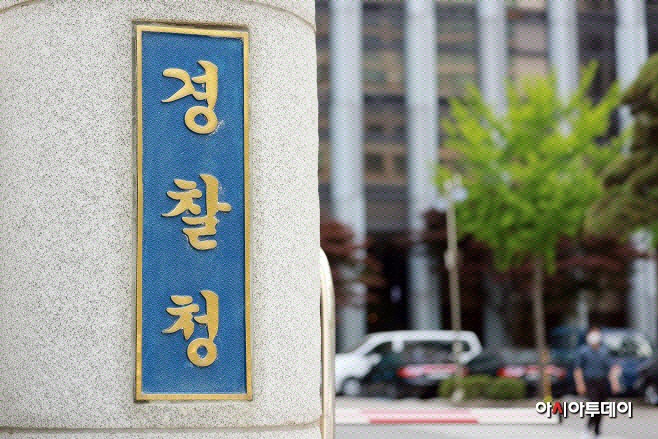 |
| National Police Agency. /Reporter Park Seong-il |
As the abolition of prosecutors' direct investigative authority and direct supplementary investigative power shifts greater investigative responsibility onto police, the National Police Agency plans to load about 1 million lower-court rulings into an AI system and link it with its existing investigation-support AI. The move aims to reduce the burden on frontline investigators — searching case law, reviewing legal reasoning, and drafting documents — given the shortened deadline for supplementary investigations.
According to the National Police Agency on the 6th, Acting Commissioner General Yoo Jae-sung instructed the National Office of Investigation and the Future Policing Policy Bureau at a weekly meeting on the 3rd to review ways to link the "Police Investigation Support AI" with the "Field Policing AI Assistant." Yoo asked that field officers' input be actively reflected in the investigation support AI and that it be linked with the field policing AI assistant as well.
The Field Policing AI Assistant is a project that provides field officers with situation-specific response information based on lower-court rulings, criminal law materials, and work manuals. When case facts are entered, it analyzes similar precedents and relevant laws to help guide investigative direction and legal review.
The existing investigation support AI is loaded mainly with Supreme Court rulings, statutes, and internal manuals, but does not sufficiently cover first- and second-instance rulings, which contain detailed facts and specific judicial reasoning. Police plan to secure about 1 million such lower-court rulings by purchasing or leasing them from private legal tech companies. Development is set to begin in the second half of this year, with officials in discussions aiming for field deployment next year. A National Police Agency official said that searching lower-court rulings only through a separate system could limit its usefulness in the field, adding that the agency is exploring ways to make those rulings and related response features accessible through the existing investigation support AI as well.
This review began separately from the official agenda of the police's internal reform task force, after Acting Commissioner Yoo called for linking the two projects to ease the burden on frontline officers. The investigation support AI combines generative AI with the Korean Information system for Criminal justice Services (KICS) to help summarize witness statements and investigation reports, organize case issues, search laws and precedents, and draft search and seizure warrant applications. It was rolled out nationwide in November of last year and will continue to be upgraded through 2027.
This review comes against the backdrop of the revised Criminal Procedure Act, set to take effect October 2. The revised law abolishes prosecutors' direct investigative authority and direct supplementary investigative power, unifying investigative authority under judicial police officers. When a prosecutor requests supplementary investigation, police must, in principle, complete it within one month, with any extension not to exceed two months total.
Acting Commissioner Yoo said, "It's important to remember that the revised Criminal Procedure Act doesn't grant police new authority — it places heavy responsibility and obligation on us," adding, "We need to prepare so that no investigative gaps or public inconvenience arise."
Seol So-young
Most Read
-
1
Trump demands rates fall below 1% as Fed hikes for..

-
2
Celltrion seeks rheumatoid arthritis indication ex..

-
3
Chinese e-commerce giants AliExpress, Temu and She..

-
4
Trump warns countries not helping U.S. must pay re..

-
5
Turkish Airlines named main club partner of Liverp..

-
6
China expels No. 2 military official Zhang Youxia..

-
7
Houthi rebels release video claiming downing of Sa..

PEOPLE







-
Address : In-Young Bldg., 34, Uisadang-daero 1-gil, Yeongdeungpo-gu, Seoul
Copyright by ASIATODAY CO., LTD. All rights resereved