



Iran, Oman agree on new Hormuz route, but not full reopening
Aug 06, 2026, 09:10 am


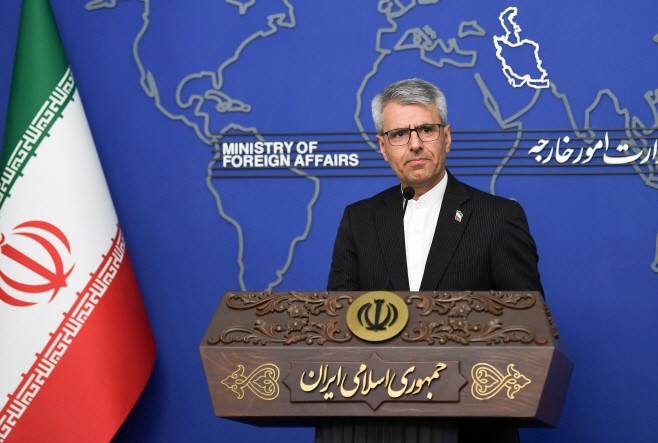 |
| Iranian Foreign Ministry spokesman Esmaeil Baghaei holds a regular briefing in Tehran on the 3rd (local time). / Xinhua-Yonhap |
Iran and Oman have agreed on the coordinates for shipping routes through the Strait of Hormuz and are finalizing a joint statement, Iranian Foreign Ministry spokesman Esmaeil Baghaei said on the 5th (local time).
U.S. President Donald Trump suggested a deal could be close, saying "we're going to know within 48 hours." Iran said the agreement does not mean the strait is fully reopening, and that safe passage will be difficult to guarantee as long as the U.S. maritime blockade of Iranian ports continues. Foreign media outlets noted that the scope of Iran's control over shipping and whether fees will be imposed remain the key sticking points.
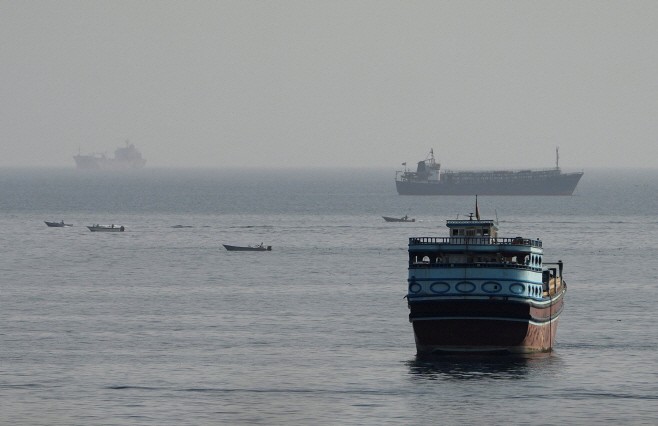 |
| Vessels sail through the Strait of Hormuz off Musandam, Oman, on the 3rd (local time). / Reuters-Yonhap |
Iran, Oman agree on Hormuz route coordinates after two months of talks; joint statement in final stages
At a press briefing that day, spokesman Baghaei said Iran and Oman have agreed on the geographic coordinates of the shipping route, and that a joint statement outlining the key points of agreement is now in the final stage of review and drafting, Iran's state news agency IRNA reported.
Baghaei explained that the two countries have spent the past two months negotiating a safe shipping route for commercial vessels, with relevant Iranian agencies reviewing technical, legal, security, and environmental issues.
Baghaei warned, however, that the agreement between the two countries alone cannot guarantee ship safety as long as the U.S. maritime blockade and threats against Iran continue. He said the agreement would be finalized "if certain third parties do not interfere."
The U.S. also raised the possibility of an early deal. In a Fox News interview recorded the day before, Trump had said, "The Strait of Hormuz is going to be open soon, or Iran is going to be hit very hard." That same night in Los Angeles, he told reporters, "We're going to know within 48 hours."
U.S. Secretary of State Marco Rubio confirmed that the U.S. is involved in the Hormuz negotiations between Oman and Iran, saying he hopes an agreement is reached soon. However, Iranian Deputy Foreign Minister Kazem Gharibabadi drew a clear line that day, saying, "We have not held any negotiations with the U.S. recently."
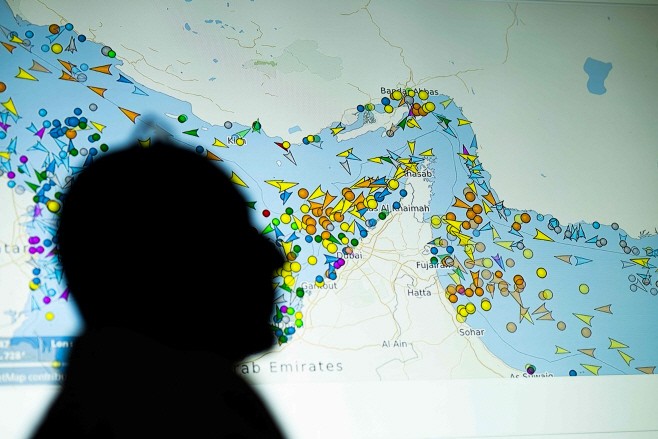 |
| A man stands in front of a large screen in Nicosia, Cyprus, on May 4 (local time), showing vessel movements in the Strait of Hormuz on a ship-tracking website. Captain Mohammad Shafiqul Islam, isolated in international waters in the Gulf for 115 days, watched missiles light up the night sky while rationing food and water for his crew. The 51-year-old Bangladeshi sailor, after returning home, told AFP that he tried to stay calm knowing he was responsible for 31 lives, a ship worth $40 million, and cargo worth $8.2 million. / AFP-Yonhap |
Route entering Hormuz to hug Iranian coast, exit route near Oman — proposals split between 60-day and 2-4 month terms
According to the draft reported by foreign media, vessels entering the Persian Gulf would use a route near the Iranian coast, while vessels exiting would use a route near Oman. The Wall Street Journal and Reuters reported that this structure would give Iran a degree of control over vessels entering the Persian Gulf.
Deputy Minister Gharibabadi, however, stressed that both entering and exiting vessels are designed to pass through Iranian territorial waters for part of the route, describing the agreement as a new operating framework different from the past 60 years rather than a full reopening, according to IRNA.
Sources differed on how long the temporary corridor would remain in effect. The WSJ reported the draft's validity period as 60 days, while Gharibabadi said the corridor could operate for two to four months. Two regional officials briefed on the negotiations told the AP that the two countries' negotiating teams have finalized the draft and are now awaiting final approval from Iranian Supreme Leader Ayatollah Mojtaba Khamenei.
This round of talks also represents an attempt to restore an earlier agreement that had collapsed. Iran and the U.S. signed a memorandum of understanding (MOU) on June 17 to extend a ceasefire and restore shipping to pre-war levels. The Financial Times assessed that the agreement aimed to restore shipping to pre-war levels without tolls, while also laying the groundwork for broader end-of-war negotiations, including over Iran's nuclear program.
However, the two sides clashed over shipping routes and control of the strait, and the agreement collapsed as vessel attacks and retaliatory strikes continued.
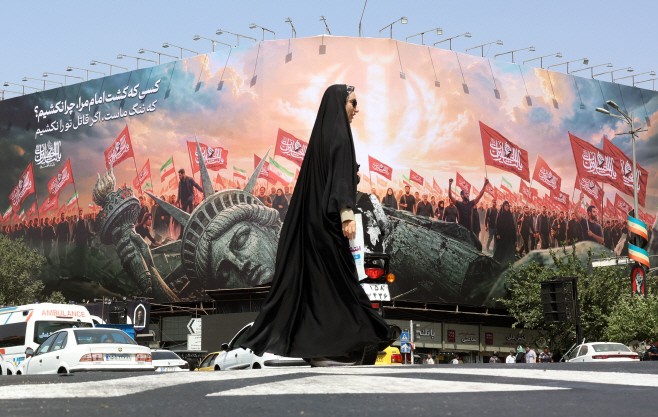 |
| A veiled Iranian woman walks past an anti-U.S. billboard at Enghelab Square in central Tehran on the 3rd (local time). / EPA-Yonhap |
U.S., Iran at odds over Iran's control and fees — 8 shipping bodies oppose mandatory tolls
The biggest sticking points are the scope of Iran's control and the cost to shipping. According to a senior Iranian source cited by Reuters, Iran is asking for 5-7% of cargo value, while Oman is discussing around 3%.
The U.S. opposes any arrangement in which Iran approves vessel passage or imposes mandatory fees. Reuters assessed that recognizing Iranian authority over entering vessels would amount to a major concession, shifting the postwar regional balance of power in Iran's favor.
Accounts of the draft's fee structure differed by outlet. The New York Times reported that Iranian officials proposed a service fee — covering environmental protection and vessel security and personnel costs — rather than a toll, with revenue split evenly between Iran and Oman.
A U.S. official pushed back, telling the NYT that Iran's characterization was inaccurate and that the temporary corridor does not involve Iranian approval, authorization, or tolls.
The WSJ, however, reported that while the draft bans tolls and service fees, it may not prohibit Iran from receiving voluntary payments for security and search-and-rescue costs.
Bloomberg reported that the shipping industry opposes any mandatory charge regardless of what it's called. Eight shipping organizations — including the International Chamber of Shipping (ICS), the Baltic and International Maritime Council (BIMCO), and the World Shipping Council (WSC) — asked the UN and the International Maritime Organization (IMO) to block mandatory tolls, warning that charges in the Strait of Hormuz could spread to other maritime chokepoints and deepen uncertainty in global shipping and trade.
Oman also conveyed opposition to mandatory tolls to the IMO, while remaining open to voluntary contributions for safety, security, and environmental services.
Bloomberg reported that Iran had previously and irregularly demanded as much as $2 million (2.847 billion won) per voyage.
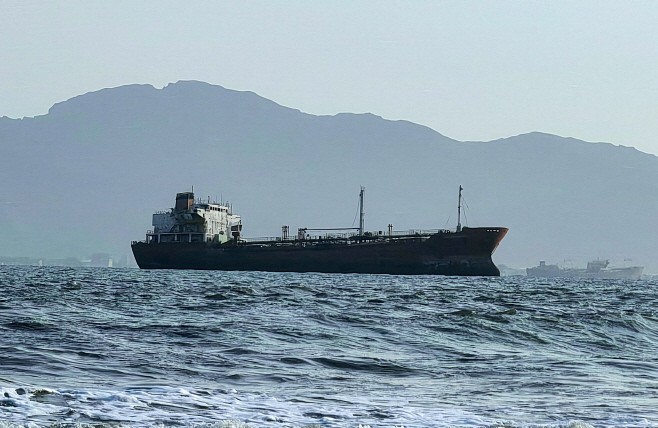 |
| A vessel passes off the coast of Aden port, Yemen, on July 23 (local time). Ship traffic in the area continued even after the Iran-linked Houthi rebels claimed to have attacked a Saudi tanker with missiles and drones. / Reuters-Yonhap |
Brent holds at $79.45 — U.S. oil inventories rise, Iran's state oil firm hit with frozen accounts
Global oil prices closed roughly flat amid hopes for negotiation progress. October-delivery Brent crude rose 9 cents (0.11%) to close at $79.45 per barrel. September-delivery U.S. WTI fell 55 cents (0.73%) to close at $75.22. The previous day, Brent had fallen 5% on news of negotiation progress, closing below $80 per barrel for the first time since July 13.
Rising U.S. crude inventories capped the upside. According to the U.S. Energy Information Administration (EIA), commercial crude inventories rose by 2.5 million barrels last week to 407 million barrels, compared with market expectations of a 1.5 million barrel decline.
Phil Flynn, senior analyst at oil market analytics firm Price Futures Group, said this agreement looks just as fragile as past ones, noting that previous deals have not held up for long.
Meanwhile, financial strain on Iran's energy sector also came to light. Iran's semi-official Fars news agency reported that the Bank of Industry and Mine froze the accounts of the National Iranian Oil Company (NIOC) over rising debt. Mehdi Ghazanfari, head of Iran's National Development Fund (NDF), said delays in developing the Azadegan oil field would make it difficult for NIOC to repay the $17 billion (24.1995 trillion won) it owes the fund out of oilfield revenue.
Iran warns of retaliation against Gulf energy facilities if U.S. strikes again; Houthis claim attack on Saudi tanker
Military threats continued alongside the diplomatic talks. Reuters reported that Iranian Foreign Minister Abbas Araghchi conveyed to the foreign ministers of Saudi Arabia, Turkey, and Qatar, as well as Pakistan's army chief, that Iran would strike U.S. assets and energy facilities in the Gulf region if the U.S. attacks Iranian infrastructure again. An Iranian official said potential targets could include oil refineries, power grids, water facilities, transportation networks, and oil fields.
In response, Saudi Crown Prince Mohammed bin Salman asked President Trump to hold off on military action and pursue negotiations and a ceasefire instead.
At the same time, Saudi Arabia warned it would respond militarily if its own territory is attacked. Qatar and Oman also urged the U.S. to resume negotiations and prevent further conflict.
Risks to maritime shipping also spread to the Red Sea and the Gulf of Aden. Iran-backed Houthi rebels in Yemen claimed to have struck the Saudi tanker Wafa off Yanbu in the Red Sea and the vessel Daisy in the Gulf of Aden with ballistic missiles; Saudi Arabia has not confirmed the claims. Yanbu is a key port through which Saudi Arabia exports crude transported via its east-west pipeline, bypassing the Strait of Hormuz. The Houthis declared last month that they would block the passage of Saudi-linked vessels through the Bab-el-Mandeb Strait.
Sanam Vakil, director of the Middle East program at UK think tank Chatham House, told the WSJ that while the agreement could lead to a temporary halt in hostilities, a final settlement remains far off, and that the U.S. and Iran are both mindful of the possibility that conflict could resume around the time of the U.S. midterm elections in November.
Ha Man-ju
Most Read
-
1
Celltrion’s Omlyclo gains ground in major European..

-
2
Trump demands rates fall below 1% as Fed hikes for..

-
3
Trump makes $1 trillion bet ahead of midterm elect..

-
4
Iran resumes ballistic missile production, assembl..

-
5
Samsung Electronics, Mistral AI to jointly develop..

-
6
Trump warns countries not helping U.S. must pay re..

-
7
Apple launches first foldable, 1 million won prici..

PEOPLE






HEADLINE NEWS
- Trump to roll out ‘unprecedented welcome’ for Xi with B-2 bombers, F-22 fighters
- S. Korea, U.S., and Japan form united front on Taiwan and economic coercion..
- Trump administration moves to impose sweeping sanctions on International Cr..
- Xi to make state visit to U.S. Sept. 23-25, dispelling rumors over his heal..

-
Address : In-Young Bldg., 34, Uisadang-daero 1-gil, Yeongdeungpo-gu, Seoul
Copyright by ASIATODAY CO., LTD. All rights resereved