



Empathy card game rides Temu wave to reach 20-30s, Couple Hero on growth track
Aug 05, 2026, 09:54 am


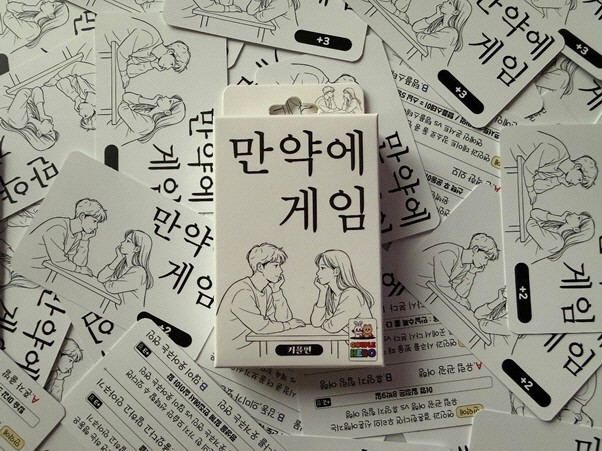 |
| Couple Hero's popular empathy card game "What If Game." The cards feature questions for couples, like "If we got married, where would we go for our honeymoon?" and "A partner who makes me laugh vs. a partner who laughs a lot at what I say." / Couple Hero |
An empathy-driven card game that sparks conversation among people in their 20s and 30s in Korea is emerging as a new consumption trend. According to Temu on the 3rd, Couple Hero, a small domestic card and board game maker that sells through the platform, is tapping into this demand with a card game featuring questions that make it easy for couples to naturally talk about their relationship — such as how much personal time is appropriate between partners, or whether a long-distance marriage could work.
Couple Hero has steadily sold its products through its own online store, other domestic e-commerce platforms, and offline stationery shops. Since joining Temu last year, it has been able to more actively reach college students and young couples in their 20s and 30s — the core consumer base for card games.
Before joining Temu, Couple Hero had difficulty gauging how well its card games were actually reaching its target audience. Heo Pil-kyung, CEO of Couple Hero, said, "Even as the product's popularity grew, it wasn't easy to tell whether it was actually reaching our core target of people in their 20s and 30s."
Couple Hero joined Temu's Korea Seller Program in May of last year. Within a few months of joining, monthly sales rose to around 400-500 units, and sales performance has continued on a steady upward trend since.
Currently, sales through Temu account for about 30% of Couple Hero's total revenue. According to the company, orders have concentrated around college towns nationwide, establishing Temu as a new sales channel for reaching younger consumers.
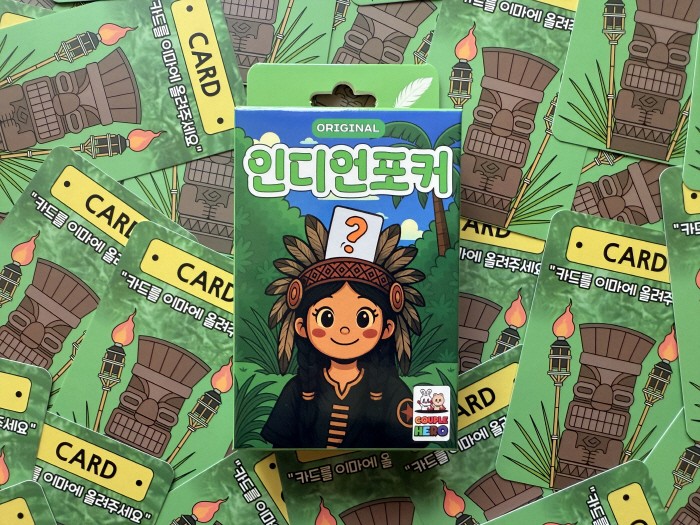 |
| Couple Hero's "Indian Poker." / Couple Hero |
CEO Heo explained that Temu's consumption pattern differs from that of existing domestic e-commerce platforms. On most domestic platforms, consumers typically search for a specific product before buying, whereas on Temu, many customers discover popular card and board games by chance while browsing. Heo said this pattern of discovery has helped the company reach new customer segments it previously had little access to.
The company's flagship product, "What If Game," took more than six months to develop. Psychology experts were involved in the development process, with a focus on selecting and refining questions that could naturally spark conversation, carefully curating questions that combine fun with meaning.
Couple Hero has since expanded its lineup with "Indian Poker," a deduction-based icebreaker card game. This game has increasingly been used by elementary and middle school teachers in class activities and relationship-building programs. Heo said teachers are using the game to help students get to know each other better and grow closer.
Building on the customer base gained through its conversation-centered card games, Couple Hero is now also working on developing board games. Heo said customers often tell the company they thought they knew their partner well, but discovered a new side of them they hadn't noticed before while playing the game.
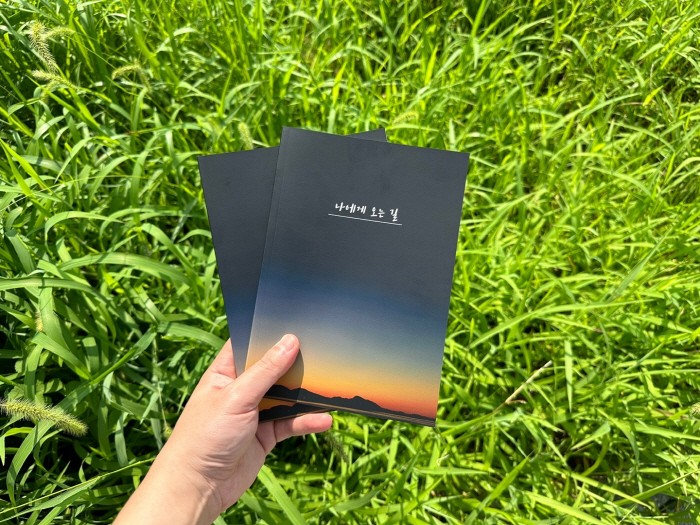 |
| Couple Hero's "The Way to Me." / Couple Hero |
The following is a Q&A with Couple Hero CEO Heo Pil-kyung.
What led you to create an empathy-driven card game?
"I felt Korea was becoming an era where conversation between couples, families, and friends was gradually diminishing. One day at a cafe, I watched friends and couples all staring at their phones and felt a sense of regret. Around that time, I was thinking about starting a business without much capital, and wanted to create a game that could help people talk to each other more — that's how it began."
What led you to join Temu?
"It's been about three years since I started the business, and I joined Temu through its local seller program in May of last year. We were already selling on our own website, other platforms, and offline stores, but it was hard to be confident that our products were adequately reaching our core customer base — college students and young couples in their 20s and 30s. I hoped Temu would let us reach more consumers and raise brand awareness."
What's the current scale of your sales through Temu?
"Within a few months of joining, monthly sales reached 400 to 500 units, and sales have continued to grow steadily. Currently, about 30% of our total revenue comes through Temu."
What's the biggest change since joining Temu?
"The biggest change is that we've gained a new customer base. On existing platforms, consumers often search for a specific product before buying, but on Temu, many people discover our card games by chance while browsing and end up buying them. That's helped us reach new customers we couldn't easily reach before."
What kind of content is in your empathy-driven card games?
"'What If Game' is a card game where players ask and answer questions about various hypothetical situations, sharing their thoughts with each other. Psychology experts were involved in the development process, and it took about six months to complete. We selected and refined questions that could naturally spark conversation — for example, questions like where you'd want to go for a honeymoon if you got married, or whether you'd prefer a partner who makes you laugh or one who laughs a lot at what you say. We carefully chose questions that combine both fun and meaning."
What are your plans going forward?
"I want to expand our lineup beyond card games into board games as well. My goal is to create games everyone can enjoy together — a brand unlike any other. Our deduction-based icebreaker card game 'Indian Poker' is also increasingly being used in elementary and middle schools, so we plan to keep developing it further."
Jeong Moon-kyung
Most Read
-
1
Celltrion’s Omlyclo gains ground in major European..

-
2
Trump demands rates fall below 1% as Fed hikes for..

-
3
Trump makes $1 trillion bet ahead of midterm elect..

-
4
Iran resumes ballistic missile production, assembl..

-
5
Samsung Electronics, Mistral AI to jointly develop..

-
6
Trump warns countries not helping U.S. must pay re..

-
7
Apple launches first foldable, 1 million won prici..

PEOPLE






HEADLINE NEWS
- Trump to roll out ‘unprecedented welcome’ for Xi with B-2 bombers, F-22 fighters
- S. Korea, U.S., and Japan form united front on Taiwan and economic coercion..
- Trump administration moves to impose sweeping sanctions on International Cr..
- Xi to make state visit to U.S. Sept. 23-25, dispelling rumors over his heal..

-
Address : In-Young Bldg., 34, Uisadang-daero 1-gil, Yeongdeungpo-gu, Seoul
Copyright by ASIATODAY CO., LTD. All rights resereved