



Cheongung-II begins operations as first unit deployed under 2026 fielding plan
Aug 03, 2026, 10:12 am


 |
| / Defense Acquisition Program Administration |
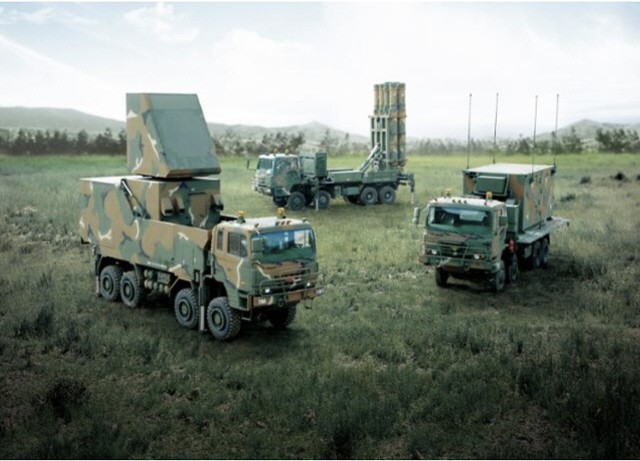
The Ministry of National Defense announced on August 3 that the first equipment among this year's planned deployment quantity for the Cheongung-II (M-SAM-II) has been deployed for actual operation starting this month.
On this day, the Ministry of National Defense stated that the first equipment among the 2026 deployment plan for the Cheongung-II was deployed to a missile defense battery located in Gyeonggi Province, and began full-scale missions on August 1 following simulated training reflecting actual battery operational environments.
To strengthen defense capabilities against North Korea's nuclear and missile threats, the South Korean military has been sequentially deploying and operating the medium-range surface-to-air guided weapon Cheongung-II, which is responsible for lower-tier defense in the terminal phase, since 2020.
As Cheongung-II operational units expand, lower-tier terminal phase defense capabilities will be strengthened, and once the long-range surface-to-air guided weapon (L-SAM) is deployed in the late 2020s, a robust multi-layered defense system covering both upper and lower terminal tiers is expected to be established.
L-SAM, the South Korean military's first upper-tier terminal defense system, can expand the missile defense zone to higher altitudes and broader areas based on high-level precision guidance technology. Following an interception in the upper tier, additional engagements by Patriot and Cheongung-II in the lower-tier terminal defense zone will secure more interception opportunities than a single engagement.
Based on accumulated technological capability, the South Korean military is also pushing forward with the development of next-generation interception systems. It is currently developing the M-SAM-III with enhanced engagement capabilities, the L-SAM-II (high-altitude interceptor missile) with an expanded defense domain, and a long-range artillery interception system capable of responding to North Korea's long-range artillery threats. In the future, high-power laser weapons are also under consideration for development as a means of missile defense.
Kim Gi-young, Director General of the Defense Forces Policy Bureau at the Ministry of National Defense, said, "We will deploy subsequent quantities without a hitch to further strengthen our military's missile response capabilities," adding, "Our military will rally advanced defense science and technology capabilities to continuously complete an overlapping, complex, and multi-layered defense system capable of responding quickly and accurately to increasingly sophisticated and diverse aerial threats."
Lee Han-sol
Most Read
-
1
Celltrion’s Omlyclo gains ground in major European..

-
2
Trump demands rates fall below 1% as Fed hikes for..

-
3
Hyundai Motor Group breaks ground on integrated st..

-
4
U.S. strikes 3 Iranian oil tankers, Iran vows reta..

-
5
S. Korea seeks redemption from World Cup setback w..

-
6
Trump makes $1 trillion bet ahead of midterm elect..

-
7
Iran resumes ballistic missile production, assembl..

PEOPLE







-
Address : In-Young Bldg., 34, Uisadang-daero 1-gil, Yeongdeungpo-gu, Seoul
Copyright by ASIATODAY CO., LTD. All rights resereved