



Lee tightens grip on domestic policy — housing, rates, stocks
Aug 03, 2026, 09:05 am


 |
| /Yonhap |
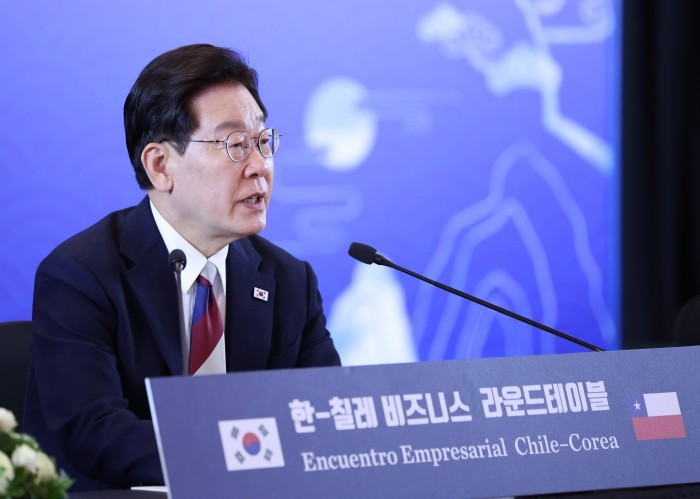
As President Lee Jae-myung returns home on the 3rd after an 11-day, seven-night trip to three countries in the U.S. and South America, a stack of domestic issues awaits — inflation, interest rates, real estate tax reform, criminal justice system reform, stock market volatility, and the Democratic Party's national convention, among others. For the presidential office, which must convert the trip's achievements into momentum for domestic governance, "August results" are expected to serve as a test that will shape its command of state affairs going forward.
According to the presidential office on the 2nd, President Lee will wrap up his trip with a meeting with the Korean community in Frankfurt, Germany, and return home on the 3rd. He is reportedly forgoing his summer vacation to be briefed on major issues immediately upon return, and will resume ministry briefings starting on the 4th.
The first indicator the presidential office will watch closely is the consumer price index, which is directly tied to the cost of living. If the July inflation rate, to be announced on the 4th, continues to run in the 3% range, it could raise the likelihood of the Bank of Korea implementing a further rate hike at its meeting on the 27th.
Real estate tax reform is a key policy battleground for the second half of the year. The government is considering measures to increase the tax burden on non-resident single-homeowners and owners of ultra-high-value homes, including reducing the holding-period deduction rate under the long-term holding special deduction and raising the comprehensive real estate tax burden on ultra-high-value homeowners. With continued dissatisfaction among genuine homebuyers over current loan regulations and ongoing debate over the supply effects of redevelopment and reconstruction projects, it remains uncertain whether tax-focused policies will succeed in stabilizing housing prices.
The revised Criminal Procedure Act is also moving toward a Cabinet meeting vote. The National Assembly passed a revision led by the ruling party on the 31st of last month that fully bans prosecutors from conducting direct investigations, including supplementary investigations. The revision is expected to be put to a Cabinet meeting vote as early as the 4th.
If implemented, the revision would divide investigative authority among the police's National Office of Investigation, the Corruption Investigation Office for High-ranking Officials, and the Serious Crimes Investigation Office starting in October, while prosecutors' offices would be converted into public prosecution offices. The presidential office says it respects the National Assembly's legislative decision, but ensuring the system takes hold smoothly in practice and addressing concerns over investigative gaps remain challenges.
Responding to stock market volatility is another major issue.
After single-stock leveraged exchange-traded funds (ETFs) were identified as a factor driving up volatility, financial authorities raised the minimum deposit requirement from 10 million won, including available securities, to 30 million won in cash, effective the 31st of last month. The presidential office and government plan to monitor the effects of this measure before considering further steps.
Park Young-hoon
Most Read
-
1
Celltrion’s Omlyclo gains ground in major European..

-
2
Trump demands rates fall below 1% as Fed hikes for..

-
3
Trump makes $1 trillion bet ahead of midterm elect..

-
4
Iran resumes ballistic missile production, assembl..

-
5
Samsung Electronics, Mistral AI to jointly develop..

-
6
Trump warns countries not helping U.S. must pay re..

-
7
Apple launches first foldable, 1 million won prici..

PEOPLE





HEADLINE NEWS
- Trump to roll out ‘unprecedented welcome’ for Xi with B-2 bombers, F-22 fighters
- S. Korea, U.S., and Japan form united front on Taiwan and economic coercion..
- Trump administration moves to impose sweeping sanctions on International Cr..
- Xi to make state visit to U.S. Sept. 23-25, dispelling rumors over his heal..

-
Address : In-Young Bldg., 34, Uisadang-daero 1-gil, Yeongdeungpo-gu, Seoul
Copyright by ASIATODAY CO., LTD. All rights resereved