



Samsung Electronics posts record quarter, rakes in 89 trillion won from chips
Jul 30, 2026, 10:17 am


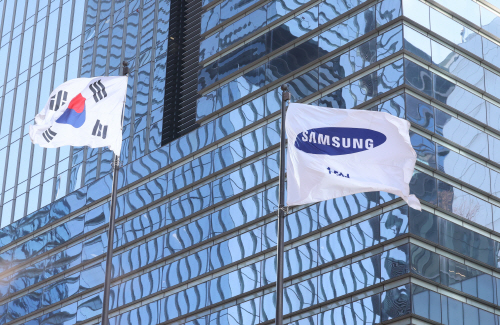 |
| Samsung Electronics corporate building / Yonhap |
Samsung Electronics once again broke its all-time quarterly performance record, proving its earnings stamina. The Device Solutions (DS) division, including semiconductors, recorded record sales driven by strong market demand. Conversely, the Device eXperience (DX) division, covering home appliances and mobile, saw revenue grow but operating profit decline due to rising component costs.
On July 30, Samsung Electronics announced its second-quarter earnings, reporting revenue of 171.5 trillion won and operating profit of 89.5 trillion won. Revenue increased by 129.9% year-on-year, while operating profit surged by 1,804.3% during the same period.
Operating profit in the DS division expanded dramatically. Second-quarter operating profit for the DS division reached 89.2 trillion won, a 223-fold increase year-on-year. On the other hand, the DX division shifted to a loss despite revenue growth, weighed down by cost burdens.
In the DS division, the memory business actively responded to strong demand centered on server products driven by the spread of Agentic AI, achieving its highest quarterly performance ever. Additionally, it strengthened its technological competitiveness by expanding the supply of differentiated performance HBM4 and shipping industry-first HBM4E samples.
System LSI achieved record-high first-half revenue through expanded sales of mobile System on Chips (SoCs) and sensors despite an overall drop in demand. Foundry results improved as sales rose, driven by demand for HBM base dies and products centered on American clients.
In the DX division, Mobile eXperience (MX) grew revenue year-on-year behind strong sales of flagship products centered on the Galaxy S26 series and healthy performance in the A series, but operating profit declined due to rising costs. The Networks business improved performance compared to both the previous year and previous quarter thanks to rising overseas sales, while the Visual Display (VD) division improved profitability by responding to demand from sports events such as the World Cup.
The Digital Appliances business also saw revenue grow quarter-on-quarter by responding to peak air conditioner season demand, but profit decreased under cost pressures. Elsewhere, Harman posted revenue of 4.6 trillion won and operating profit of 400 billion won, while Samsung Display reported revenue of 7.5 trillion won and operating profit of 700 billion won, both up year-on-year.
Samsung Electronics plans to maintain its performance growth momentum, expecting semiconductor demand centered on AI to persist through the second half of the year. In memory, it plans to strengthen its leadership in the AI memory market by expanding sales of HBM4, HBM4E, DDR5, SOCAMM2, and enterprise SSDs (eSSD). System LSI will expand its next-generation and customized SoC businesses while broadening image sensor application areas to automotive and robotics. The foundry business plans to strengthen its medium- to long-term growth foundation through mass production of the 2-nanometer second-generation process and expanding orders for AI and High-Performance Computing (HPC).
In the DX division, the company plans to increase market share and profitability by expanding sales of flagship and foldable smartphones, while positioning AI products at the forefront to target the premium market and expand sales in TVs and home appliances. The Networks business will focus on securing new orders and strengthening cost competitiveness.
Harman aims to sustain its growth momentum by expanding sales of automotive electronics, such as centralized controllers, and audio products. Meanwhile, Samsung Display plans to drive revenue growth by expanding sales of premium products and ramping up mass production on its 8.6-generation line.
Lee Ji-sun
Most Read
-
1
Celltrion’s Omlyclo gains ground in major European..

-
2
Hyundai Motor Group breaks ground on integrated st..

-
3
U.S. strikes 3 Iranian oil tankers, Iran vows reta..

-
4
S. Korea seeks redemption from World Cup setback w..

-
5
Trump demands rates fall below 1% as Fed hikes for..

-
6
Trump makes $1 trillion bet ahead of midterm elect..

-
7
Iran resumes ballistic missile production, assembl..

PEOPLE







-
Address : In-Young Bldg., 34, Uisadang-daero 1-gil, Yeongdeungpo-gu, Seoul
Copyright by ASIATODAY CO., LTD. All rights resereved