



Trump slaps 50% tariff bomb on Canada
Jul 21, 2026, 11:10 am


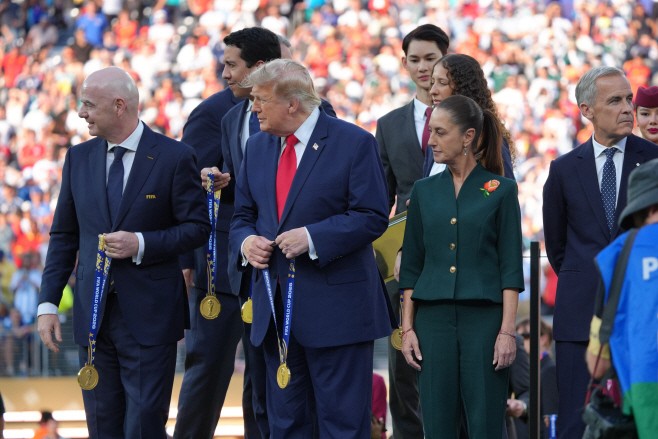 |
| From left: FIFA President Gianni Infantino, U.S. President Donald Trump, Mexican President Claudia Sheinbaum Pardo, and Canadian Prime Minister Mark Carney wait to congratulate players from both teams following the FIFA World Cup final match between Spain and Argentina in East Rutherford, New Jersey, on July 19 (local time). / Courtesy of AP and Yonhap News |
On July 20 (local time), President Donald Trump signed three proclamations imposing an additional 50% tariff on select Canadian products, citing discrimination against U.S. automobiles, alcoholic beverages, and dairy products.
Among these, the White House determined in its auto-related proclamation that Canada disadvantaged American commerce by applying discriminatory tariffs and tariff-rate quotas (TRQs) on U.S. vehicles, citing this as grounds for the 50% tariff penalty.
The tariffs are scheduled to take effect on August 19. Major news outlets including Bloomberg and The New York Times reported that this marks the first time Section 338 of the Tariff Act of 1930 has been invoked to impose actual duties.
Trump invokes Section 338 for the first time, signing three proclamations to impose 50% tariffs on select Canadian goods
President Trump ordered the imposition of a 50% ad valorem duty, claiming Canada discriminated against U.S. automobiles, alcoholic beverages, and dairy products. The tariffs will take effect at 12:01 a.m. Eastern Time on August 19 (1:01 p.m. KST). Targeted items include wine, hockey sticks, cement, dairy products, swimming pools, furniture, fishing rods, seeds, apparel, and wigs.
Energy products, potash (a raw material for potassium fertilizer), certain fish, and critical minerals are exempted. Vehicles, steel, and other goods subject to separate tariffs under Section 232 of the Trade Expansion Act are also excluded from the measure. Covered items under the 50% tariff will not be exempted even if they meet the rules of origin requirements under the United States-Mexico-Canada Agreement (USMCA).
In principle, the 50% tariff will be levied on top of existing duties, taxes, and fees. Section 338 grants the president authority to impose tariffs of up to 50% on imports from countries that place discriminatory or unreasonably unequal burdens on U.S. commerce. Furthermore, Section 338 stipulates that tariffs can only take effect at least 30 days following the publication of a proclamation. The timeframe from the signing on July 20 to implementation on August 19 reflects this statutory grace period.
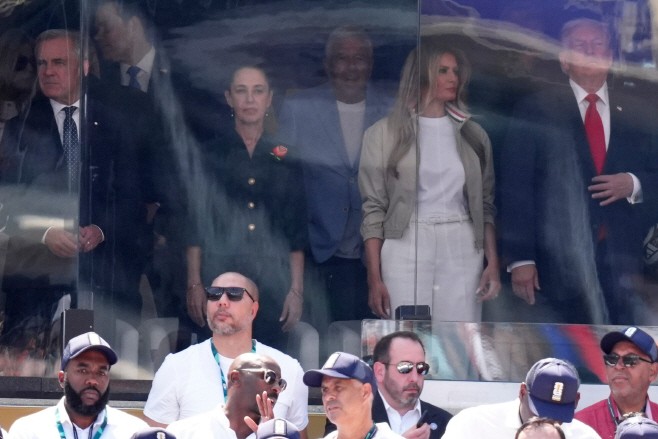 |
| From left: Canadian Prime Minister Mark Carney, Mexican President Claudia Sheinbaum, U.S. First Lady Melania Trump, and U.S. President Donald Trump watch the FIFA World Cup final match between Spain and Argentina in East Rutherford, New Jersey, on July 19 (local time). / Courtesy of AP and Yonhap News |
The White House pointed out that Canada's imports of American vehicles reached 20.3 billion dollars (30 trillion won) from April 2025 to March 2026, marking a 22% decrease compared to 25.9 billion dollars (38.3 trillion won) during the same period in the previous year. Most provincial governments in Canada halted the sale of American liquor in response to existing U.S. tariffs. Reuters reported that the White House stated imports of American liquor fell by 81% over the past year.
From April 2025 to February 2026, Canada's vehicle imports from Mexico surged by 23.6% year-on-year, while imports from Japan, South Korea, and Germany also grew by approximately 10.1% to 13.5% during the same period. Canada's vehicle imports from countries other than the United States increased by roughly 2.85 billion dollars (4.2137 trillion won), with Mexican imports accounting for the vast majority at about 2 billion dollars (2.957 trillion won).
Furthermore, the White House explicitly noted that Canada reduced duty-free quota (TRQ) allocations for companies that relocated automotive manufacturing facilities to the United States, citing Canada's failure to disclose firm-specific duty-free volumes as additional evidence of discrimination.
United States Trade Representative (USTR) Jamieson Greer stated in a release, "Unlike other partners and allies, Canada continues to retaliate against U.S. efforts to rebalance trade and protect domestic industries in sectors sensitive to national security."
The White House explained that the tariffs could expand competitive opportunities for American producers in the domestic market and induce Canada to rescind its discriminatory measures. U.S. Customs and Border Protection (CBP) will establish detailed implementation rules in coordination with the Department of the Treasury, the Department of Commerce, and the USTR.
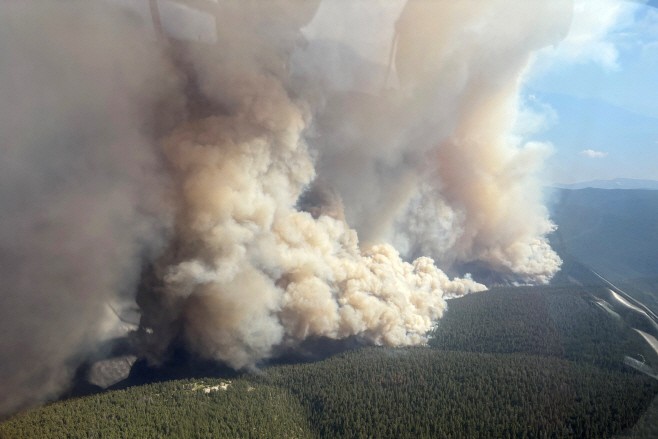 |
| Smoke rises from the French Bar Creek wildfire (K70748), located northwest of Cache Creek, British Columbia, Canada, on July 17 (local time). This photo was taken with a mobile phone through an aircraft window. / Courtesy of British Columbia Wildfire Service, Reuters, and Yonhap News |
US excludes USMCA goods from exemptions, reigniting trade clash with Canada
The New York Times noted that this measure is highly likely to reignite a trade conflict with Canada, America's second-largest trading partner. The Trump administration decided early this month not to extend the United States-Mexico-Canada Agreement (USMCA). While U.S. officials are visiting Mexico this week for separate negotiations, formal talks between the United States and Canada have yet to begin.
President Trump also threatened additional tariffs last week over wildfire smoke from Canada that blanketed major U.S. cities. Bloomberg reported that a senior U.S. official clarified this measure was pursued separately from the wildfire smoke threat.
South Korea faces upcoming Section 301 forced labor tariff of up to 12.5%, testing durability of 15% tariff deal
As the U.S. deployed Section 338 for the first time as a new tariff mechanism, Section 301 tariffs under the Trade Act remain the next variable for South Korea ahead of the July 24 expiration of the 10% global tariff based on Section 122 of the Trade Act. The USTR announced plans early last month to impose a 10% to 12.5% tariff on 60 economic entities, including South Korea, under forced labor provisions. Having concluded public hearings, the USTR is expected to issue a final announcement as early as this week.
Because an official plan for tariffs on overcapacity has not yet been announced, finalizing them before July 24 is physically improbable.
In late July last year, South Korea reached a trade agreement with the U.S. to lower reciprocal tariffs from 25% to 15% in exchange for 350 billion dollars (517.475 trillion won) in U.S. investments. Of that total, 150 billion dollars (221.775 trillion won) was allocated to shipbuilding cooperation.
Ambassador Greer publicly stated early last month that he would respect the 15% tariff cap agreed upon in the deal. However, if an overcapacity tariff is added on top of the 12.5% forced labor tariff, it remains uncertain how the 15% cap will be maintained. Opening ceremonies for the Korea-U.S. Shipbuilding Cooperation Center are scheduled for July 23 in Washington, D.C.
Ha Man-joo
Most Read
-
1
Celltrion’s Omlyclo gains ground in major European..

-
2
Trump demands rates fall below 1% as Fed hikes for..

-
3
Trump makes $1 trillion bet ahead of midterm elect..

-
4
Iran resumes ballistic missile production, assembl..

-
5
Samsung Electronics, Mistral AI to jointly develop..

-
6
Trump warns countries not helping U.S. must pay re..

-
7
Apple launches first foldable, 1 million won prici..

PEOPLE






HEADLINE NEWS
- Trump to roll out ‘unprecedented welcome’ for Xi with B-2 bombers, F-22 fighters
- S. Korea, U.S., and Japan form united front on Taiwan and economic coercion..
- Trump administration moves to impose sweeping sanctions on International Cr..
- Xi to make state visit to U.S. Sept. 23-25, dispelling rumors over his heal..

-
Address : In-Young Bldg., 34, Uisadang-daero 1-gil, Yeongdeungpo-gu, Seoul
Copyright by ASIATODAY CO., LTD. All rights resereved