



U.S. launches second day of airstrikes against Iran
Jul 09, 2026, 09:08 am


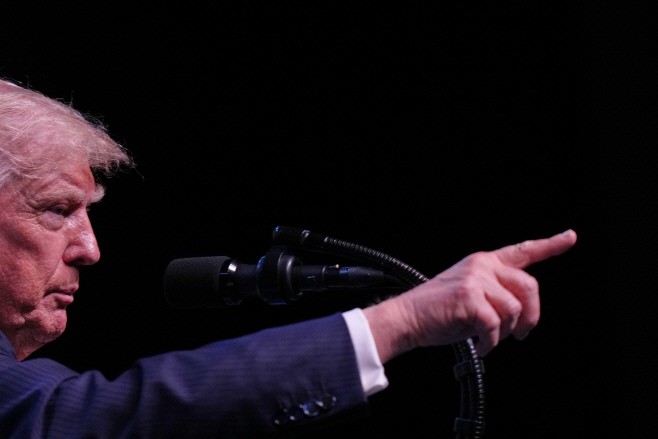 |
| US President Donald Trump points to a reporter to take a question during a press conference at the NATO summit in Ankara, Turkey, on July 8 (local time). / Courtesy of AP, Yonhap News |
The U.S. Central Command (CENTCOM) launched a second consecutive day of airstrikes against Iran on July 8 (local time) in retaliation for recent Iranian attacks on commercial vessels in the Strait of Hormuz.
U.S. President Donald Trump, speaking at the NATO summit in Ankara, Turkey, declared that the initial war-ending Memorandum of Understanding (MOU) with Iran appears to be "over." In response, Iran's Islamic Revolutionary Guard Corps announced that it carried out retaliatory strikes against 85 U.S.-linked military targets across Kuwait and Bahrain.
The renewed hostilities have cast deep uncertainty over the freedom of navigation in the strategic waterway and the viability of the scheduled 60-day follow-up negotiations. Amid the sudden escalation, global oil benchmarks reacted sharply, with Brent crude surging 5.2%.
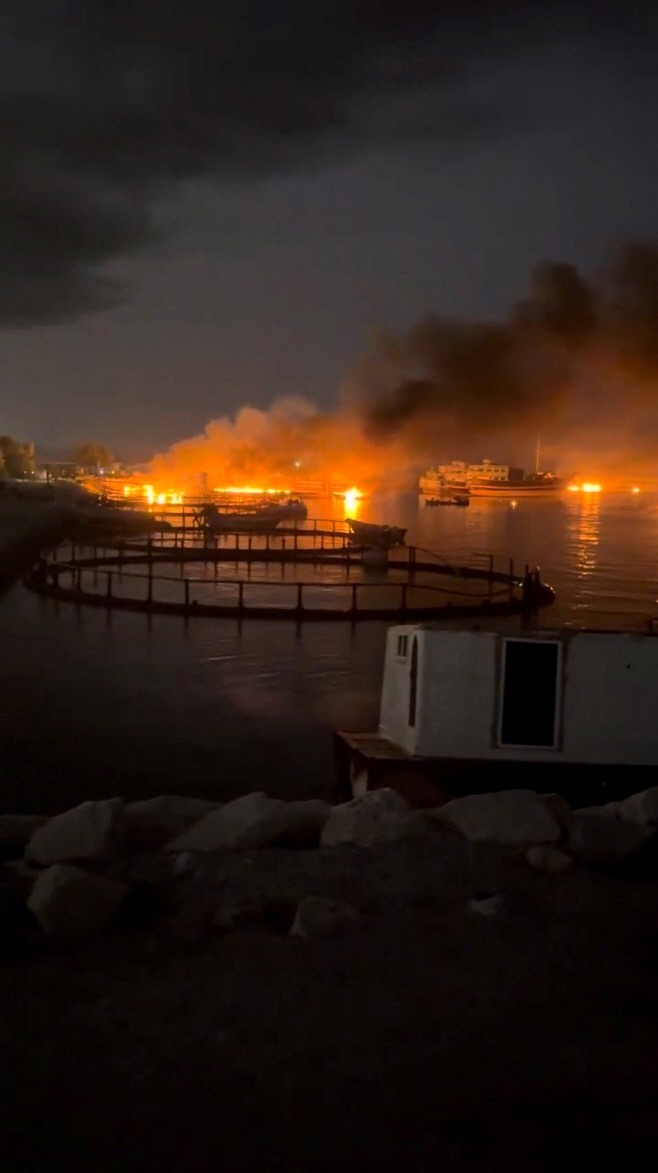 |
| Smoke rises from a port near the Strait of Hormuz in Kuhestak, Hormozgan Province, Iran, following an airstrike conducted by the U.S. Central Command (CENTCOM) on July 8 (local time). / This photo is a screenshot captured from a social media video distributed by Reuters, Yonhap News |
US launches second day of airstrikes on Iran, targeting threats to freedom of navigation in Strait of Hormuz
US Central Command (CENTCOM) announced on X (formerly Twitter) that under the direction of President Trump, it has "initiated additional airstrikes to further degrade Iran's capability to threaten freedom of navigation in the Strait of Hormuz." This follows a massive wave of precision strikes the previous day that hit more than 80 targets, including Iranian air defense systems, command and control centers, coastal radar sites, anti-ship missile sites, and roughly 60 fast attack craft belonging to the Islamic Revolutionary Guard Corps (IRGC).
The Wall Street Journal (WSJ), quoting a senior US official, reported that the latest strikes expanded in scope compared to the first day, hitting missile and drone (unmanned aerial vehicle) storage facilities across the Persian Gulf region.
Iran's semi-official Fars News Agency reported a series of explosions near Bandar Abbas and Sirik in southern Iran, as well as Chabahar and Konarak along the southeastern coast of the Gulf of Oman. Iranian state broadcaster IRIB reported that shrapnel fell near Imam Ali Hospital in Chabahar, two docks and a maritime traffic control tower were damaged, and three power lines were severed. Meanwhile, the Iranian Army announced that eight personnel from its army aviation and navy branches were killed during the airstrikes in southern Bandar Abbas and Bushehr.
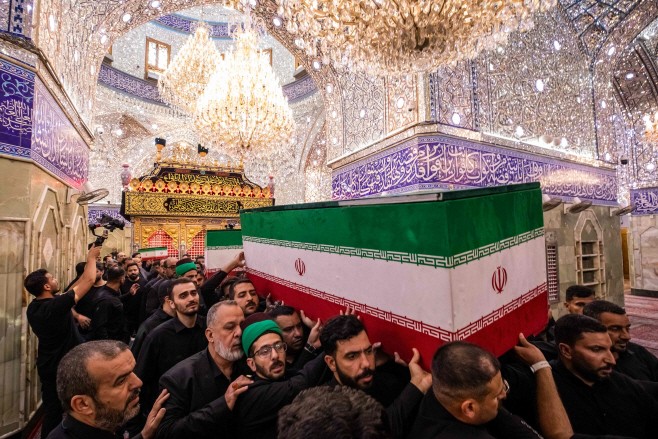 |
| Mourners carry the coffins of relatives of the late Supreme Leader Ayatollah Ali Khamenei at the Imam Abbas Shrine in Karbala, Iraq, on July 8 (local time). / Courtesy of the Media Office of the Imam Abbas Shrine, AFP, Yonhap News |
Trump signals end of ceasefire MOU, warns "it will get much worse" if attacks recur
President Trump, meeting with NATO Secretary General Mark Rutte in Ankara, Turkey, during the NATO summit, remarked, "In my judgment, it's over," adding, "I don't want to deal with them," according to reports from AP and AFP.
Through Truth Social, he warned that the latest airstrikes were in retaliation for Iran's attack on three commercial vessels the previous day—including a Qatari liquefied natural gas (LNG) tanker—in the Strait of Hormuz, stating, "If it happens again, it will get much worse!"
During a press conference, Trump foreshadowed further military action by saying, "We're going to hit them again very hard tonight." However, he denied a return to a full-scale war, emphasizing, "We are not looking for a long-term war."
Meanwhile, the U.S. Department of the Treasury's Office of Foreign Assets Control (OFAC) ramped up economic pressure by revoking a 60-day temporary general license that had authorized the production, delivery, and sale of Iranian crude oil.
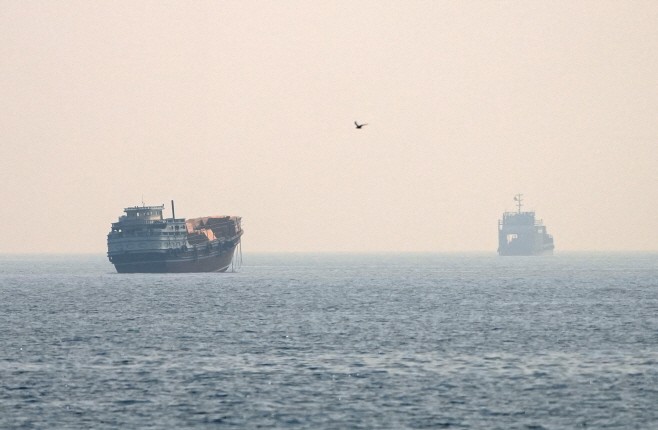 |
| Vessels are seen anchored in the Strait of Hormuz from Musandam, Oman, on July 8 (local time). / Courtesy of Reuters, Yonhap News |
Iran claims retaliatory strikes on 85 US-linked targets, blames US for violating MOU
Iran's Islamic Revolutionary Guard Corps (IRGC) announced that it launched a barrage of missiles and drones targeting 85 U.S. military-linked installations across Bahrain and Kuwait in retaliation for the American airstrikes. Meanwhile, the Kuwaiti Ministry of Defense reported that its air defense forces successfully intercepted two ballistic missiles and 13 drones.
Esmaeil Baghaei, spokesperson for the Iranian Ministry of Foreign Affairs, stated on X (formerly Twitter) that "Article 5 of the MOU clearly stipulates that Iran holds the responsibility for ensuring the safety of vessels transiting the Strait of Hormuz." He argued that the United States completely violated the framework of the agreement through its unilateral reimposition of sanctions and military strikes.
While Iran has not officially claimed responsibility for the attacks on the three commercial vessels, it has consistently maintained that only the shipping lanes designated by Tehran constitute safe passage routes. Reuters analyzed that the fundamental catalyst for the current crisis stems from a structural clash between these Iranian-designated channels and the U.S.-supported alternative bypass routes running along the coast of Oman.
Iranian Foreign Minister Abbas Araghchi wrote on X, "We will respond to vulgar provocations not with words, but with actions." Additionally, the Khatam al-Anbiya Central Headquarters—the supreme command structure of the Iranian Armed Forces—underscored that "under no circumstances will we tolerate U.S. interference in the Strait of Hormuz, and the shipping lanes designated by Iran remain the sole safe passage route."
Brent crude surges 5.2% as shipping and follow-up talks plunge into uncertainty
As armed conflict resumed in the critical Strait of Hormuz—a vital maritime chokepoint through which roughly one-fifth of global oil and liquefied natural gas (LNG) trade passes—energy markets reacted violently. On London's ICE Futures Europe, Brent crude futures for September delivery surged 5.2% to close at $78.02 per barrel. Concurrently, West Texas Intermediate (WTI) futures for August delivery on the New York Mercantile Exchange (NYMEX) rose 4.37% to finish at $73.52 per barrel. This marked the highest settlement for Brent since June 19 and for WTI since June 22.
In response to the escalating hostilities, the Joint Maritime Information Center (JMIC) raised the risk level for vessels transiting the Strait of Hormuz to "severe." In a rare joint statement, the heads of the International Energy Agency (IEA), the International Monetary Fund (IMF), the World Bank Group (WBG), and the World Trade Organization (WTO) warned that "energy markets and global goods transit continue to face acute pressure," while calling for the strict preservation of freedom of navigation principles in the strait.
According to the Financial Times (FT), critical diplomatic talks between Washington and Tehran were originally scheduled to reconvene on July 12 following the funeral of the late Supreme Leader Ayatollah Ali Khamenei. However, those prospects have now been thrown into complete disarray by the latest outbreak of violence.
Dan Pickering, chairman of Pickering Energy Partners, summarized the sudden shift in market sentiment, noting, "The honeymoon period is officially over. The market is once again pricing in the reality that the underlying geopolitical war risks were never truly resolved."
Ha Man-joo
Most Read
-
1
Celltrion’s Omlyclo gains ground in major European..

-
2
Trump demands rates fall below 1% as Fed hikes for..

-
3
Trump makes $1 trillion bet ahead of midterm elect..

-
4
Iran resumes ballistic missile production, assembl..

-
5
Samsung Electronics, Mistral AI to jointly develop..

-
6
Trump warns countries not helping U.S. must pay re..

-
7
Apple launches first foldable, 1 million won prici..

PEOPLE






HEADLINE NEWS
- Trump to roll out ‘unprecedented welcome’ for Xi with B-2 bombers, F-22 fighters
- S. Korea, U.S., and Japan form united front on Taiwan and economic coercion..
- Trump administration moves to impose sweeping sanctions on International Cr..
- Xi to make state visit to U.S. Sept. 23-25, dispelling rumors over his heal..

-
Address : In-Young Bldg., 34, Uisadang-daero 1-gil, Yeongdeungpo-gu, Seoul
Copyright by ASIATODAY CO., LTD. All rights resereved