



Iran issues 'unprecedented' visas to foreign media for Khamenei's funeral
Jul 08, 2026, 02:54 pm


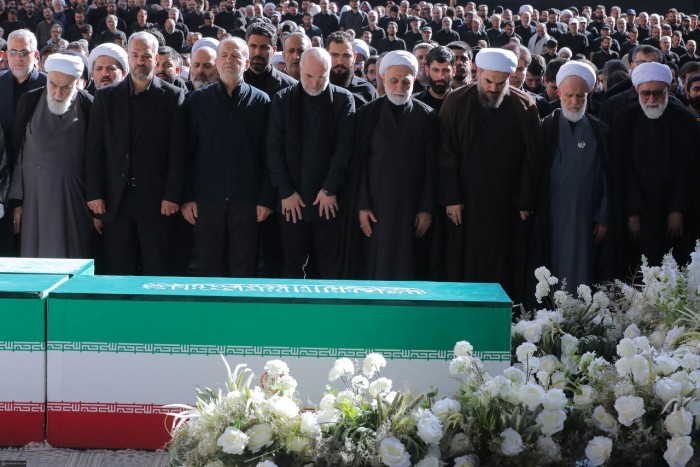 |
| The funeral procession of the late Supreme Leader Ayatollah Seyyed Ali Khamenei held in Tehran, Iran, on July 5 (local time). / Courtesy of AFP, Yonhap News |
Iran issues 'unprecedented' visas to foreign media for Khamenei's funeral
The Washington Post reported on July 7 (local time) that Iran is granting an unprecedented number of visas to foreign journalists to actively support international coverage of the funeral of the late Supreme Leader Ali Khamenei, who was killed in a joint US-Israeli airstrike.
According to the report, hundreds of Iranian journalists are currently covering every stage of the funeral proceedings, while Iran has issued rare visas to dozens of foreign media outlets, allowing them to enter the country for on-the-ground reporting under tight restrictions.
While Iranian tourist visas are generally accessible, regulations have tightened significantly in recent years due to security concerns and heightened geopolitical friction.
In particular, following escalating conflicts with the US and Israel, Iran has strictly managed the entry of foreign nationals, restricting tourist visas or requiring extensive vetting for citizens of certain countries, including the United States, the United Kingdom, and Canada.
Furthermore, screening procedures have become more rigorous to prevent illegal stays and potential intelligence leaks, with the government more closely monitoring foreign activities amid recent large-scale protests and economic crises.
Under these circumstances, the Iranian government’s decision to issue media credentials and permit open reporting to foreign news organizations is viewed as a calculated effort to broadcast strategic messaging and maximize propaganda value on the global stage.
To mobilize domestic crowds, the Iranian authorities are also providing free transportation from provincial cities to the capital city of Tehran.
Furthermore, once mourners arrive in Tehran, the government is supporting their stay by transforming vacated schools and government facilities into complimentary accommodations.
While these measures could be seen as logistical support for mourners, analysts suggest they are part of a broader strategy to create a tightly scripted environment that turns the funeral itself into a powerful propaganda stage for the regime.
Park Jin-sook
Most Read
-
1
Celltrion’s Omlyclo gains ground in major European..

-
2
Trump demands rates fall below 1% as Fed hikes for..

-
3
Trump makes $1 trillion bet ahead of midterm elect..

-
4
Iran resumes ballistic missile production, assembl..

-
5
Samsung Electronics, Mistral AI to jointly develop..

-
6
Trump warns countries not helping U.S. must pay re..

-
7
Apple launches first foldable, 1 million won prici..

PEOPLE





HEADLINE NEWS
- Trump to roll out ‘unprecedented welcome’ for Xi with B-2 bombers, F-22 fighters
- S. Korea, U.S., and Japan form united front on Taiwan and economic coercion..
- Trump administration moves to impose sweeping sanctions on International Cr..
- Xi to make state visit to U.S. Sept. 23-25, dispelling rumors over his heal..

-
Address : In-Young Bldg., 34, Uisadang-daero 1-gil, Yeongdeungpo-gu, Seoul
Copyright by ASIATODAY CO., LTD. All rights resereved