



Samsung logs record earnings, but internal rift deepens between DS and DX divisions
Jul 08, 2026, 09:58 am


 |
| / Yonhap |
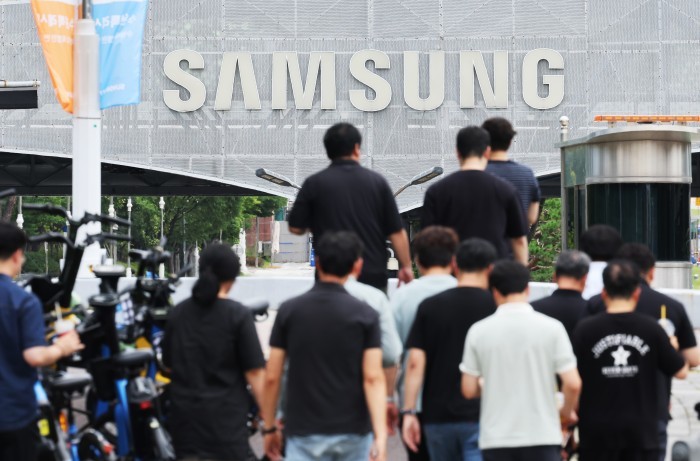
Despite registering historic earnings on the back of a memory semiconductor boom, Samsung Electronics is facing growing concerns as internal divisions between its business units continue to deepen. The friction is being further exacerbated by a rapid restructuring of labor unions along the lines of the Device Solutions (DS) chip division and the Device Experience (DX) finished goods division. Given that the seamless synergy between DS and DX has historically been Samsung’s core competitive advantage, reconciling the two fronts is emerging as a critical management priority.
According to Samsung Electronics' earnings guidance released on July 7, the company generated an estimated 171 trillion won in revenue and 89.4 trillion won in operating profit for the second quarter of this year. This represents a staggering year-on-year surge of 129.31% in revenue and 1,810.26% in operating profit, fueled primarily by the explosive growth of the artificial intelligence (AI) market boosting the performance of the DS division. However, while the record-shattering results are a major milestone, they have only served to polarize the conflicting interests of the different business units.
The friction intensified during this year's wage and collective bargaining negotiations. The management introduced a new special management performance bonus system exclusive to the DS division, pledging to distribute 10.5% of its business performance. In contrast, employees in the DX division were offered treasury stock valued at approximately 6 million won, sparking immediate backlash over equity.
Reflecting this discontent, the company’s labor unions are increasingly reorganizing around specific business segments to take targeted action. The "Samsung Electronics Union Donghaeng," which primarily consists of DX division workers, is planning large-scale rallies near Samsung’s Suwon campus on July 16 and 23, with over 3,000 employees expected to attend. The union intends to demand that management bridge the widening performance bonus gap between the DS and DX divisions. Donghaeng's membership has swelled to 27,856 after absorbing a significant number of members from the Samsung Group Integrated Union's Samsung Electronics Branch, which previously held majority status.
The National Samsung Electronics Union (NSEU) is also considering staging its own rallies around the same period. The NSEU has similarly seen its ranks bolster to 22,217 members following a massive influx of DX division personnel.
Meanwhile, membership in the broader Samsung Group Integrated Union, which once surpassed 70,000, has contracted to 54,630 as it pivots toward a more hardline stance focused on representing the interests of the DS division. Chairman Choi Seung-ho, who secured reelection last month after successfully pressuring management to establish the new special performance bonus for the DS unit, is currently pushing for the launch of a DS policy committee and the formal separation of bargaining units.
Industry analysts note that a formal split in collective bargaining units faces steep legal hurdles, as it requires meeting strict statutory criteria regarding stark differences in working conditions, employment types, and historical bargaining practices. Nevertheless, experts warn that the mere pursuit of this separation is already unifying union members along divisional lines. Regardless of whether the split is legally sanctioned, it will inevitably deepen internal animosity. In response, Samsung management is reportedly reviewing countermeasures, underscoring the urgency of patching up the internal fracture.
Historically, Samsung Electronics has been highly praised for creating a powerful internal ecosystem, where the DS division supplies its locally manufactured semiconductors directly to the DX division's device lineups. This structure has long ensured a stable internal demand base, allowing the tech giant to project formidable market dominance globally.
Choi In-kyu
Most Read
-
1
Kia Sportage outperforms Mazda CX-5 in German auto..

-
2
Houthis launch successive attacks on Saudi airport..

-
3
Saudi Arabia, Iran hold first diplomatic talks to..

-
4
U.S. deploys carrier, 10,000 more troops to Middle..

-
5
Saudi airport in Riyadh struck again, leaving at l..

-
6
Japan tracks Ukraine fiber-optic drones, bolsters..

-
7
Putin's ally visits China on the 8th ahead of APEC..

PEOPLE





HEADLINE NEWS

-
Address : In-Young Bldg., 34, Uisadang-daero 1-gil, Yeongdeungpo-gu, Seoul
Copyright by ASIATODAY CO., LTD. All rights resereved