



Fears turn into reality: Only 7 Chinese NEV companies projected to survive
Jul 07, 2026, 10:28 am


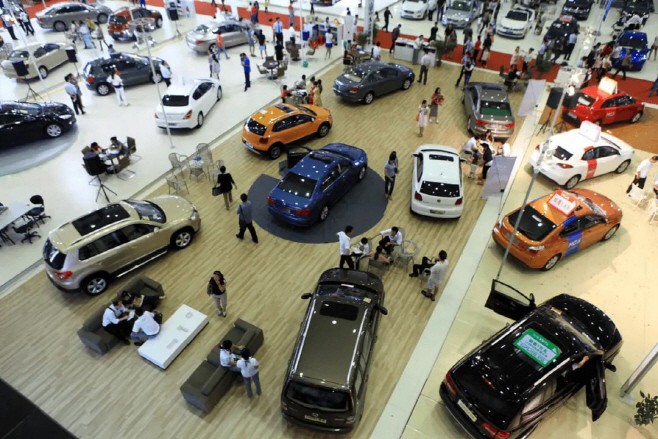 |
| An electric vehicle showroom in Xicheng District, Beijing. Brand-new vehicles are frequently sold at dirt-cheap prices due to chronic overproduction and intense market saturation. / Courtesy of Jingji Ribao |
China’s new energy vehicle (NEV) industry, which arguably boasts world-class competitiveness, is facing concerns that it will enter a severe crisis as bankruptcies among market players become commonplace. With projections indicating that only around seven companies will manage to survive by 2030, these fears appear to be materializing.
According to recent reports by media outlets including Jingji Ribao, citing analyses from management consulting firm AlixPartners and automotive industry insiders, China's automotive sector possessed lackluster competitiveness until the end of the last century. This was an inevitable outcome given its lagging technology in manufacturing internal combustion engine vehicles, which require highly complex assembly processes and an immense number of components. However, with electric vehicles now becoming the global standard, the landscape has completely shifted as if the past never happened. China has quite naturally established itself as a leading nation in the NEV industry.
This transformation is a natural result of the ideal convergence between battery technology and artificial intelligence (AI), sectors where China holds an overwhelming global edge. Statistics prove this fact clearer than anything else. Looking first at production volume driven primarily by EVs, China is estimated to have produced nearly 17 million units in 2025. This year, the country is highly likely to comfortably cross the 10-million-unit production mark.
Export figures are equally astonishing. Media reports note that China exported around 4 million electric vehicles last year, capturing a 40% share of the global market. It is certainly not without merit that Beijing-based automotive commentator Ding Hai projected Chinese firms would dominate the global EV market going forward, stating, "China’s NEVs, particularly its EVs, boast supreme competitiveness. Simply put, they offer excellent value for money."
Under these circumstances, it would be surprising if entering the market did not become a massive trend. In fact, as of the first half of this year, some 150 to 200 companies are locked in a fierce battle to carve out their own piece of the market pie, resembling the warring states of the Spring and Autumn period. While only about 30 companies are actively engaged in large-scale production and sales, even this number can hardly be considered small.
Inevitably, chronic overproduction—driven by companies indiscriminately churning out vehicles regardless of their financial viability—has become a glaring issue. It is no exaggeration to say the industry is suffering through a severe bout of growing pains. The same applies to hyper-competition that defies description. There is a clear reason why brand-new vehicles are being sold far below cost or dumped onto the market as cheap used cars immediately after rolling off the assembly line.
It comes as no surprise that a substantial number of firms are sliding into default or bankruptcy. It is estimated that at least 50 or so companies have quietly vanished over the past few years. Going forward, this trend is bound to accelerate. It stands to reason that AlixPartners and industry insiders project only seven ultra-competitive companies will make it to 2030 unscathed. This implies that corporate bankruptcies will indeed become a daily reality. The cries of distress echoing across the industry have now become an undeniable fact.
Hong Soon-do
Most Read
-
1
Celltrion nears additional contract with major U.S..

-
2
Putin proposes trilateral U.S.-China-Russia summit..

-
3
U.S. weighs dropping MOAB, world's most powerful n..

-
4
"Aren't those foreigners on welfare?": M..

-
5
Attention centers on APEC for possible Trump-Xi-Pu..

-
6
Saudi Arabia, Iran hold first diplomatic talks to..

-
7
China tightens grip on boosting domestic demand an..

PEOPLE







-
Address : In-Young Bldg., 34, Uisadang-daero 1-gil, Yeongdeungpo-gu, Seoul
Copyright by ASIATODAY CO., LTD. All rights resereved