



Samsung, SK weigh U.S. investment despite 800 tn won domestic pledge
Jul 06, 2026, 09:44 am


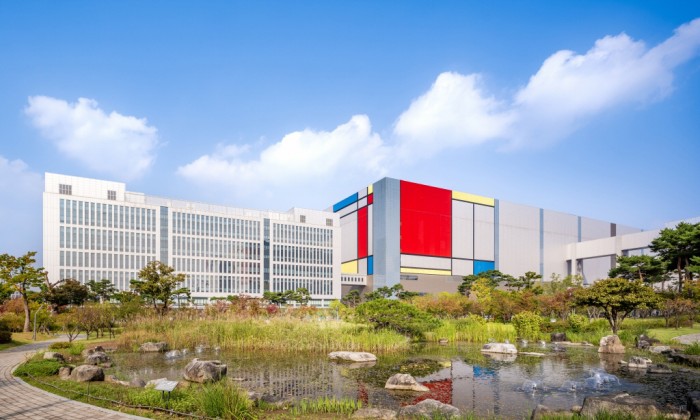 |
| Samsung Electronics Pyeongtaek Nano City. / Courtesy of Samsung Electronics |
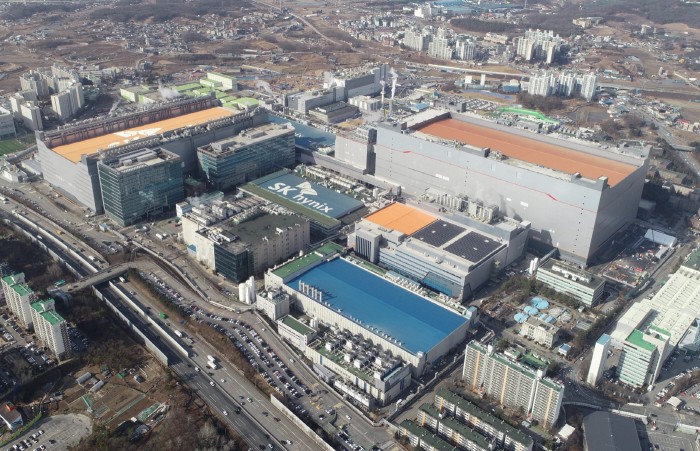 |
| SK Hynix Icheon Campus. / Courtesy of SK Hynix |
Since disclosing plans to invest approximately 800 trillion won in building a semiconductor cluster in the southwestern metropolitan region, Samsung Electronics and SK Hynix have been highly attuned to variables stemming from the U.S. While the massive domestic projects, dubbed mega-investments, face internal hurdles of their own, the two tech giants—having navigated U.S. tariff pressures until early this year—now find themselves unable to ignore scrutiny from Washington, which has consistently demanded localized investment. The pressure could intensify as the Trump administration faces upcoming midterm elections, raising the possibility that it may once again pressure major global corporations to expand their investments on U.S. soil.
According to the Financial Supervisory Service on July 5, SK Hynix recently detailed risks associated with U.S. tariffs and trade restrictions in its securities registration statement.
"If major nations, including the U.S., impose or tighten trade restrictions such as tariffs on imports, including semiconductors, our operating performance could suffer," SK Hynix stated.
The U.S. has imposed reciprocal tariffs and temporary import levies since 2025. Although semiconductors are currently exempt from these measures, the U.S. government previously hinted at the possibility of slapping a 100% tariff on all semiconductor imports. Early this year, U.S. President Donald Trump ramped up pressure by threatening a 100% tariff on memory chipmakers that fail to establish manufacturing facilities within the U.S.
Both Samsung Electronics and SK Hynix are already constructing facilities in the United States. Samsung Electronics is on track to invest upwards of 37 billion dollars (approximately 56.61 trillion won) in Taylor, Texas by 2030, while SK Hynix is injecting 3.87 billion dollars (approximately 5.92 trillion won) into Indiana to build an advanced packaging production hub for AI memory.
While these represent substantial investments, they pale in comparison to the companies' domestic spending plans—a gap that could prompt Washington to closely eye the remaining investment capacity of both firms. However, because both chipmakers have already committed astronomical capital layout, industry experts view that accelerating their pre-planned U.S. investments would be the most realistic approach for the time being.
According to the respective first-quarter reports, the Americas market accounts for an overwhelming share of revenue for both companies, standing at 32.5% for Samsung Electronics and 68.8% for SK Hynix. This revenue structure leaves both firms highly sensitive to demands from the U.S. government.
Industry sources suggest that Samsung Electronics could choose to formalize its plans for a second fab at its Taylor site. The first fab is slated to house a foundry production facility utilizing an advanced 2-nanometer process. During its earnings call in April, Samsung Electronics noted, "We are conducting initial reviews for the construction of the Taylor Fab 2 in tandem with discussions to secure orders from global customers."
Meanwhile, attention is focused on whether SK Hynix will review new investments. The company is in a more delicate position, given that its U.S. investment scale is smaller than Samsung's, and it is scheduled to list American Depositary Receipts (ADRs) on the Nasdaq exchange on July 10.
Should Washington's potential demands for additional investment materialize, financing will be the primary challenge. Whether the companies choose to accelerate pre-existing investments or draw up new capital deployment blueprints, both firms have already committed a massive amount of capital elsewhere.
For the immediate term, second-quarter performance indicators show that both companies maintain robust cash-generating capabilities. According to securities industry estimates, Samsung Electronics is projected to log an operating profit of approximately 85 trillion won in the second quarter of this year. Considering that Samsung's annual operating profit last year was 43.60 trillion won, the company is poised to generate nearly double its previous annual profit in a single quarter. This would instantly shatter the historic domestic record of 57 trillion won set just the previous quarter, with an estimated operating profit margin approaching 49%.
SK Hynix reflects a similar trajectory. Its second-quarter operating profit is projected to reach approximately 65 trillion won, with an expected operating profit margin of 76.6%.
The prevailing view within the industry is that the surge in semiconductor demand remains in its nascent stage. Former U.S. Federal Reserve Governor Kevin Warsh recently likened the current AI industry to a baseball game during the European Central Bank's annual central banking forum. "The rapid growth of AI represents a massive paradigm shift for policy operations and the broader economy," Warsh remarked, adding, "If this revolution were a baseball game, we would only be in the first or second inning."
Accordingly, industry insiders note that while traditional semiconductor cycles typically lasted three to four years, the current upcycle could prove to be far more prolonged.
Ahn So-yeon
Most Read
-
1
Kia Sportage outperforms Mazda CX-5 in German auto..

-
2
Houthis launch successive attacks on Saudi airport..

-
3
Saudi Arabia, Iran hold first diplomatic talks to..

-
4
U.S. deploys carrier, 10,000 more troops to Middle..

-
5
Saudi airport in Riyadh struck again, leaving at l..

-
6
Japan tracks Ukraine fiber-optic drones, bolsters..

-
7
Putin's ally visits China on the 8th ahead of APEC..

PEOPLE






HEADLINE NEWS

-
Address : In-Young Bldg., 34, Uisadang-daero 1-gil, Yeongdeungpo-gu, Seoul
Copyright by ASIATODAY CO., LTD. All rights resereved