



SK Innovation targets AI data centers via power subsidiaries and vertical integration
Jul 03, 2026, 09:55 am


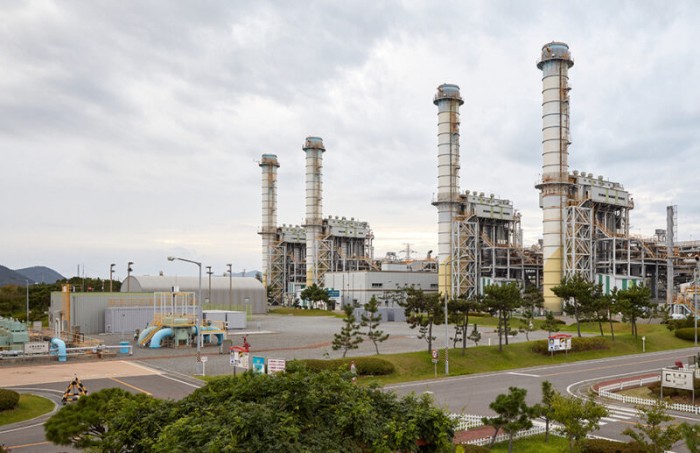 |
| Exterior view of the Gwangyang Natural Gas Power Plant. / Courtesy of SK Innovation |
SK Innovation is entering the build-out of artificial intelligence (AI) data center infrastructure, utilizing its power and energy assets. The strategy leverages the LNG generation infrastructure of its subsidiary, SK Innovation E&S, to achieve vertical integration across the power value chain, spanning power generation to data center infrastructure supply.
According to the Ministry of Trade, Industry and Energy on July 2, SK Group plans to construct a combined 5.0 GW of distributed AI data centers across five regional zones—including Honam, Jungbu, Daekyeong, and Gangwon—by 2030 under its first phase. It is also pushing a second-phase blueprint to expand this capacity significantly to 15 GW by 2035.
Securities analysts view SK Innovation as the practical engine behind this massive infrastructure rollout, driven by the energy vertical integration capabilities secured through SK Innovation E&S. To minimize data latency—the top priority for AI data center clients—SK Innovation will directly link data centers with optimized power plants operated by SK Innovation E&S in Paju (1.8 GW), Gwangyang (1.1 GW), and Yeoju (1.0 GW). The company plans to maximize synergies by establishing direct connections between these data centers and power plants that utilize directly imported LNG from overseas.
This approach provides a competitive edge in an AI infrastructure market where securing power grids has emerged as a critical issue. While typical annual utilization rates currently hover between 70% and 90%, projections show that linking these key hub power plants will allow the company to stably maintain high utilization rates of 80% to 95% on a continuous basis.
Financial markets evaluate that the company possesses sufficient financial health to fund these infrastructure investments. Despite past concerns over a lack of new growth engines in the refining and chemical sectors, the sustained upcycle is now projected to drive historic earnings.
The investment generates dual synergies for SK Innovation. First, its own power plants—which previously faced hurdles in raising utilization rates due to grid transmission constraints—can now operate at full capacity continuously by powering energy-intensive data centers. Second, because data centers require large-scale Energy Storage Systems (ESS) to prevent power interruptions, the project creates new captive demand that can be met by batteries from its subsidiary, SK On. This structure allows the company to supply large volumes of batteries to its own infrastructure while building a solid track record for the global market.
SK Group's broader move to expand its eco-friendly power ecosystem also serves as a positive backdrop. The group plans to launch an integrated entity by the end of the year by consolidating its renewable energy assets in partnership with private equity firm KKR to supply large-scale power. While SK Innovation reliably handles the 24-hour baseload power required by AI data centers through LNG generation, the group will ultimately complete a vast power ecosystem that integrates renewable energy sources over the long term.
"Backed by the strong financial stability of its core business, the company is now positioned to make bold investments in high-yield projects like AI data centers," a financial investment industry source noted. "This infrastructure investment will maximize the utilization rates of existing power plants while simultaneously generating new captive demand, such as ESS for power load control, yielding positive synergies that strengthen both revenue and deployment track records."
Son Kang-hoon
Most Read
-
1
Kia Sportage outperforms Mazda CX-5 in German auto..

-
2
Houthis launch successive attacks on Saudi airport..

-
3
Saudi Arabia, Iran hold first diplomatic talks to..

-
4
U.S. deploys carrier, 10,000 more troops to Middle..

-
5
Saudi airport in Riyadh struck again, leaving at l..

-
6
Japan tracks Ukraine fiber-optic drones, bolsters..

-
7
Putin's ally visits China on the 8th ahead of APEC..

PEOPLE





HEADLINE NEWS

-
Address : In-Young Bldg., 34, Uisadang-daero 1-gil, Yeongdeungpo-gu, Seoul
Copyright by ASIATODAY CO., LTD. All rights resereved