



KakaoBank acquires Mastern Capital
Jun 26, 2026, 10:31 am


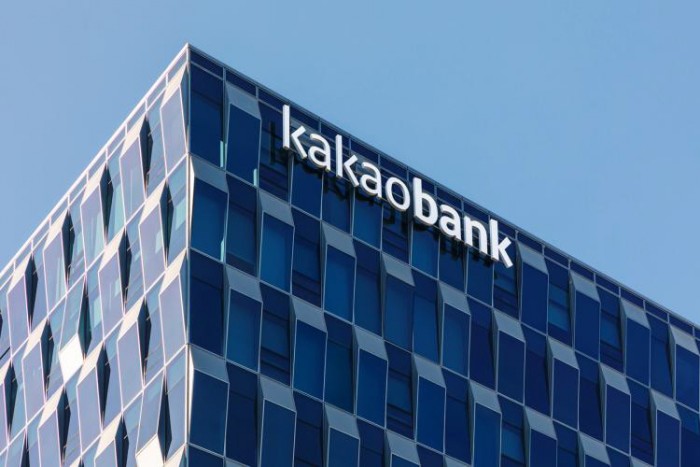 |
| An overall view of the KakaoBank headquarters. / Courtesy of KakaoBank |
KakaoBank is entering the capital finance industry by acquiring Mastern Capital. This move is interpreted as a strategy to expand its business footprint into non-banking credit sectors, such as installment finance and leasing, as the bank faces growth limitations due to household lending regulations.
However, given that the capital firm is small in scale and currently registering a deficit, improving profitability remains a key challenge.
According to the Financial Supervisory Service's electronic disclosure system on the 25th, KakaoBank has decided to acquire 5 million shares of Mastern Capital. The acquisition amount stands at 24.1 billion won, which will grant KakaoBank a 100% stake upon completion of the takeover.
Mastern Capital is a specialized credit financial company established in 2022 through a joint investment by Mastern Investment Management and NH Investment & Securities, and it operates in sectors including lease finance and corporate finance.
This acquisition is analyzed as a response to KakaoBank's limited growth potential in its core banking business following tightened caps on total household loans. As household debt continued to rise, financial authorities raised the intensity of regulation by activating a "household debt emergency management system." Consequently, commercial and internet-only banks have strengthened their risk management, consecutively slashing credit loan limits to around 100 million won. Recently, KakaoBank and Toss Bank lowered their limits on personal credit loans and credit lines (minus accounts), while K-bank went as far as suspending the opening of new minus accounts until next month.
With growth in the banking sector's retail segment hitting the brakes, the bank is diversifying its portfolio into the non-banking sector. KakaoBank's takeover of a capital firm is emerging as an alternative for expanding non-banking credit operations. Jeong Jun-seop, a researcher at NH Investment & Securities, noted, "Amid the structural growth limits of the traditional banking industry, acquiring a capital company can serve as a new growth engine," adding, "A powerful synergy can be generated by combining KakaoBank's lowered funding costs based on its high credit rating with the capital firm's expertise in managing high-yield assets."
Regarding the background of selecting Mastern Capital, the bank stated that strategic fit was the top priority. While large-scale capital companies possess sizable assets and organizational structures, the substantial time and cost burdens required to transition their existing face-to-face sales frameworks into KakaoBank's digital-first model were taken into account.
KakaoBank officials stated, "We selected a target that possesses the essential foundation to commercialize services most rapidly by integrating our non-face-to-face technology and platform capabilities," adding, "We plan to inject the necessary capital in phases in line with future business expansion."
The initial business focus is projected to be installment finance. Having signed the share purchase agreement, KakaoBank plans to finalize the acquisition procedures by the end of the year and launch installment finance services next year. The bank is also reviewing plans to connect financial demands arising from vehicle purchases through partnerships with automotive distribution platforms. Over the medium to long term, expanding its business scope into leasing, rentals, corporate finance, and investment banking is also being considered.
Following the acquisition, KakaoBank plans to drive profitability improvements through funding cost reductions, expansion of operating assets, and operational efficiency. Becoming a subsidiary is expected to upgrade Mastern Capital's credit rating, which in turn will lower borrowing rates. Through this, the bank envisions fostering asset growth by expanding new products like auto finance and driving sales through partnership-based operations. A KakaoBank official commented, "We will extend our innovative non-face-to-face financial technologies and know-how into the capital finance sector to offer diverse financial experiences," adding, "Through phased business expansion, we will strengthen productive finance while boosting platform competitiveness and capital efficiency."
Nevertheless, because the acquisition target is small and has recently recorded losses, arranging the business foundation and normalizing operations are viewed as the primary immediate tasks rather than expecting an instant contribution to earnings. Mastern Capital flipped into the red last year, posting a net loss of approximately 2.3 billion won due to an increase in bad debt expenses. This was triggered by rising credit costs amid the recent real estate market slowdown and a burdensome interest rate environment. A KakaoBank official explained, "There may have been a temporary weakening of revenue as operations were restricted during the sale process," reiterating, "We plan to inject the necessary capital sequentially as the business scales up in the future."
Lee Bo-ra
Most Read
-
1
Celltrion’s Omlyclo gains ground in major European..

-
2
Trump demands rates fall below 1% as Fed hikes for..

-
3
Trump makes $1 trillion bet ahead of midterm elect..

-
4
Iran resumes ballistic missile production, assembl..

-
5
Samsung Electronics, Mistral AI to jointly develop..

-
6
Trump warns countries not helping U.S. must pay re..

-
7
Apple launches first foldable, 1 million won prici..

PEOPLE






HEADLINE NEWS
- Trump to roll out ‘unprecedented welcome’ for Xi with B-2 bombers, F-22 fighters
- S. Korea, U.S., and Japan form united front on Taiwan and economic coercion..
- Trump administration moves to impose sweeping sanctions on International Cr..
- Xi to make state visit to U.S. Sept. 23-25, dispelling rumors over his heal..

-
Address : In-Young Bldg., 34, Uisadang-daero 1-gil, Yeongdeungpo-gu, Seoul
Copyright by ASIATODAY CO., LTD. All rights resereved