



FSS to overhaul accounting audit framework
Jun 24, 2026, 09:52 am


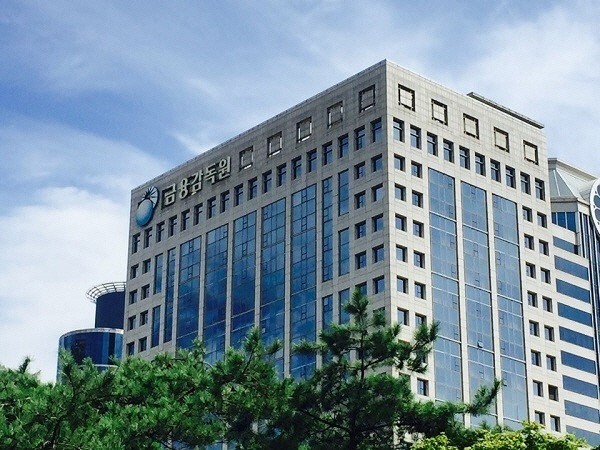 |
| The Financial Supervisory Service (FSS). / Courtesy of the Financial Supervisory Service |
The Financial Supervisory Service (FSS) is pushing to drastically shorten the accounting review and audit cycle for listed companies. The plan aims to slash the current average audit cycle of roughly 20 years down to 10 years for KOSPI-listed companies and 5 years for KOSDAQ firms, shifting toward a prevention-oriented oversight framework that detects accounting fraud at an early stage.
On June 24, the FSS, in partnership with the Korean Accounting Association (KAA), hosted a research seminar on the direction of improving the accounting review and audit system to discuss overhauling the regulatory framework. The seminar drew key figures including FSS Governor Lee Chan-jin, Democratic Party of Korea lawmaker Kim Nam-geun, and KAA President Kim Ki-young, alongside officials from the Financial Services Commission (FSC), the Korean Institute of Certified Public Accountants (KICPA), the Korea Listed Companies Association (KLCA), and the accounting industry.
The seminar was prompted by growing concerns that the current audit cycle is excessively protracted, making it difficult to detect accounting irregularities in a timely manner. Critics have pointed out that the current 20-year average audit cycle for listed companies is long even when compared to major advanced economies.
The research team proposed shortening the audit cycle to 10 years for KOSPI-listed companies and 5 years for KOSDAQ-listed firms, while expanding the dedicated audit organization from the current two departments to four. Furthermore, they argued that for companies caught committing intentional and material accounting fraud, the audit findings should be swiftly linked to delisting procedures.
"While audit quality has improved since the 2017 accounting reform, recurring accounting fraud scandals remain a structural threat that undermines market confidence," FSS Governor Lee Chan-jin noted in his welcoming remarks. "We must transition to a preventative oversight framework that identifies accounting irregularities early and responds proactively."
During the panel discussion, attendees also raised the need to adopt an AI-driven, risk-based supervisory framework. The core idea is to classify companies based on risk levels and apply different review cycles to each group to maximize regulatory efficiency. However, some participants voiced caution, suggesting a phased implementation since aggressively slashing the audit cycle to 10 years for KOSPI and 5 years for KOSDAQ in the short term could burden corporations.
"Accounting fraud is a grave issue that leads to investor losses and erodes market trust," Democratic Party lawmaker Kim Nam-geun stated in his congratulatory remarks. "Shortening the review and audit cycle and taking swift action will help restore investor confidence and create a predictable growth environment for businesses."
The FSS plans to consult with the Financial Services Commission to hammer out specific institutional improvements based on the research findings and industry feedback. The regulatory bodies will also review measures to expand audit staff, upgrade investigative tools, and amend relevant laws and regulations.
Park Ju-yeon
Most Read
-
1
Celltrion nears additional contract with major U.S..

-
2
Putin proposes trilateral U.S.-China-Russia summit..

-
3
U.S. weighs dropping MOAB, world's most powerful n..

-
4
"Aren't those foreigners on welfare?": M..

-
5
Attention centers on APEC for possible Trump-Xi-Pu..

-
6
Saudi Arabia, Iran hold first diplomatic talks to..

-
7
China tightens grip on boosting domestic demand an..

PEOPLE







-
Address : In-Young Bldg., 34, Uisadang-daero 1-gil, Yeongdeungpo-gu, Seoul
Copyright by ASIATODAY CO., LTD. All rights resereved