



UNHCR: Global refugee numbers drop, but prolonged displacement lingers
Jun 12, 2026, 10:49 am


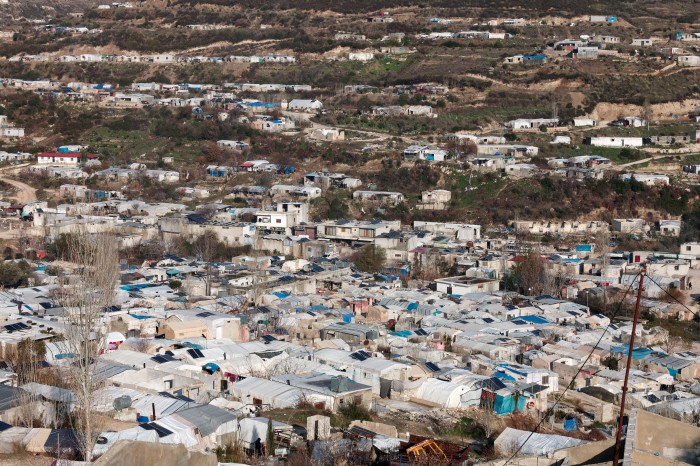 |
| A drone view overlooks a refugee tent camp set up on the outskirts of Idlib, Syria, on January 3rd (local time). / Reuters Yonhap |
The UN refugee agency (UNHCR) announced that the number of people displaced globally by conflict and persecution has decreased for the first time in a decade.
According to the annual report released by the UNHCR on the 11th (local time), Reuters reported that a total of 5.4 million people fled their homes during 2025, bringing the global total of refugees and displaced persons to 41.6 million.
During the same period, the number of refugees who returned to their homelands increased by approximately 50% year-on-year to around 14.7 million, marking the second-largest scale since 1965. The returnees were heavily concentrated in six countries, including Afghanistan, Syria, and the Democratic Republic of the Congo.
Due to the tightening of refugee regulations by Iran and Pakistan, 2.9 million individuals returned home, causing the global number of Afghan refugees to drop from 5.8 million in 2024 to 3.7 million in 2025.
In Syria, 1.3 million people returned following the collapse of the regime in December 2024, lowering the total number of refugees to 4.9 million; however, the vast majority face harsh environments, including destroyed infrastructure and public insecurity.
The report analyzed that military conflicts in the Middle East arising in 2026 are triggering new crises. The UNHCR stated that following airstrikes by the U.S. and Israel in late February, approximately 3.2 million displaced persons emerged within Iran, and around 100万 people in Lebanon have also fled since March due to military clashes and evacuation orders.
Currently, 70% of the world's refugees are trapped in long-term stays of over five years in countries such as Lebanon, Jordan, and Türkiye. The UNHCR plans to halve the number of long-term displaced persons requiring humanitarian assistance by 2035 by fostering job creation and educational support in host nations.
"Asylum and protection are life-saving fundamental rights that are never subject to compromise, but we cannot tolerate a situation where millions of refugees remain stranded for years or decades without even the hope of starting a new life," emphasized Barham Salih, the UN High Commissioner for Refugees, underscorering the importance of voluntary returns and economic self-reliance support.
Lee Jung-eun
Most Read
-
1
Celltrion’s Omlyclo gains ground in major European..

-
2
Trump demands rates fall below 1% as Fed hikes for..

-
3
Trump makes $1 trillion bet ahead of midterm elect..

-
4
Iran resumes ballistic missile production, assembl..

-
5
Samsung Electronics, Mistral AI to jointly develop..

-
6
Trump warns countries not helping U.S. must pay re..

-
7
Apple launches first foldable, 1 million won prici..

PEOPLE





HEADLINE NEWS
- Trump to roll out ‘unprecedented welcome’ for Xi with B-2 bombers, F-22 fighters
- S. Korea, U.S., and Japan form united front on Taiwan and economic coercion..
- Trump administration moves to impose sweeping sanctions on International Cr..
- Xi to make state visit to U.S. Sept. 23-25, dispelling rumors over his heal..

-
Address : In-Young Bldg., 34, Uisadang-daero 1-gil, Yeongdeungpo-gu, Seoul
Copyright by ASIATODAY CO., LTD. All rights resereved