



FTC approves NS Home Shopping’s acquisition of Homeplus Express
Jun 12, 2026, 10:22 am


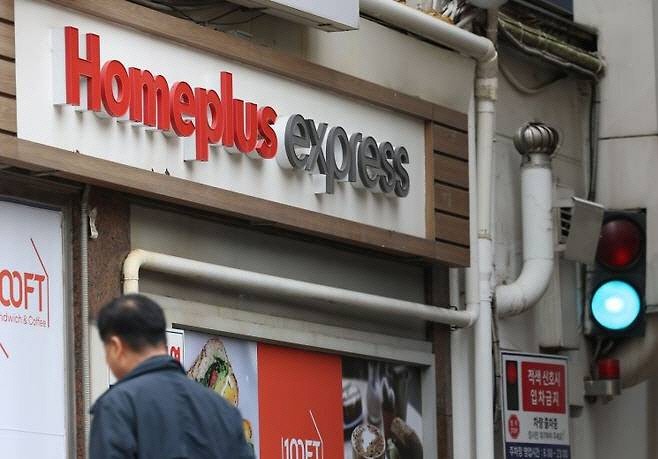 |
| A Homeplus Express store in a city shopping district. / Yonhap News Agency. |
The Fair Trade Commission (FTC) approved NS Home Shopping's acquisition of Homeplus Express. The antitrust regulator determined that the transaction would not restrict competition, citing that Homeplus Express, a corporate supermarket (SSM) chain, holds a relatively low market share compared to its competitors.
On the 12th, the FTC announced, "The business acquisition of the Homeplus Express division by NS Home Shopping is highly unlikely to limit market competition."
Last month, Harim Group affiliate NS Home Shopping agreed to acquire the entire business of the Homeplus Express division from Homeplus for 120.6 billion won. Harim, whose flagship business is poultry, is a food and poultry conglomerate that has vertically integrated grain procurement, animal feed, livestock husbandry, slaughtering, processing, and distribution. Through NS Home Shopping, the group has also expanded into the TV home shopping and e-commerce markets.
Homeplus Express is an SSM subject to the Distribution Industry Development Act, alongside GS The Fresh, E-Mart Everyday, and Lotte Super. The FTC explained that while food accounts for an average of 93% of total sales for SSMs, surging food sales via online retail channels have recently presented significant competitive pressure, along with substantial pressure from adjacent markets such as large food ingredient marts and mid-to-large general supermarkets.
Against this backdrop, the FTC determined that the business acquisition would generate 11 vertical combinations and two conglomerate combinations. The vertical combinations link Harim’s production and manufacturing portfolios with Homeplus Express’s retail network, while the conglomerate combinations merge NS Home Shopping’s TV home shopping and online retail networks with Homeplus Express’s brick-and-mortar distribution network.
The regulator concluded that with the exception of three vertical combinations related to poultry—covering broilers, samgyetang chicken, and native Korean chicken—the possibility of the remaining 10 vertical and conglomerate combinations restricting market competition is negligible due to the companies' low market shares. Even in the poultry sector, Homeplus Express holds a low market share compared to rivals. When factoring in the adjacent general supermarket market, its share stands at a mere 2% range. Consequently, the FTC judged it unlikely that competing poultry suppliers would be excluded from the market due to a lack of retail outlets, or that rival retailers would face a disadvantage from being cut off from Harim's poultry supplies.
The FTC highlighted the significance of the approval, noting that it supports a trailing market player in regaining competitiveness and growing into a potent rival against leading operators amid a rapid structural reshuffling of the market. The regulator also underscored its role in fostering a viable competitive environment within the relevant sector.
"We will continue to swiftly review corporate mergers that promote market innovation to support the creation of a competitive market environment," an FTC official stated. "Conversely, we plan to respond strictly to business combinations that strengthen monopolistic status or substantially restrict market competition."
Seo Byung-joo
Most Read
-
1
Celltrion’s Omlyclo gains ground in major European..

-
2
Trump demands rates fall below 1% as Fed hikes for..

-
3
Trump makes $1 trillion bet ahead of midterm elect..

-
4
Iran resumes ballistic missile production, assembl..

-
5
Samsung Electronics, Mistral AI to jointly develop..

-
6
Trump warns countries not helping U.S. must pay re..

-
7
Apple launches first foldable, 1 million won prici..

PEOPLE






HEADLINE NEWS
- Trump to roll out ‘unprecedented welcome’ for Xi with B-2 bombers, F-22 fighters
- S. Korea, U.S., and Japan form united front on Taiwan and economic coercion..
- Trump administration moves to impose sweeping sanctions on International Cr..
- Xi to make state visit to U.S. Sept. 23-25, dispelling rumors over his heal..

-
Address : In-Young Bldg., 34, Uisadang-daero 1-gil, Yeongdeungpo-gu, Seoul
Copyright by ASIATODAY CO., LTD. All rights resereved