



Trump hints at weekend end-of-war MOU; Iran says "no final decision"
Jun 12, 2026, 10:18 am


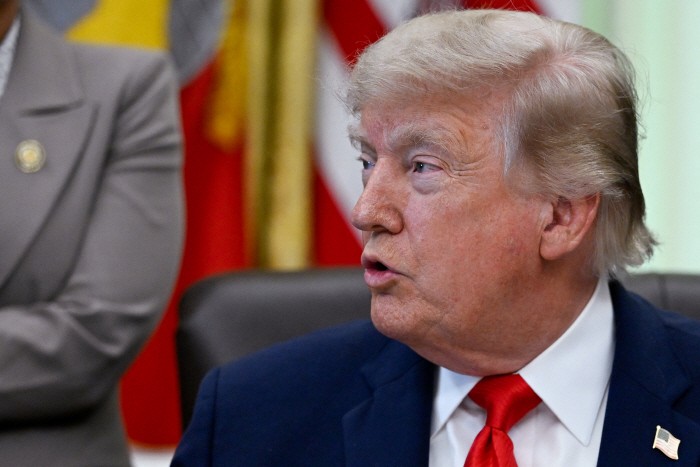 |
| U.S. President Donald Trump speaks in his office in Washington, D.C., on the 11th (local time). / Reuters·Yonhap. |
U.S. President Donald Trump announced that a memorandum of understanding (MOU) to end the war with Iran could be signed in Europe as early as this weekend, but the Iranian government maintained a cautious stance, stating that a final agreement has not yet been reached.
According to Reuters on the 11th (local time), President Trump met with reporters at the White House and announced, "We just came up with a great settlement in the war with Iran," adding that a signing ceremony could take place in Europe as early as this weekend. He noted that the document is in its final fine-tuning stages and that Vice President J.D. Vance, rather than himself, might represent the United States at the ceremony.
President Trump cited blocking Iran's development of nuclear weapons as the core achievement of the agreement. "The most important thing is we have come up with an agreement where Iran will never have nuclear weapons," he emphasized, adding that while the MOU is 'somewhat conceptual,' it will be a very powerful document. He also stated that upon the signing of the agreement, the Strait of Hormuz would be officially opened and the U.S. naval blockade on Iran would be lifted.
President Trump said he understands that Iran's Supreme Leader Ayatollah Mojtaba Khamenei has approved the deal, and mentioned that he canceled scheduled military airstrikes against Iran as the negotiations progressed.
The Iranian government showed a difference in tone from the U.S. announcement, adopting a cautious stance. According to Iran's state-run IRNA news agency, Iranian Foreign Ministry Spokesperson Esmaeil Baghaei drew the line, stating that while it is true a substantial portion of the negotiated text has been finalized, Iran will not compromise on its red lines.
"We have not yet reached a final conclusion on this matter," Baghaei stated. "This is a highly significant issue currently under review by our decision-making bodies." At present, the Iranian side is strongly demanding the lifting of international sanctions, the release of frozen assets, and the recognition of its control over the Strait of Hormuz.
The complex interests of regional nations in the Middle East surrounding this agreement also remain a variable. President Trump claimed via social media that the agreement had received the approval of other countries in the region, including Israel, Saudi Arabia, Qatar, and the United Arab Emirates (UAE).
However, the office of Israeli Prime Minister Benjamin Netanyahu released a statement following a phone call with President Trump, drawing a line under any direct involvement by stating, "Israel is not a party to the MOU with Iran." Nonetheless, Prime Minister Netanyahu expressed gratitude for U.S. efforts to secure an agreement that includes the removal of highly enriched materials, restrictions on missile production, and the cessation of support for regional proxy forces.
Furthermore, as Iran is demanding that Israel halt its attacks in Lebanon, where clashes with the Lebanese militant group Hezbollah continue, difficulties are anticipated during the detailed fine-tuning process before a final agreement is reached.
Lee Jung-eun
Most Read
-
1
Celltrion’s Omlyclo gains ground in major European..

-
2
Trump demands rates fall below 1% as Fed hikes for..

-
3
Trump makes $1 trillion bet ahead of midterm elect..

-
4
Iran resumes ballistic missile production, assembl..

-
5
Samsung Electronics, Mistral AI to jointly develop..

-
6
Trump warns countries not helping U.S. must pay re..

-
7
Apple launches first foldable, 1 million won prici..

PEOPLE






HEADLINE NEWS
- Trump to roll out ‘unprecedented welcome’ for Xi with B-2 bombers, F-22 fighters
- S. Korea, U.S., and Japan form united front on Taiwan and economic coercion..
- Trump administration moves to impose sweeping sanctions on International Cr..
- Xi to make state visit to U.S. Sept. 23-25, dispelling rumors over his heal..

-
Address : In-Young Bldg., 34, Uisadang-daero 1-gil, Yeongdeungpo-gu, Seoul
Copyright by ASIATODAY CO., LTD. All rights resereved