



NTT partners with SK and Chunghwa Telecom for ¥70B AI optical network fund
Jun 08, 2026, 02:30 pm


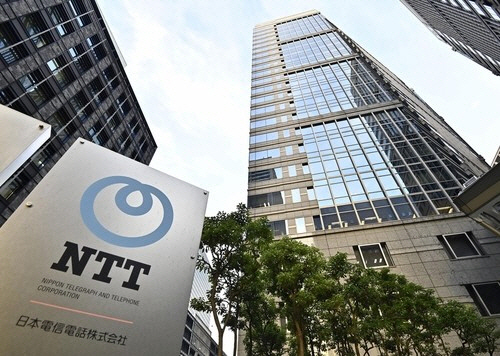 |
| Japan's NTT. / Photo via Yonhap News |
Japanese telecommunications giant NTT is set to invest in artificial intelligence (AI) infrastructure based on next-generation optical communications, partnering with South Korea's SK Group and Taiwan's Chunghwa Telecom.
On the 8th, the Yomiuri Shimbun reported that NTT plans to establish the "IOWN AI Fund," with assets exceeding 70 billion yen, to facilitate the international expansion of its next-generation communication infrastructure, IOWN (Innovative Optical and Wireless Network). NTT, SK Group, Taiwanese telecom giant Chunghwa Telecom, and the Development Bank of Japan will jointly participate in the fund. SK Group holds telecom operator SK Telecom and semiconductor company SK Hynix under its umbrella. NTT, SK Group, and Chunghwa Telecom already maintain a cooperative relationship in IOWN technology development.
According to the Yomiuri, more than ten companies in Japan—including MUFG Bank, Sumitomo Mitsui Banking Corporation, Mizuho Bank, Sumitomo Mitsui Trust Bank, Toshiba, Sony Group, and Fujitsu—are also showing interest in investing. The fund plans to target startups in North America, Asia, and Europe, investing in photoelectric fusion technology, semiconductors for AI, and the development of the latest AI models based on IOWN.
IOWN stands for "Innovative Optical and Wireless Network." It is a next-generation information and communication infrastructure whose concept was announced by NTT in 2019. It aims to achieve low power consumption, high speed, and large capacity processing by utilizing light instead of electricity for data transmission within semiconductors and communication networks. As the spread of generative AI increases power usage in data centers, it is drawing attention as a technology to improve the power efficiency of communication and computing infrastructure.
◇ Combining South Korean Semiconductors, Japanese Telecom, and Taiwanese Networks
To establish international standards for IOWN, NTT announced the creation of the IOWN Global Forum in 2019 alongside US-based Intel and Sony, and the forum officially launched in 2020. Since then, as companies related to telecommunications, semiconductors, data centers, and cloud computing have joined, IOWN is moving beyond a standalone project by a Japanese corporation and into the stage of building an international technological ecosystem.
In 2024, NTT and Chunghwa Telecom activated a roughly 3,000-kilometer international IOWN optical communication network connecting Chunghwa Telecom’s data center in Taoyuan, Taiwan, and NTT’s R&D Center in Musashino City, Tokyo, Japan. The two companies announced that they confirmed low-latency communication of approximately 17 milliseconds (ms) one-way over this distance.
This latest fund initiative serves as a financing mechanism to broaden the applications of IOWN. Because creating international standards is difficult through technological development alone, the goal is to nurture the photoelectric fusion semiconductor and AI infrastructure ecosystem by supporting related startups and product development. From NTT's perspective, this has the effect of binding South Korea's semiconductors, Taiwan's communication networks, and Japanese financial and manufacturing capital around Japan's telecommunications technology.
In the AI semiconductor market, US-based Nvidia holds a high market share, and China's Huawei is also accelerating development in telecom equipment and AI semiconductors. Photoelectric fusion technology is considered an area that can reduce power consumption and communication latency in AI data centers. This global technological rivalry underscores Japan's background in trying to cultivate IOWN into an international standard.
This holds significance for South Korea as well. This initiative involving SK Group represents an instance where South Korean companies cooperate with Japan and Taiwan in the AI infrastructure competition that combines semiconductors and telecommunications. The AI race is expanding beyond model development and into a foundational infrastructure competition that ties power, semiconductors, data centers, and communication networks together altogether.
Choe Yeong-jae
Most Read
-
1
Celltrion’s Omlyclo gains ground in major European..

-
2
Trump demands rates fall below 1% as Fed hikes for..

-
3
Trump makes $1 trillion bet ahead of midterm elect..

-
4
Iran resumes ballistic missile production, assembl..

-
5
Samsung Electronics, Mistral AI to jointly develop..

-
6
Trump warns countries not helping U.S. must pay re..

-
7
Apple launches first foldable, 1 million won prici..

PEOPLE






HEADLINE NEWS
- Trump to roll out ‘unprecedented welcome’ for Xi with B-2 bombers, F-22 fighters
- S. Korea, U.S., and Japan form united front on Taiwan and economic coercion..
- Trump administration moves to impose sweeping sanctions on International Cr..
- Xi to make state visit to U.S. Sept. 23-25, dispelling rumors over his heal..

-
Address : In-Young Bldg., 34, Uisadang-daero 1-gil, Yeongdeungpo-gu, Seoul
Copyright by ASIATODAY CO., LTD. All rights resereved