



Police launch AI advisory body to advance investigations
Jun 08, 2026, 01:51 pm


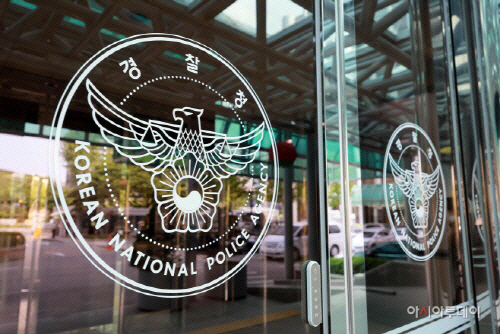 |
The National Police Agency. / Photo via Reporter Park Sung-il
The police are accelerating the advancement of an investigation support system utilizing generative artificial intelligence (AI). The plan is to step-by-step expand features to include analyzing unstructured investigation data such as voice and images, verifying warrant applications, and detecting new types of crimes, moving beyond merely summarizing case issues and providing laws and precedents.
The National Investigation Headquarters (NIH) of the National Police Agency announced on the 8th that it appointed the first Criminal Justice Information System (KICS) Investigation Support AI Policy Advisory Body, consisting of seven experts from academia, the legal profession, investigation, and AI sectors, on May 27.
The policy advisory body was established to enhance the technical completeness and suitability for investigation sites of the police's investigation support AI advancement project. Through the advisory body, the NIH plans to identify legal and institutional issues and improvement tasks required during the project's implementation while complementing functions necessary for investigation sites.
The police receive more than 3 million cases annually. Under judgment that there are limitations in securing both investigation quality and processing speed simultaneously with limited investigative personnel while the number of cases increases every year, they have been pushing for the introduction of a generative AI-based investigation support system. The project is carried out as a three-year plan from 2025 to 2027.
The first phase is the stage of establishing core infrastructure and primary functions. Investing 2.7 billion won last year, the police built an investigation support AI linked with the Criminal Justice Information System (KICS). This system features functions such as summarizing case issues, foreign language translation, providing laws and precedents, and drafting warrant application outlines, and has been provided to field investigators since November 17 last year.
A total of 5.5 billion won will be injected into the second-phase project pursued this year. The police plan to newly introduce unstructured investigation data analysis functions, including optical character recognition (OCR) and voice recognition. Additionally, functions for drafting written decisions and investigation result notices, recommending questions by crime type through analyzing statements of similar cases, and creating crime lists based on investigation data will be added.
A function to detect new types of crimes by comparing and analyzing case data scattered across the country will also be introduced. In this method, the AI analyzes common clues between cases—such as account numbers, phone numbers, and social media accounts—to confirm the possibility of similar cases or organized crimes at an early stage.
In the third-phase project in 2027, multimodal functions will be added. The goal is to build a comprehensive data utilization framework, including video analysis, specific scene extraction, and content analysis of multiple images. Functions to enhance the completeness of investigations, such as verifying the integrity of warrant applications and generating statistical source sheets, are also included.
An official from the NIH stated, "The appointment of this policy advisory body aims to establish not only the technical advancement of the investigation support AI but also its legal and institutional foundations," adding, "Through continuous cooperation with experts in each field, we will strive to increase the speed and completeness of investigations and ensure that citizens can be guaranteed a fair investigation."
Seol So-young |
Most Read
-
1
Celltrion’s Omlyclo gains ground in major European..

-
2
Trump demands rates fall below 1% as Fed hikes for..

-
3
Hyundai Motor Group breaks ground on integrated st..

-
4
U.S. strikes 3 Iranian oil tankers, Iran vows reta..

-
5
Trump makes $1 trillion bet ahead of midterm elect..

-
6
Iran resumes ballistic missile production, assembl..

-
7
Samsung Electronics, Mistral AI to jointly develop..

PEOPLE







-
Address : In-Young Bldg., 34, Uisadang-daero 1-gil, Yeongdeungpo-gu, Seoul
Copyright by ASIATODAY CO., LTD. All rights resereved