



NHRCK urges institutional frameworks for people with borderline intelligence
Jun 05, 2026, 03:43 pm


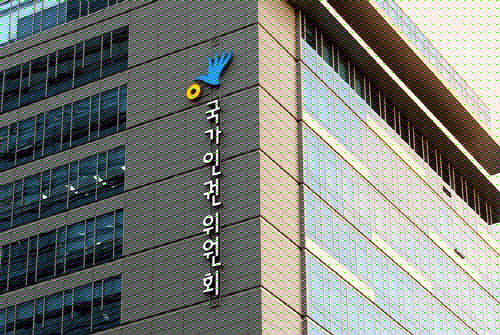 |
| National Human Rights Commission of Korea. / Asia Today DB |
The National Human Rights Commission of Korea (NHRCK) has called on the National Assembly to apply a multi‑dimensional evaluation principle—assessing cognitive, learning, and social adaptation functions—rather than relying solely on IQ scores when reviewing bills related to people with borderline intellectual functioning.
On June 5, the NHRCK submitted its opinions on eight points to the Speaker of the National Assembly after reviewing ten bills concerning borderline intellectual functioning introduced in the 22nd National Assembly.
Borderline intellectual functioning refers to individuals who do not meet the criteria for intellectual disability (IQ 70 or below) but also fall short of average intelligence, facing difficulties in learning, employment, and independent living. They are estimated to make up about 13.6% of the population, yet remain excluded from support under the Disability Welfare Act, leaving them in a policy blind spot.
The NHRCK pointed out the limitations of defining borderline intellectual functioning solely by IQ. Test environments can cause significant variations in scores, and those at the margins (70–71, 84–85) fall into another blind spot. International standards such as DSM‑5 and ICD‑11 also consider learning ability, adaptive functioning, and social functioning rather than IQ alone.
Guaranteeing rights in criminal and judicial procedures was also emphasized. The NHRCK stated that investigative agencies should be required to allow trusted persons to accompany individuals either by discretion or upon request. It also recommended mandatory training for police officers and providing major policy and procedural information in easy‑to‑understand formats.
In the employment sector, the NHRCK proposed that national and local governments be tasked with promoting employment policies and establishing continuous support systems, including career counseling, vocational training, job placement, and post‑employment adaptation assistance.
In healthcare and education, the commission called for professional medical support systems that include psychiatric diagnosis and treatment as well as psychological counseling. It also recommended separate lifelong education support systems that cover daily living skills, social training, and legal education for crime prevention.
The NHRCK stated: “Before the law is implemented, a diagnostic system suited to Korea’s reality must be established. In the future legislative process, we will continue to monitor discussions to ensure that a human rights‑centered perspective is substantively reflected, and we will cooperate with relevant institutions.”
Kim Tae‑hoon
Most Read
-
1
Celltrion’s Omlyclo gains ground in major European..

-
2
Trump demands rates fall below 1% as Fed hikes for..

-
3
Hyundai Motor Group breaks ground on integrated st..

-
4
U.S. strikes 3 Iranian oil tankers, Iran vows reta..

-
5
Trump makes $1 trillion bet ahead of midterm elect..

-
6
Iran resumes ballistic missile production, assembl..

-
7
Samsung Electronics, Mistral AI to jointly develop..

PEOPLE







-
Address : In-Young Bldg., 34, Uisadang-daero 1-gil, Yeongdeungpo-gu, Seoul
Copyright by ASIATODAY CO., LTD. All rights resereved