



Korea to deploy regional networks to protect citizens abroad
May 22, 2026, 04:29 pm


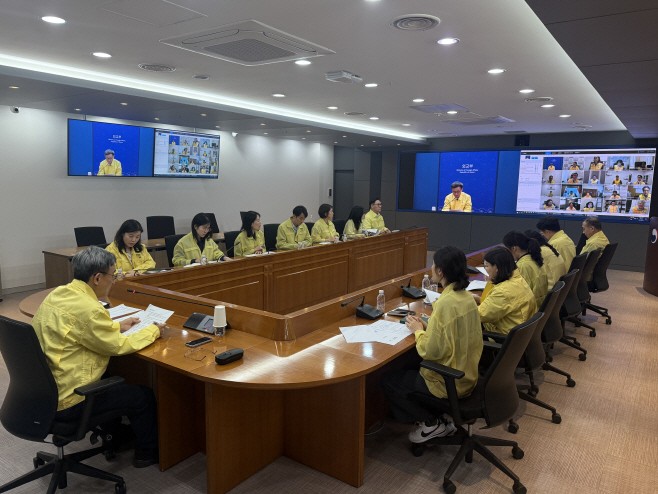 |
| The Ministry of Foreign Affairs holds a video conference between its headquarters and 19 hub diplomatic missions on May 21 to establish measures for ensuring the safety of South Korean nationals abroad. / Photo courtesy of the Ministry of Foreign Affairs |
Amid growing volatility in the international security landscape, including the recent conflict in the Middle East, the South Korean government has convened a comprehensive video conference to establish a regional contingency response framework designed to shield overseas nationals from mounting security threats.
The meeting, held on May 21 and presided over by Cho Ju-seong, Director-General for Overseas Koreans Protection, brought together representatives from 19 key hub diplomatic missions. The strategic shift is prompted by the rising scale and frequency of international incidents and disasters, which have exposed the limitations of traditional, isolated consular responses and underscored the need for a coordinated, hub-and-spoke operational model.
According to a press release distributed by the Ministry of Foreign Affairs (MOFA) on May 22, the participants engaged in deep discussions regarding organic communication channels and collaborative protocols across regional diplomatic networks. "Relying strictly on the personnel and resources of an individual mission presents clear structural constraints in executing rapid and effective emergency operations," MOFA noted. "The focus here is building a regionalized network around designated hub embassies to optimize resource allocation during a crisis."
During the session, the South Korean Embassy in the United States delivered a presentation on the designated duties of a hub mission during large-scale civil unrest or terrorist contingencies, outlining templates for regional cooperation. Concurrently, the South Korean Embassy in Japan shared concrete coordination blueprints focused on regional cross-mission readiness in anticipation of a potential Nankai Trough mega-earthquake. Addressing geopolitical shifts in Latin America, the South Korean Embassy in Mexico detailed cooperative strategies to guarantee the safety of Korean expatriates in Cuba, operating in its capacity as the central diplomatic hub for the Central American theater during emergencies.
Following this preliminary headquarters-wide session, MOFA plans to systematically roll out localized, regional conferences spearheaded by these key hub missions.
"The ultimate objective is to weave a far more seamless and robust protective safety net for our citizens," a MOFA official stated. "We will ensure that no matter where a South Korean national is positioned across the globe, they will have immediate access to swift, high-efficiency consular assistance during a crisis."
In a parallel development on May 22, Director-General Cho also convened an urgent joint situational assessment meeting with the South Korean Embassy in Bolivia to counter the escalating anti-government protests sweeping the South American nation. The emergency session focused heavily on drafting actionable contingencies to safeguard local Korean residents.
"It is imperative that headquarters and the local embassy maintain a round-the-clock communication link," Cho instructed during the session. "Every possible measure must be deployed to guarantee the security of our citizens on the ground." In response, the South Korean Embassy in Bolivia confirmed that it is conducting routine safety check-ins with the expatriate community and issuing real-time travel advisories, pledging a proactive stance as the local political situation evolves.
Mok Yong-jae
Most Read
-
1
Trump demands rates fall below 1% as Fed hikes for..

-
2
Celltrion seeks rheumatoid arthritis indication ex..

-
3
Chinese e-commerce giants AliExpress, Temu and She..

-
4
Trump warns countries not helping U.S. must pay re..

-
5
Turkish Airlines named main club partner of Liverp..

-
6
China expels No. 2 military official Zhang Youxia..

-
7
Houthi rebels release video claiming downing of Sa..

PEOPLE






-
Address : In-Young Bldg., 34, Uisadang-daero 1-gil, Yeongdeungpo-gu, Seoul
Copyright by ASIATODAY CO., LTD. All rights resereved