



Veteran director laments film industry’s obsession with box office
May 07, 2026, 11:24 am


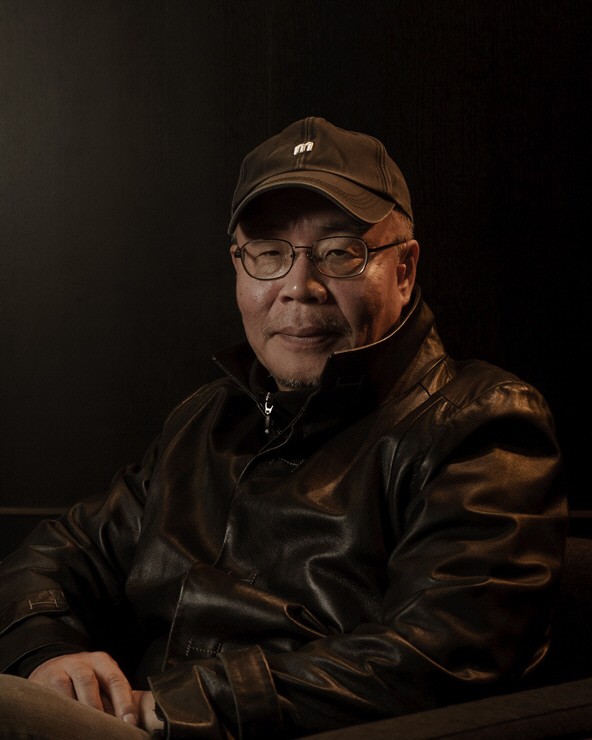 |
| Lee Myung-se, who returned with the feature-length documentary Ran 12.3, urged younger filmmakers not to forget the essence of cinema as both an industry and an art form. /Production M |
“Filmmakers no longer talk about films.”
Veteran South Korean director Lee Myung-se delivered a blunt message to younger generations of filmmakers, lamenting what he sees as the industry’s growing obsession with box office success over cinematic artistry.
In a recent interview marking the release of his documentary Ran 12.3, Lee was asked how the Korean film industry could overcome its current crisis.
“When I meet people in the film industry these days, most conversations revolve around box office results rather than films themselves,” Lee said. “We need to return to our original mindset and focus first on the essence of cinema, which is both an industry and an art form.”
He added that filmmakers should pay closest attention to the emotional satisfaction audiences experience through films.
“We need to revive the spirit of film art again with the same intensity as independence activists,” he said.
Lee also emphasized the need for a healthier filmmaking ecosystem beyond blockbuster hits.
“Ten-million-viewer films are great, but the industry also needs directors who can consistently attract two to three million viewers,” he said. “Influential figures in the industry, especially stars, should support and protect emerging directors.”
Born in 1955 in Asan, South Chungcheong Province, Lee began his career as an assistant director to Bae Chang-ho before making his directorial debut with Gagman in 1989.
The film, starring late actor Ahn Sung-ki and actress Hwang Shin-hye as members of a bank robbery gang, was ignored by audiences upon release. However, it was later reevaluated as a “cursed masterpiece” for pioneering a new direction in Korean cinema.
Lee later gained recognition as one of Korea’s leading visual stylists through films including My Love, My Bride, First Love, Nowhere to Hide and Duelist.
Released on April 22, Ran 12.3 is Lee’s first feature-length documentary and depicts the events of the night martial law was declared on Dec. 3, 2024.
Unlike conventional documentaries, the film contains no interviews or narration. Instead, it combines video footage provided by nearly 300 citizens and National Assembly aides with AI-generated reenactments and pop art-style animation.
According to the Korean Film Council’s integrated box office system, the documentary had attracted a cumulative audience of 217,031 viewers as of Tuesday and has remained the top-performing independent and art-house film at the daily box office for 15 consecutive days.
Lee said his filmmaking process has always been driven by a desire for originality.
“Before making a film, I always ask myself: ‘What is different about this? What is new? If it is not different, does it really have to be me doing it?’” he said.
He explained that the decision to exclude interviews and narration from Ran 12.3 came from his determination not to repeat the conventions of existing documentaries.
“If I make another documentary in the future, I may fill it entirely with interviews,” he said. “It has to be new.”
#Lee Myung-se #Ran 12.3 #Korean cinema #documentary film #independent film
Copyright by Asiatoday
Most Read
-
1
Alteogen secures European patent for Keytruda SC,..

-
2
Trump shares map on social media labeling Strait o..

-
3
Celltrion seeks rheumatoid arthritis indication ex..

-
4
Kia Sportage outperforms Mazda CX-5 in German auto..

-
5
Chinese e-commerce giants AliExpress, Temu and She..

-
6
China expels No. 2 military official Zhang Youxia..

-
7
Trump rejects Iran's offer to open Strait of Hormu..

PEOPLE







-
Address : In-Young Bldg., 34, Uisadang-daero 1-gil, Yeongdeungpo-gu, Seoul
Copyright by ASIATODAY CO., LTD. All rights resereved