|
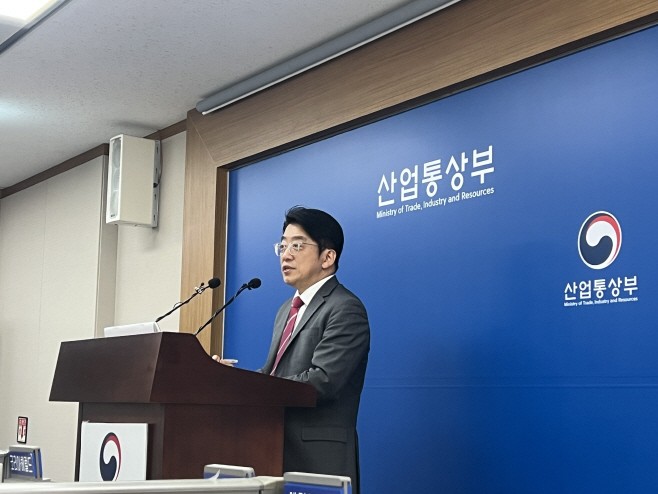 | | 0 | | Yang Ki-wook, head of the Industrial Resource Security Office at the Ministry of Trade, Industry and Energy, delivers a daily briefing on crude oil supply stabilization and government measures in response to the prolonged Middle East conflict at the ministry’s press room in the Government Complex Sejong on April 30. / Rporter Han Dae-ui |
South Korea’s oil supply is expected to remain stable in May despite prolonged geopolitical tensions in the Middle East, the Ministry of Trade, Industry and Energy said on April 30, adding that it is considering extending its emergency oil swap program through July. |
Global oil prices have surged amid continued disruptions linked to the blockade of the Strait of Hormuz. As of 7 a.m., Brent crude stood at $121.68 per barrel, while West Texas Intermediate (WTI) reached $108.35, both hovering near recent highs.
Yang Ki-wook, a senior official at the ministry, said upward pressure on oil prices is likely to persist. “Both Brent and WTI are expected to remain at elevated levels for the time being,” he noted.
Despite earlier concerns over a potential supply crisis in April, the government and refining industry secured approximately 50 million barrels of alternative crude during the month, maintaining supply at around 60% of normal levels. An additional 14.47 million barrels were 확보ed through the oil stockpile swap system, strengthening supply resilience.
Yang said more than 70 million barrels of crude are scheduled for import in May, easing concerns about shortages.
Domestic fuel prices have remained relatively stable compared to global trends. As of April 30, gasoline prices rose just 0.007% from the previous day, while diesel prices fell 0.006%. However, compared to pre-war levels in late February, gasoline and diesel prices have increased by 18.7% and 25.4%, respectively.
The government attributed the relatively moderate rise to policy measures, including price caps, noting that price increases in countries such as Germany and France have been significantly higher.
Supply conditions for naphtha, a key petrochemical feedstock, are also improving. The government has allocated 674.4 billion won in supplementary budget funds to support half of the import cost differences for naphtha, LPG, and condensate. As a result, contract lead times have shortened significantly, and supply sources have diversified beyond the Middle East to include the United States, India, Algeria, and Greece.
Thanks to these efforts, naphtha supply is expected to recover to 85–90% of pre-war levels in May.
Petrochemical plant utilization rates, which had dropped to around 50% during the crisis, have recently rebounded to 60–70% and are projected to reach 90–95% in May. Major firms such as Yeochun NCC and Korea Petrochemical Industry Co. have already begun increasing operations.
The government said it is shifting toward a standing response system as the Middle East conflict shows signs of becoming prolonged. The oil swap program, currently extended through June, is under review for further extension into July.
“Given the uncertainty surrounding the duration of the conflict, we plan to operate emergency measures as a sustainable system rather than a temporary response,” Yang said, adding that authorities will continue to closely monitor volatility in global energy markets.